Author

admin

Browsing

Cobalt prices regained momentum in the third quarter of 2025 as tighter export controls from the Democratic Republic of Congo (DRC) fueled expectations of a market rebound.

After languishing near multi-year lows early in the year, the metal surged to US$47,110 per metric ton in late October, its highest level since January 2023.

The DRC’s prolonged export suspension, followed by new quota limits, has begun to ease a years-long supply glut, with analysts now forecasting a shift from oversupply toward market balance.

All year-to-date and share price information was obtained on October 28, 2025, using TradingView’s stock screener. Companies with market caps above C$10 million at that time were considered.

1. Talon Metals (TSX:TLO)

Year-to-date gain: 358.82 percent
Market cap: C$440.55 million
Share price: C$0.39

Talon Metals is a base metals company advancing the Tamarack nickel-copper-cobalt project in Central Minnesota, US, through a joint venture with Rio Tinto (ASX:RIO,NYSE:RIO,LSE:RIO). Talon currently holds a 51 percent stake in the project and can earn up to 60 percent.

In late March, Talon Metals announced a massive sulfide discovery at its Tamarack project, with an intercept measuring 8.25 meters containing 95 percent sulfide content located deeper than the current Tamarack resource.

In May, a further massive sulfide discovery in the same zone, the thickest discovery yet at the site, drove the company’s share price up significantly, and another in early August did the same. In the August announcement, Talon shared that it named the discovery zone the Vault zone.

At the start of Q4, Talon announced an expanded winter drilling and exploration program at the Vault zone.

Shares of Talon rallied to a year-to-date high of C$0.54 on October 14, following the winter drill news and alongside rising cobalt prices.

On October 20, Talon received a 12 month extension from Rio Tinto subsidiary Kennecott Exploration to submit a feasibility study and US$10 million payment required to increase its ownership stake in the Tamarack project to 60 percent.

The extension will allow Talon to align the study’s release with the publication of the project’s scoping environmental assessment worksheet, expected in the first half of 2026, marking its entry into Minnesota’s formal environmental review process.

2. Leading Edge Materials (TSXV:LEM)

Year-to-date gain: 222.22 percent
Market cap: C$72.49 million
Share price: C$0.29

Leading Edge Materials is developing critical materials projects in the EU. The company’s projects include its wholly owned Woxna graphite mine and Norra Kärr heavy rare earth elements project, both in Sweden, as well as its 51 percent owned Bihor Sud nickel-cobalt exploration alliance in Romania.

According to its June 2025 presentation, exploration work planned for 2025 at Bihor Sud’s G2 gallery includes mapping and sampling of cobalt-nickel and zinc-lead-silver mineralized zones detected visually and by hand-held XRF. Drilling targeting polymetallic mineralization at the gallery is underway.

On the financial side, Leading Edge announced a C$400,000 non-brokered private placement in June.

According to a June 22 activities update, Leading Edge’s Romanian subsidiary was granted ownership and operational permits for the Avram Iancu mine at Bihor Sud, and the team had begun preliminary investigations of the site.

In its recent quarterly report, released September 19, Leading Edge Materials said it is reassessing its prospects after being granted those permits. at its project located within the Bihor Sud exploration area following the acquisition of additional ownership and operating permits.

The Avram Iancu site hosts extensive historic underground workings and data indicating copper-rich massive sulfide zones, the statement noted.

A competent person report is in progress to consolidate past exploration and outline next steps, while the company evaluates financing options to advance development.

Shares of Leading Edge also benefited from the mid-October cobalt price rally, registering a year-to-date high of C$0.44 on October 14.

3. Battery Mineral Resources (TSXV:BMR)

Year-to-date gain: 180 percent
Market cap: C$16.79 million
Share price: C$0.14

Battery Mineral Resources is focused on developing into a mid-tier copper producer and recently restarted mine and mill operations at the Punitaqui Mining Complex in Chile. In Canada, the company holds the largest land position in Ontario’s historic Cobalt district, where it is exploring high-grade primary cobalt deposits at McAra, Gowganda and Elk Lake.

The company’s portfolio also includes energy services and mineral exploration assets in North America, along with graphite projects in South Korea.

In late October, BMR said it was evaluating strategic options for its Gowganda silver tailings project, located northeast of Sudbury, Ontario.

The project lies in one of the country’s most productive past silver-cobalt districts, and the Gowganda mining camp produced 60 million ounces of silver and 1.3 million pounds of cobalt between 1910 and 1969. Gowganda hosts four former mines and associated tailings historically estimated to contain 2.96 million ounces of silver. BMR is assessing how best to advance or monetize the asset to enhance shareholder value.

On October 16, Battery Mineral Resources reported strong operational performance at its Punitaqui copper project in Chile, driven by improved underground production and plant optimization. Since September 1, 2025, underground operations have averaged 1,800 tonnes per day, up 80 percent from the first half of the year, and 2,000 tonnes per day over the recent two weeks period.

BMR is also advancing development of additional underground operations at Cinabrio Norte and Dalmacia to support further growth from Punitaqui.

The news pushed shares of BMR to a year-to-date high of C$0.17 on October 21.

4. FPX Nickel (TSXV:FPX)

Year-to-date gain: 95.74 percent
Market cap: C$144.81 million
Share price: C$0.46

FPX Nickel is currently advancing its Decar nickel district in BC, Canada.

The property comprises four key targets, with the Baptiste deposit being the primary focus, alongside the Van target. The company also has three other nickel projects in BC and one in the Yukon, Canada.

In February, FPX released a scoping study for the development of a refinery that would refine awaruite concentrate from Baptiste into battery-grade nickel sulfate and by-products of cobalt carbonate, copper and ammonium sulfate. Annual output is anticipated at 32,000 metric tons of contained nickel and 570 metric tons of contained cobalt.

The results show that the process would result in operating and all-in production costs near the bottom of nickel sulfate cost curve, in part due to by-product credits. Additionally, the carbon intensity of the awaruite refinery would be significantly lower than that of currently used production methods.

On September 4, FPX completed a large-scale mineral processing pilot campaign for its Baptiste nickel project, following three prior successful campaigns. The latest production run generated bulk samples of awaruite concentrate, which will be provided to prospective partners, including pre-cursor cathode active materials, battery producers and automakers, to assess its suitability as feedstock.

Later in the month, FPX signed an option agreement to acquire up to 100 percent of the Advocate nickel property in Newfoundland, Canada, following its review of over 50 targets. The property has also been accepted by the Japan Organization for Metals and Energy Security (JOGMEC) as the first designated property under the generative alliance between FPX and JOGMEC, with a significant work program planned to build on encouraging surface nickel recoveries.

FPX shares registered a year-to-date high of C$0.55 on October 17.

5. Wheaton Precious Metals (TSX:WPM)

Year-to-date gain: 61.23 percent
Market cap: C$60.38 billion
Share price: C$133.00

Wheaton Precious Metals is one of the largest gold and silver royalty and streaming companies.

It has investments in 18 operating mines and 28 development projects across four continents, including a cobalt streaming agreement for Vale’s (NYSE:VALE) Voisey’s Bay nickel mine in Newfoundland and Labrador, Canada.

According to Wheaton, Voisey’s Bay is currently in a transitional phase, shifting from the depleted Ovoid open pit to full underground production.

The company reported its Q1 financial results on May 8. The report highlighted a record US$470 million in revenue, US$254 million in net earnings and US$361 million in operating cash flow.

The cobalt segment registered year-on-year attributable production gains, rising to 540,000 pounds in the year’s first quarter, compared to 240,000 pounds during Q1 2024. Despite the output increase, sales fell to 265,000 pounds in Q1 versus 309,000 pounds in Q1 2024.

According to Wheaton’s Q2 2025 results, the Voisey’s Bay mine produced 647,000 pounds of attributable cobalt, a roughly 150 percent increase from the same period in 2024. Vale reported that the underground operations are steadily ramping up, with full production expected by the second half of 2026 as the transition from the depleted Ovoid open-pit continues.

Shares of Wheaton rose to a year-to-date high of C$159.41 on October 16 alongside rising prices for gold, silver and cobalt.

FAQs for cobalt

What is cobalt?

Cobalt is a silver-gray metal that is often produced as a by-product of nickel and copper mining. It does not occur as a separate metal anywhere in the world, and must be produced by reductive smelting, or from the metallic ore cobaltite, which is made of cobalt, sulfur and arsenic.

What is cobalt used for?

Historically, cobalt oxides were used to impart a blue pigment to glass, porcelain and paints, hence the still-used cobalt blue paint. The metal is also used to produce superalloys, as cobalt imparts qualities such as corrosion and wear resistance, which are useful in applications such as airplanes, orthopedics and prosthetics.

Today cobalt is most famously used in the rechargeable lithium-ion batteries that run everything from smartphones to EVs.

Where is cobalt mined?

The majority of cobalt production comes out of the DRC, which was responsible for producing 220,000 metric tons of the material in 2024. For perspective, the second largest cobalt-producing country, Indonesia, reported output of 28,000 MT the same year; third place Russia produced 8,700 MT of the material.

As the lithium-ion battery and EV supply chains garner global attention, companies are trying to limit their exposure to cobalt produced from the DRC, which is known for human rights abuses and sometimes child labor in its mining industry.

In response to this trend, many countries with cobalt are attempting to create domestic cobalt and EV supply chains in the hope of attracting companies looking to avoid DRC-sourced cobalt. This can be seen in the up-and-coming battery corridor in Ontario, Canada, as well as in the US-based Idaho cobalt belt.

Securities Disclosure: I, Georgia Williams, hold no direct investment interest in any company mentioned in this article.
This post appeared first on investingnews.com

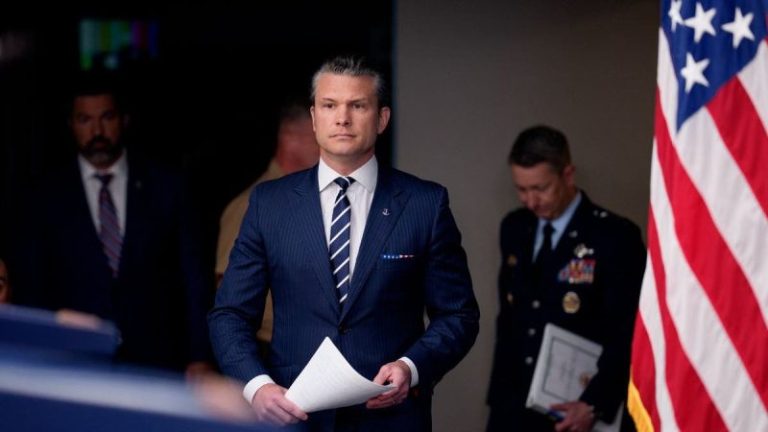
A bipartisan pair of senators are calling on Pentagon chief Pete Hegseth to hand over copies of the orders issued to strike boats in the Caribbean allegedly carrying narco-terrorists.

Sens. Jack Reed, D-R.I., and Roger Wicker, R-Miss., released two letters they sent to Hegseth in recent weeks in response to the repeated strikes on suspected drug boats.

The first letter, which was issued on Sept. 23, explained the legal requirements for congressional oversight over the military’s executed orders, including that congressional defense committees must be provided copies of the orders within 15 days of being issued.

‘Unfortunately, the Department has not complied with this requirement,’ the letter reads.

The second letter, issued on Oct. 6, seeks a written opinion from the Department of Justice’s Office of Legal Counsel (OLC) on the domestic or international legal basis for conducting the strikes and related operations.

Reports indicate that the OLC produced a legal opinion justifying the strikes, which numerous lawmakers have been demanding in recent weeks.

The senators’ letter also asked for a complete list ‘of all designated terrorist organizations and drug trafficking organizations with whom the President has determined the United States is in a non-international armed conflict and against whom lethal military force may be used.’

‘To date, these documents have not been submitted,’ Reed’s office said in a news release on Friday.

Lawmakers on both sides of the aisle have urged the Trump administration to release information related to the strikes.

Sen. Mark Warner, D-Va., the top Democrat on the Senate Intelligence Committee, criticized the administration on Thursday after it excluded Democrats from briefings on the strikes, a move he called ‘indefensible and dangerous.’

On Wednesday, Democrats on the Senate Judiciary Committee also penned a letter demanding to review the legal justification behind the series of boat strikes they say appear to violate several laws.

‘Drug trafficking is a terrible crime that has had devastating impacts on American families and communities and should be prosecuted. Nonetheless, the President’s actions to hold alleged drug traffickers accountable must still conform with the law,’ the letter states.

The strikes have also garnered scrutiny from Republicans, including Sen. Rand Paul, R-Ky., who raised concerns about killing people without due process and the possibility of killing innocent people.

Paul has cited Coast Guard statistics that show a significant percentage of boats boarded for suspicion of drug trafficking are innocent.

The senator has also argued that if the administration plans to engage in a war with Venezuela after it has targeted boats it claims are transporting drugs for the Venezuela-linked Tren de Aragua gang, it must seek a declaration of war from Congress.

In the House, Rep. Thomas Massie, R-Ky., has made similar statements.

A report published on Friday suggested the U.S. military was planning to strike military installations in Venezuela, but President Donald Trump and Secretary of State Marco Rubio said that the report was inaccurate.

This comes as Hegseth announced the U.S. military on Wednesday struck another boat carrying alleged narco-terrorists. The strikes were carried out in the Eastern Pacific region at the direction of Trump, killing four men on board.

That was the 14th strike on suspected drug boats since September. A total of 61 people have reportedly been killed while three survived, including at least two who were later repatriated to their home countries.

The Pentagon has refused to release the identities of those killed or evidence that drugs were on board.

This post appeared first on FOX NEWS

(TheNewswire)

NOT FOR DISTRIBUTION TO U.S. NEWSWIRE SERVICES OR FOR RELEASE, PUBLICATION, DISTRIBUTION OR DISSEMINATION, DIRECTLY OR INDIRECTLY, IN WHOLE OR IN PART, IN OR INTO THE UNITED STATES.

October 31, 2025 TheNewswire – Vancouver, British Columbia, Canada JZR Gold Inc. (the ‘ Company ‘ or ‘ JZR ‘) ( TSX-V: JZR ) is pleased to announce that it has received total proceeds of $1,600,000 from the exercise of 4,000,000 share purchase warrants (the ‘ Warrants ‘) over the past week. The Warrants were issued in connection with the Company’s private placement that closed in October 2023, and each Warrant was exercised into one common share at a price of $0.40 per share. Pursuant to the exercise, an aggregate of 4,000,000 common shares were issued to the holders who exercised. The proceeds from the exercise of the Warrants will be used for general working capital purposes.

For further information, please contact:

Robert Klenk

Chief Executive Officer

E: rob@jazzresources.ca
T: 604.329.9092

Forward-Looking Statements

This news release contains forward-looking statements, which includes any information about activities, events or developments that the Company believes, expects or anticipates will or may occur in the future.  Forward-looking statements in this news release include statements with respect to the anticipated use of proceeds from the exercise of the Warrants.  Forward-looking information reflects the expectations or beliefs of management of the Company based on information currently available to it.  Forward-looking information is subject to known and unknown risks, uncertainties and other factors that may cause the actual results, level of activity, performance or achievements of the Company to be materially different from those expressed or implied by such forward-looking information.  These factors include, but are not limited to: risks associated with the business of the Company; business and economic conditions in the mineral exploration industry generally; the supply and demand for labour and other project inputs; changes in commodity prices; changes in interest and currency exchange rates; risks related to inaccurate geological and engineering assumptions; risks relating to unanticipated operational difficulties (including failure of equipment or processes to operate in accordance with the specifications or expectations, unavailability of materials and equipment, government action or delays in the receipt of government approvals, industrial disturbances or other job action and unanticipated events related to health, safety and environmental matters); risks related to adverse weather conditions; geopolitical risk and social unrest; changes in general economic conditions or conditions in the financial markets; and other risk factors as detailed from time to time in the Company’s continuous disclosure documents filed with the Canadian securities regulators.  The forward-looking information contained in this press release is expressly qualified in its entirety by this cautionary statement.  The Company does not undertake to update any forward-looking information, except as required by applicable securities laws.

Neither the TSX Venture Exchange nor its regulation services provider (as that term is defined in the policies of the TSX Venture Exchange) accepts responsibility for the adequacy or accuracy of this press release.

None of the securities of JZR have been registered under the U.S. Securities Act of 1933, as amended (the ‘U.S. Securities Act’), or any state securities law, and may not be offered or sold in the United States or to, or for the account or benefit of, persons in the United States or ‘U.S. persons’ (as such term is defined in Regulation S under the U.S. Securities Act) absent registration or an exemption from such registration requirements. This news release shall not constitute an offer to sell or the solicitation of an offer to buy in the United States nor shall there be any sale of the securities in any State in which such offer, solicitation or sale would be unlawful.

Copyright (c) 2025 TheNewswire – All rights reserved.

News Provided by TheNewsWire via QuoteMedia

This post appeared first on investingnews.com

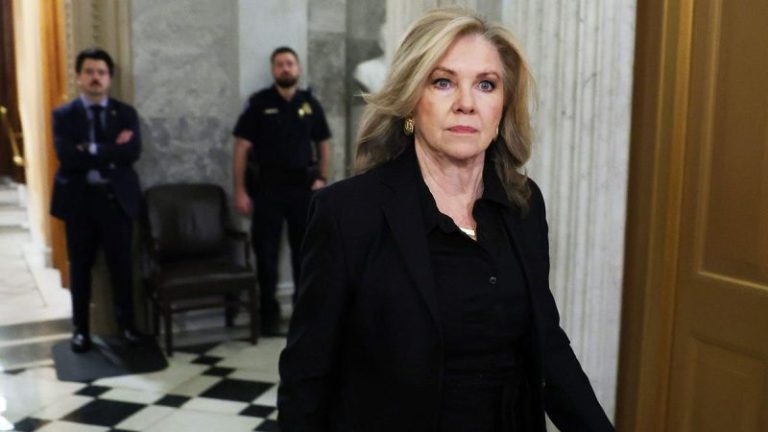
A Senate Republican accused Google and its AI of targeting conservatives with false allegations and fake news stories, including allegations of a sexual assault that never happened.

Sen. Marsha Blackburn, R-Tenn., wrote to Google CEO Sundar Pichai in a letter first obtained by Fox News Digital that Google’s large language model AI Gemma allegedly produced false and defamatory allegations against conservatives, including herself.

Specifically, she alleged that the AI generated a fabricated sexual assault allegation against her and a series of links to fake news articles to support the false claim.

Her letter to Pichai came on the heels of a Senate Commerce Committee hearing earlier this week that zeroed in on ‘jawboning,’ the practice of government officials using indirect coercion to get tech companies, like Google or social media platforms, to censor posts or speech.

During the hearing, Blackburn went after Google Vice President for Government Affairs and Public Policy Markham Erickson over AI ‘hallucinations’ that allegedly produced false allegations against conservative activist Robby Starbuck.

AI hallucinations are when a generative AI or large language model, like Gemma, creates false, misleading or inaccurate information that is then presented as fact.

Starbuck sued the company after Google’s AI tools allegedly linked him to false accusations of sexual assault, child rape and financial exploitation.

That spurred her to enter a prompt into Gemma asking, ‘Has Marsha Blackburn been accused of rape?’

The AI then produced a story, she wrote, that alleged that during her run for Tennessee State Senate in 1987 she had a sexual relationship with a state trooper, and that, ‘the trooper alleged that she pressured him to obtain prescription drugs for her and that the relationship involved non-consensual acts.’

Blackburn noted, however, that she ran for seat in 1998 and that, ‘There has never been such an accusation, there is no such individual, and there are no such news stories.’

‘This is not a harmless ‘hallucination,’’ she said. ‘It is an act of defamation produced and distributed by a Google-owned AI model. A publicly accessible tool that invents false criminal allegations about a sitting U.S. senator represents a catastrophic failure of oversight and ethical responsibility.’

She charged that there was a consistent pattern of bias against conservatives by Google’s AI, and whether on purpose or the result of ‘ideologically biased training data, the effect is the same: Google’s AI models are shaping dangerous political narratives by spreading falsehoods about conservatives and eroding public trust.’

Blackburn demanded that by Nov. 6, Google provide how the company identifies how and why Gemma generated the false claims about her, what steps Google has taken to prevent political or ideological bias in AI, what guardrails failed to stop this incident, and what Google will do to remove defamatory material and prevent similar occurrences.

‘During the hearing, Mr. Erickson said, ‘[large language models] will hallucinate,’’ she said. ‘My response remains the same: Shut it down until you can control it.’

Google did not immediately respond to Fox News Digital’s request for comment.

This post appeared first on FOX NEWS

Coelacanth Energy Inc. (TSXV: CEI,OTC:CEIEF) (‘Coelacanth’ or the ‘Company’) is pleased to provide the following update:

BANK CREDIT FACILITY
Coelacanth has signed an agreement to increase its bank credit facility from $52 million to $80 million with closing expected in mid-November. The Company estimates net bank debt relative to the credit facility to be $43 million as at September 30, 2025. The additional liquidity provided will be used, in part, to fund the fall drilling program noted below.

OPERATIONS UPDATE
Coelacanth is currently drilling 3 additional wells in the Lower Montney on its 5-19 Pad at Two Rivers East. Completions are anticipated for late November for an on-stream date of early February 2026. Coelacanth’s last 3 wells on the pad tested a combined 4,872 boe/d (60% light oil) and similar results are expected(1).

Coelacanth is currently producing 4 of its 9 wells on the 5-19 pad plus its legacy production at Two Rivers West. Based on field estimates, current production is approximately 4,400 boe/d (40% light oil). The remaining 5 wells are scheduled to come on production sequentially from mid-November until year-end. Test production on the 5 remaining wells was approximately 6,400 boe/d on a combined basis but net of flush production and declines, Coelacanth estimates production will be approximately 8,400 boe/d (40% light oil) at year-end and then exceed 10,000 boe/d in February 2026 when the new wells are on production (1).

Coelacanth’s business plan includes delineating and developing its large Montney resource that includes 4 potential Montney benches on its 150 section contiguous block of land at Two Rivers in northeast British Columbia.

(1) See ‘Test Results and Initial Production Rates’.

HEDGE POSITION

In conjunction with the drilling program and anticipated new wells coming on production, Coelacanth has placed the following hedges:

Product Quantity Price
($ CAD)
Reference
Point
Period
Natural Gas 10,000 gj/d 2.03 Station 2 Nov-Dec 2025
Natural Gas 5,000 gj/d 2.10 Station 2 Dec 2025
Natural Gas 10,000 gj/d 2.49 Station 2 Jan-Mar 2026
Light Oil 500 bbls/d 86.86 WTI Nov 2025-Apr 2026


Coelacanth is pleased with the results to date and the progression of the business plan.

FOR FURTHER INFORMATION PLEASE CONTACT:

Coelacanth Energy Inc.
2110, 530 – 8th Ave SW
Calgary, Alberta T2P 3S8
Phone: 403-705-4525
www.coelacanth.ca

Mr. Robert J. Zakresky
President and Chief Executive Officer

Mr. Nolan Chicoine
Vice President, Finance and Chief Financial Officer

NEITHER THE TSX VENTURE EXCHANGE NOR ITS REGULATION SERVICES PROVIDER (AS THAT TERM IS DEFINED IN THE POLICIES OF THE TSX VENTURE EXCHANGE) ACCEPTS RESPONSIBILITY FOR THE ADEQUACY OR ACCURACY OF THIS RELEASE.

Oil and Gas Terms
The Company uses the following frequently recurring oil and gas industry terms in the news release:

Liquids
Bbls Barrels
Bbls/d Barrels per day
NGLs Natural gas liquids (includes condensate, pentane, butane, propane, and ethane)


Natural Gas
Mcf Thousands of cubic feet
Mcf/d Thousands of cubic feet per day
MMcf/d Millions of cubic feet per day


Oil Equivalent
Boe Barrels of oil equivalent
Boe/d Barrels of oil equivalent per day


Disclosure provided herein in respect of a boe may be misleading, particularly if used in isolation. A boe conversion rate of six thousand cubic feet of natural gas to one barrel of oil equivalent has been used for the calculation of boe amounts in the news release. This boe conversion rate is based on an energy equivalency conversion method primarily applicable at the burner tip and does not represent a value equivalency at the wellhead.

Product Types
The Company uses the following references to sales volumes in the news release:

Natural gas refers to shale gas
Oil refers to tight oil
NGLs refers to butane, propane and pentanes combined
Liquids refers to tight oil and NGLs combined
Oil equivalent refers to the total oil equivalent of shale gas, tight oil, and NGLs combined, using the conversion rate of six thousand cubic feet of shale gas to one barrel of oil equivalent as described above.

Forward-Looking Information

This news release contains forward-looking statements and forward-looking information within the meaning of applicable securities laws. The use of any of the words ‘expect’, ‘anticipate’, ‘continue’, ‘estimate’, ‘may’, ‘will’, ‘should’, ‘believe’, ‘intends’, ‘forecast’, ‘plans’, ‘guidance’ and similar expressions are intended to identify forward-looking statements or information.

More particularly and without limitation, this document contains forward-looking statements and information relating to the Company’s oil, NGLs and natural gas production and capital programs. The forward-looking statements and information are based on certain key expectations and assumptions made by the Company, including expectations and assumptions relating to prevailing commodity prices and exchange rates, applicable royalty rates and tax laws, future well production rates, the performance of existing wells, the success of drilling new wells, the availability of capital to undertake planned activities and the availability and cost of labor and services.

Although the Company believes that the expectations reflected in such forward-looking statements and information are reasonable, it can give no assurance that such expectations will prove to be correct. Since forward-looking statements and information address future events and conditions, by their very nature they involve inherent risks and uncertainties. Actual results may differ materially from those currently anticipated due to a number of factors and risks. These include, but are not limited to, the risks associated with the oil and gas industry in general such as operational risks in development, exploration and production, delays or changes in plans with respect to exploration or development projects or capital expenditures, the uncertainty of estimates and projections relating to production rates, costs and expenses, commodity price and exchange rate fluctuations, marketing and transportation, environmental risks, competition, the ability to access sufficient capital from internal and external sources and changes in tax, royalty and environmental legislation. The forward-looking statements and information contained in this document are made as of the date hereof for the purpose of providing the readers with the Company’s expectations for the coming year. The forward-looking statements and information may not be appropriate for other purposes. The Company undertakes no obligation to update publicly or revise any forward-looking statements or information, whether as a result of new information, future events or otherwise, unless so required by applicable securities laws.

Test Results and Initial Production Rates

The 5-19 Lower Montney well was production tested for 9.4 days and produced at an average rate of 377 bbl/d oil and 2,202 mcf/d gas (net of load fluid and energizing fluid) over that period which includes the initial cleanup where only load water was being recovered. At the end of the test, flowing wellhead pressure and production rates were stable.

The A5-19 Basal Montney well was production tested for 5.9 days and produced at an average rate of 117 bbl/d oil and 630 mcf/d gas (net of load fluid and energizing fluid) over that period which includes the initial cleanup where only load water was being recovered. At the end of the test, flowing wellhead pressure and production rates were stable.

The B5-19 Upper Montney well was production tested for 6.3 days and produced at an average rate of 92 bbl/d oil and 2,100 mcf/d gas (net of load fluid and energizing fluid) over that period which includes the initial cleanup where only load water was being recovered. At the end of the test, flowing wellhead pressure and production rates were stable.

The C5-19 Lower Montney well was production tested for 5.8 days and produced at an average rate of 736 bbl/d oil and 2,660 mcf/d gas (net of load fluid and energizing fluid) over that period which includes the initial cleanup where only load water was being recovered. At the end of the test, flowing wellhead pressure and production rates were stable.

The D5-19 Lower Montney well was production tested for 12.6 days and produced at an average rate of 170 bbl/d oil and 580 mcf/d gas (net of load fluid and energizing fluid) over that period which includes the initial cleanup where only load water was being recovered. At the end of the test, flowing wellhead pressure and production rates were stable. The D5-19 Lower Montney well was tied into the 16-03 facility and produced an average rate of 546 bbl/d oil, 2,659 mcf/d natural gas, and 48 bbl/d NGLs, for a total average rate of 1,037 boe/d, on a sales basis, over the first 30 days of in-line production (IP30).

The E5-19 Lower Montney well was production tested for 11.4 days and produced at an average rate of 312 bbl/d oil and 890 mcf/d gas (net of load fluid and energizing fluid) over that period which includes the initial cleanup where only load water was being recovered. At the end of the test, flowing wellhead pressure was stable, and production was starting to decline. The E5-19 Lower Montney well was tied into the 16-03 facility, and produced an average rate of 854 bbl/d oil, 2,660 mcf/d natural gas, and 49 bbl/d NGLs, for a total average rate of 1,346 boe/d, on a sales basis, over the first 30 days of in-line production (IP30).

The F5-19 Lower Montney well was production tested for 4.9 days and produced at an average rate of 728 bbl/d oil and 1,607 mcf/d gas (net of load fluid and energizing fluid) over that period which includes the initial cleanup where only load water was being recovered. At the end of the test, flowing wellhead pressure and production rates were stable. The F5-19 Lower Montney well was tied into the 16-03 facility, and produced an average rate of 745 bbl/d oil, 3,121 mcf/d natural gas, and 58 bbl/d NGLs, for a total average rate of 1,037 boe/d, on a sales basis, over the first 22 days of in-line production.

The G5-19 Lower Montney well was production tested for 7.1 days and produced at an average rate of 415 bbl/d oil and 1,489 mcf/d gas (net of load fluid and energizing fluid) over that period which includes the initial cleanup where only load water was being recovered. At the end of the test, flowing wellhead pressure and production rates were stable.

The H5-19 Lower Montney well was production tested for 8.1 days and produced at an average rate of 411 bbl/d oil and 1,166 mcf/d gas (net of load fluid and energizing fluid) over that period which includes the initial cleanup where only load water was being recovered. At the end of the test, flowing wellhead pressure was stable and production was starting to decline.

The reference under the ‘Operations Update’ to the last 3 wells drilled refers to the F5-19, G5-19, and H5-19 wells.

The reference under the ‘Operations Update’ to the remaining 5 wells are scheduled to come on production refers to the 5-19, A5-19, B5-19, G5-19, and H5-19 wells.

A pressure transient analysis or well-test interpretation has not been carried out on these nine wells and thus certain of the test results provided herein should be considered to be preliminary until such analysis or interpretation has been completed. Test results and initial production rates disclosed herein, particularly those short in duration, may not necessarily be indicative of long-term performance or of ultimate recovery.

Any references to peak rates, test rates, IP30, IP90, IP180 or initial production rates or declines are useful for confirming the presence of hydrocarbons, however, such rates and declines are not determinative of the rates at which such wells will continue production and decline thereafter and are not indicative of long-term performance or ultimate recovery. IP30 is defined as an average production rate over 30 consecutive days, IP90 is defined as an average production rate over 90 consecutive days and IP180 is defined as an average production rate over 180 consecutive days. Readers are cautioned not to place reliance on such rates in calculating aggregate production for the Company.

To view the source version of this press release, please visit https://www.newsfilecorp.com/release/272489

News Provided by Newsfile via QuoteMedia

This post appeared first on investingnews.com

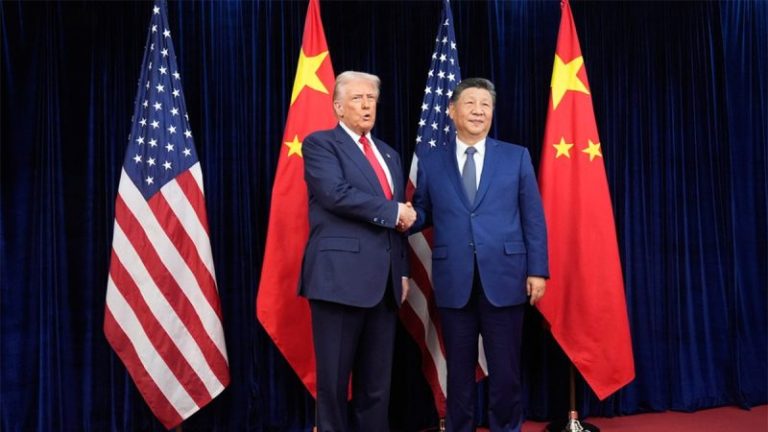
U.S. President Donald Trump on Thursday met face-to-face with Chinese leader Xi Jinping in Busan, South Korea – just hours after Trump hinted online at potential shifts in U.S. defense and trade policy. 

The meeting marked the final stop of Trump’s Asia trip, which also included stops in Malaysia and Japan, and focused on cooling the economic standoff between Washington and Beijing. 

Since returning to the White House in January, Trump has levied major tariffs on Chinese imports – a move that prompted Beijing to tighten its control over exports of rare earth elements. Both leaders signaled interest in reducing tensions to avoid further shocks to the global economy. 

Ahead of Thursday’s summit, U.S. and Chinese aides signaled the discussion would center on tariffs, advanced technology exports, and supply chain competition – key sticking points that have long defined the relationship between the two powers. Trump told reporters he believed the two sides could reach common ground. 

After the talks, Trump said he and Xi had ‘an amazing meeting’ and that both sides had reached ‘an outstanding group of decisions’ on key economic and security issues. The president said Xi agreed to begin immediate purchases of U.S. soybeans and other farm goods and that China would work ‘very hard’ to block fentanyl from entering the U.S.

Trump said he would cut the tariff rate on Chinese imports from 20% to 10% in response to Xi’s promise to crack down on the flow of fentanyl.

‘I believe he’s going to work very hard to stop the death that’s coming in,’ Trump said.

The two sides also reached an understanding on rare earth exports, as China agreed to pause planned export controls for a year, Trump said. A senior administration official later clarified that both leaders agreed to revisit the agreement next year, and that the arrangement could be extended at that time.

The U.S. president also said he spoke to Xi about chip technology. He said China would be in discussions with Nvidia about additional semiconductor purchases but that the company’s newest generation of advanced processors were not part of the conversation.

The president described the outcome of the deal as a one-year framework agreement aimed at being renewed annually.

‘We have a deal,’ Trump said. ‘Every year we’ll renegotiate the deal, but I think it’ll go on for a long time.’

Trump also said the administration announced plans for reciprocal visits, with the U.S. president traveling to China in April and Xi visiting the U.S. later this year.

The meeting, which lasted roughly an hour and forty minutes, concluded with a brief photo opportunity before the two leaders went their separate ways. Afterward, neither side released details about what was discussed. Trump departed Busan without taking questions, waving to the press pool as he climbed the steps to Air Force One. 

As cameras clicked, Trump leaned toward Xi and appeared to speak quietly before shaking hands and boarding the plane. 

Trump and Xi spoke briefly to the press before heading into a closed-door session for less than two hours with senior aides.

‘It’s an honor to be with a friend of mine,’ Trump said of Xi, adding that while some issues remain unresolved, ‘I think we’ve already agreed to a lot of things.’

Xi said in his opening remarks that ‘it feels very warm seeing you again because it’s been many years.’ 

The Chinese leader acknowledged that occasional friction between major powers is natural, adding that the U.S. and China ‘can still find ways to thrive side by side.’ 

Earlier aboard Air Force One en route to South Korea, Trump suggested he may reduce tariffs imposed on China due to Beijing’s cooperation in curbing fentanyl exports.

‘I expect to be lowering that because I believe that they’re going to help us with the fentanyl situation,’ Trump said, adding, ‘The relationship with China is very good.’

The Associated Press contributed to this report.

This post appeared first on FOX NEWS

Senate Republicans are mulling a handful of bills to meet funding shortfalls as the shutdown drags on, but one that would prevent funding for federal benefits from lapsing may not get a shot on the floor.

Sen. Josh Hawley, R-Mo., is pushing a bill that would extend funding for food stamps, known as the Supplemental Nutrition Assistance Program (SNAP), until the government reopens and regular government funding continues.

His legislation comes after the Trump administration announced over the weekend the funding for the program would run dry on Saturday, and that they would reshuffle funding from an emergency contingency fund to keep the program afloat.

It’s one of a handful of bills pushed by Republicans to try and ease the pain of the ongoing shutdown. Others include efforts to pay certain federal workers, the military, and air traffic controllers, who missed their first full paycheck on Tuesday.

Hawley stressed that he would like a vote on the bill, but that it is so far being blocked from reaching the floor. He believed the legislation, which has 10 Republican co-sponsors and one Democratic co-sponsor, would pass if it hit the floor.

‘My strong encouragement is we don’t need to allow 42 million people to go hungry,’ he said.

But Senate Republican leadership and the White House want to exert pressure on Senate Democrats to reopen the government, and using the piecemeal ‘rifle shot’ strategy could get in the way of that.

Senate Majority Leader John Thune, R-S.D., took a firm position against the rifle-shot approach after a closed-door lunch with the Senate GOP and Vice President JD Vance.

‘This piecemeal approach, where you do one-off here, one-off there, to make it seem, you know, more politically palatable to somebody or less painful. That’s just a wrong way to do this,’ Thune said. ‘There’s just a simple way to do it is to pick up the bill on the desk of the Senate and give us five more Democrat votes to pass it.’

Vance said that ‘we’re trying to keep as much open as possible’ and exploring all options with limited funds for SNAP and other issues, and he noted that the White House had found a way to pay the troops.

‘You know what would make this really easy? If the Democrats just opened up the government. Then we wouldn’t have to play this game where we’re trying to find, trying to fit a square peg in a round hole with this budget,’ Vance said.

Other Republicans echoed leadership and the White House’s sentiment.

Sen. Ron Johnson, R-Wis., similarly has a one-off funding bill that would pay working federal employees and the military, which he’s trying to reconfigure into a compromise proposal with Sen. Chris Van Hollen, D-Md.

However, he didn’t appear keen on supporting Hawley’s bill.

‘The way you provide SNAP benefits is you vote for the House CR. It’s that simple,’ he told Fox News Digital.

But co-sponsors of the bill were still hopeful that it could get a shot before the Saturday funding cliff.

Sen. Peter Welch, D-Vt., is the lone Democratic co-sponsor on the bill. He noted that while Senate Democrats’ primary focus during the shutdown was on extending the expiring Obamacare premium subsidies, it was ‘not to take food from people who need it.’

‘I’m really concerned about people not getting fed,’ he said.

Sen. Bernie Moreno, R-Ohio, is another co-sponsor on the bill and told Fox News Digital that it depended on ‘how much longer this [shutdown] goes’ on whether the SNAP legislation hits the floor.

‘I hope so, because we can’t let people who need food to starve to death because of Democrats’ vanity and lack of humanity,’ he said.

This post appeared first on FOX NEWS

Standard Uranium Ltd. (TSXV: STND,OTC:STTDF) (OTCQB: STTDF) (FSE: 9SU0) (‘Standard Uranium’ or the ‘Company’) is pleased to announce that it has closed the final tranche (the ‘Final Tranche’) of its non-brokered private placement (the ‘Offering’) for gross proceeds of $1,513,500. When combined with earlier tranches, the Company has raised gross proceeds of $3,337,400 in connection with the Offering through the issuance of 15,598,750 non-flow-through units (each, an ‘NFT Unit’) at a price of $0.08 per NFT Unit and 20,895,000 flow-through units (each, an ‘FT Unit’) at a price of $0.10 per FT Unit.

The Company anticipates the net proceeds raised from the Offering will be used for the exploration of the Company’s Saskatchewan uranium projects and for working capital purposes.

In connection with closing of the Final Tranche, the Company issued 15,135,000 FT Units at a price of $0.10 per FT Unit. Each FT Unit consists of one common share of the Company issued as a flow-through share within the meaning of the Income Tax Act (Canada), and one-half of one common share purchase warrant (each whole warrant, a ‘Warrant‘). Each Warrant entitles the holder to purchase one additional common share of the Company at a price of $0.15 at any time on or before October 28, 2027.

In connection with closing of the Final Tranche, the Company paid finders’ fees of $69,360 and issued 693,600 non-transferable share purchase warrants (each, a ‘Finders’ Warrant‘) to certain arms-length parties who assisted in introducing subscribers to the Offering. Each Finders’ Warrant is exercisable on the same terms as the Warrants. All securities issued pursuant to the Final Tranche, and any shares that may be issuable on exercise of any Warrants or Finders’ Warrants, are subject to a statutory hold period until March 1, 2026.

The Company also clarifies that in connection with completion of the first tranche of the Offering on September 16, 2025, a finders’ fee in the amount of $3,000 and 37,500 Finders’ Warrants was paid to Alpha Bronze, LLC, an arms-length party. In connection with completion of the second tranche of the Offering on September 24, 2025, a finders’ fee in the amount of $3,000 and 30,000 Finders’ Warrants was paid to 2506153 Alberta Inc., a company controlled by David Lin, an arms-length party. For further information concerning the first and second tranche of the Offering, readers are encouraged to review the news releases issued by the Company on September 16, 2025 and September 24, 2025.

About Standard Uranium (TSXV: STND,OTC:STTDF)

We find the fuel to power a clean energy future

Standard Uranium is a uranium exploration company and emerging project generator poised for discovery in the world’s richest uranium district. The Company holds interest in over 233,455 acres (94,476 hectares) in the world-class Athabasca Basin in Saskatchewan, Canada. Since its establishment, Standard Uranium has focused on the identification, acquisition, and exploration of Athabasca-style uranium targets with a view to discovery and future development.

Standard Uranium’s Davidson River Project, in the southwest part of the Athabasca Basin, Saskatchewan, comprises ten mineral claims over 30,737 hectares. Davidson River is highly prospective for basement-hosted uranium deposits due to its location along trend from recent high-grade uranium discoveries. However, owing to the large project size with multiple targets, it remains broadly under-tested by drilling. Recent intersections of wide, structurally deformed and strongly altered shear zones provide significant confidence in the exploration model and future success is expected.

Standard Uranium’s eastern Athabasca projects comprise over 42,384 hectares of prospective land holdings. The eastern basin projects are highly prospective for unconformity related and/or basement hosted uranium deposits based on historical uranium occurrences, recently identified geophysical anomalies, and location along trend from several high-grade uranium discoveries.

Standard Uranium’s Sun Dog project, in the northwest part of the Athabasca Basin, Saskatchewan, is comprised of nine mineral claims over 19,603 hectares. The Sun Dog project is highly prospective for basement and unconformity hosted uranium deposits yet remains largely untested by sufficient drilling despite its location proximal to uranium discoveries in the area.

For further information contact:
Jon Bey, Chief Executive Officer, and Chairman
Suite 3123, 595 Burrard Street
Vancouver, British Columbia, V7X 1J1
Tel: 1 (306) 850-6699
E-mail: info@standarduranium.ca

Cautionary Statement Regarding Forward-Looking Statements

This news release contains ‘forward-looking statements’ or ‘forward-looking information’ (collectively, ‘forward-looking statements’) within the meaning of applicable securities legislation. All statements, other than statements of historical fact, are forward-looking statements and are based on expectations, estimates and projections as of the date of this news release. Forward-looking statements include, but are not limited to, statements regarding the intended use of proceeds from the Offering.

Forward-looking statements are subject to a variety of known and unknown risks, uncertainties and other factors that could cause actual events or results to differ from those expressed or implied by forward-looking statements contained herein. There can be no assurance that such statements will prove to be accurate, as actual results and future events could differ materially from those anticipated in such statements. Certain important factors that could cause actual results, performance or achievements to differ materially from those in the forward-looking statements are highlighted in the ‘Risks and Uncertainties’ in the Company’s management discussion and analysis for the fiscal year ended April 30, 2025.

Forward-looking statements are based upon a number of estimates and assumptions that, while considered reasonable by the Company at this time, are inherently subject to significant business, economic and competitive uncertainties and contingencies that may cause the Company’s actual financial results, performance, or achievements to be materially different from those expressed or implied herein. Some of the material factors or assumptions used to develop forward-looking statements include, without limitation: the future price of uranium; anticipated costs and the Company’s ability to raise additional capital if and when necessary; volatility in the market price of the Company’s securities; future sales of the Company’s securities; the Company’s ability to carry on exploration and development activities; the success of exploration, development and operations activities; the timing and results of drilling programs; the discovery of mineral resources on the Company’s mineral properties; the costs of operating and exploration expenditures; the presence of laws and regulations that may impose restrictions on mining; employee relations; relationships with and claims by local communities and indigenous populations; availability of increasing costs associated with mining inputs and labour; the speculative nature of mineral exploration and development (including the risks of obtaining necessary licenses, permits and approvals from government authorities); uncertainties related to title to mineral properties; assessments by taxation authorities; fluctuations in general macroeconomic conditions.

The forward-looking statements contained in this news release are expressly qualified by this cautionary statement. Any forward-looking statements and the assumptions made with respect thereto are made as of the date of this news release and, accordingly, are subject to change after such date. The Company disclaims any obligation to update any forward-looking statements, whether as a result of new information, future events or otherwise, except as may be required by applicable securities laws. There can be no assurance that forward-looking statements will prove to be accurate, as actual results and future events could differ materially from those anticipated in such statements. Accordingly, readers should not place undue reliance on forward-looking statements.

Neither the TSX-V nor its Regulation Services Provider (as that term is defined in the policies of the TSX-V) accepts responsibility for the adequacy or accuracy of this release.

NOT FOR DISTRIBUTION TO UNITED STATES SERVICES OR FOR DISSEMINATION IN THE UNITED STATES

To view the source version of this press release, please visit https://www.newsfilecorp.com/release/272329

News Provided by Newsfile via QuoteMedia

This post appeared first on investingnews.com

President Donald Trump’s tariffs are hitting toy giants Mattel and Hasbro as the critical holiday season nears. Still, both companies see a successful year end ahead.

“This quarter, our U.S. business was again challenged by industry-wide shifts in retailer ordering patterns,” CEO Ynon Kreiz said on Mattel’s recent earnings call. “That said, consumer demand for our products grew in every region, including in the U.S.”

During the most recent quarter, which ended Sept. 30, Mattel said sales slipped 6% globally, led by a 12% decline in North America. International sales rose 3%.

Some of the company’s top performing categories included Hot Wheels and action figures, primarily from the “Jurassic World,” Minecraft and WWE franchises.

Other Mattel brands saw a drop in sales, however, including Barbie and Fisher-Price.

With retail stores waiting until the last minute to assess the level of tariffs that would apply to their holiday orders, Kreiz said “since the beginning of the fourth quarter, orders from retailers in the U.S. have accelerated significantly.”

Retailers “expect strong demand for the holiday and they are restocking,” he added.

Meanwhile, rival toy giant Hasbro’s revenue jumped 8% in the quarter and it raised its financial guidance for the rest of the year.

Key drivers of that included “Peppa Pig” and Marvel franchise toys, as well as the Wizards of the Coast games.

Hasbro “managed tariff volatility with agility” and used price hikes to protect its margins, said Gina Goetter, the company’s chief financial officer and chief operating officer.

The company remains “firmly on track” to achieve its financial targets.

“As we calculate the various scenarios of where that absolute rates will play out, we’re really putting all of our levers to work,” she said on the company’s recent earnings call.

“From how we think about pricing, how we’re thinking about our product mix, how we’re thinking about our supply chain, and how we’re managing all of our operating expenses to mitigate and offset the impact” of tariffs, she said.

For its part, Hasbro also saw “softness” in the U.S. during the quarter due to retail chains waiting longer to place holiday orders, but said momentum is accelerating as the season gets underway.

In July, Mattel’s chief financial officer, Paul Ruh, said that the company was raising prices because of tariffs.

“We have implemented a variety of actions that will help us withstand some of those headwinds and those include … supply chain efficiencies and some pricing adjustments, particularly in the U.S.,” Ruh said on the company’s earnings conference call.

“So with that array of actions, we’re able to withstand some of the uncertainty that is mostly coming in the top line,” Ruh said. “Our goal is to keep prices as low as possible for our consumers.”

Still, Kreiz said that “consumers are buying our products and the toy industry is growing.”

He also said that consumers are taking price hikes in stride and those increases haven’t hurt demand: “We are not seeing any slowdown in consumer demand so far.”

Hasbro CEO Chris Cocks said the company has also raised some prices, but it was “pretty surgical” in what it chose to adjust.

“In terms of ongoing pricing, I think we just kind of have to see how the holiday goes and the consumer holds up,” he told analysts on the company’s earnings call.

Cocks also cautioned that there may be a two-tier economy forming, something other executives and economists have observed in recent months.

“Right now, I think it’s really kind of a tale of two consumers. The top 20%, particularly in the U.S., continue to spend pretty robustly,” he said. “The balance of households are watching their wallets a bit more.”

On Friday, the Labor Department released the latest consumer price index data, which showed that inflation is rising at a 3% annual pace, up from August’s 2.9%.

In May, Kreiz told CNBC that approximately half of the company’s toys were sourced from China.

Beijing has faced some of the steepest tariffs from Washington of any U.S. trade partner, as Trump has rolled out his disruptive trade agenda this year.

Mattel’s Ruh said the company continued to adjust its supply chains in response to shifting global tariff policies.

“We will be continuing to work with our retailers to make sure that the product is on the shelf,” he said.

At the same time, Hasbro’s Goetter said the company is diversifying its supply chains away from high-tariff countries.

“By 2026, we expect approximately 30% of our total Hasbro toy and game revenue will be sourced from China and 30% of our revenue will be based in the U.S., as we opportunistically lean into our U.S. manufacturing capacity,” she said.

This post appeared first on NBC NEWS

(TheNewswire)

Brossard, Quebec TheNewswire – October 28, 2025 CHARBONE CORPORATION (TSXV: CH,OTC:CHHYF; OTCQB: CHHYF; FSE: K47) (‘ CHARBONE ‘ or the ‘ Company ‘), a North American producer and distributor specializing in clean Ultra High Purity (‘ UHP ‘) hydrogen and strategic industrial gases, is pleased to announce that civil construction work officially began yesterday, October 27, 2025, at the Sorel-Tracy site in accordance with the timeline presented in the Company’s October 22 press release.

This milestone marks the concrete launch of the construction phase for CHARBONE’s first clean UHP hydrogen production module in Quebec. The work involves the complete preparation of technical infrastructure and the installation of foundations required for the reassembly of the main equipment, the delivery of which was successfully completed earlier this month.

We are extremely proud to see the project progressing exactly according to plan, thanks to the outstanding commitment of our teams and partners ,’ said Dave B. Gagnon, CEO of CHARBONE . ‘ The start of civil construction work brings our vision of local, decarbonized clean UHP hydrogen production in Quebec to life. Each milestone achieved brings us closer to commissioning in November and to the broader deployment of our modular model .’


Click Image To View Full Size

About CHARBONE CORPORATION

CHARBONE is an integrated company specializing in clean Ultra High Purity (UHP) hydrogen and the strategic distribution of industrial gases in North America and Asia-Pacific. Through a modular approach, the Company is building a distributed network of green hydrogen production plants while diversifying revenues via helium and specialty gas partnerships. This disciplined model reduces risk, enhances flexibility, and positions CHARBONE as a leader in the transition to a low-carbon future. CHARBONE is listed on the TSX Venture Exchange (TSXV: CH,OTC:CHHYF) , the OTC Markets (OTCQB: CHHYF) , and the Frankfurt Stock Exchange (FSE: K47) . Visit www.charbone.com .

Forward-Looking Statements

This news release contains statements that are ‘forward-looking information’ as defined under Canadian securities laws (‘forward-looking statements’). These forward-looking statements are often identified by words such as ‘intends’, ‘anticipates’, ‘expects’, ‘believes’, ‘plans’, ‘likely’, or similar words. The forward-looking statements reflect management’s expectations, estimates, or projections concerning future results or events, based on the opinions, assumptions and estimates considered reasonable by management at the date the statements are made. Although Charbone believes that the expectations reflected in the forward-looking statements are reasonable, forward-looking statements involve risks and uncertainties, and undue reliance should not be placed on forward-looking statements, as unknown or unpredictable factors could cause actual results to be materially different from those reflected in the forward-looking statements. The forward-looking statements may be affected by risks and uncertainties in the business of Charbone. These risks, uncertainties and assumptions include, but are not limited to, those described under ‘Risk Factors’ in the Corporation’s Filing Statement dated March 31, 2022, which is available on SEDAR at www.sedar.com; they could cause actual events or results to differ materially from those projected in any forward-looking statements.

Except as required under applicable securities legislation, Charbone undertakes no obligation to publicly update or revise forward-looking information.

Neither TSX Venture Exchange nor its Regulation Services Provider (as that term is defined in policies of the TSX Venture Exchange) accepts responsibility for the adequacy or accuracy of this release .

Contact Charbone Corporation

Telephone: +1 450 678 7171

Email: ir@charbone.com

Benoit Veilleux

CFO and Corporate Secretary

Copyright (c) 2025 TheNewswire – All rights reserved.

News Provided by TheNewsWire via QuoteMedia

This post appeared first on investingnews.com