Author

admin

Browsing

Gold Price Surge Hits $3,385 Amid Trade Tensions

The gold price surge continued on April 21, 2025, as gold hit a record high of $3,385 per ounce. This milestone came amid a weakening U.S. dollar and renewed global trade tensions. Investors are increasingly turning to gold as a safe-haven asset, signaling market uncertainty and shifting investment strategies.

Gold Price Increase Driven by Dollar Weakness

The U.S. dollar index fell sharply, hitting its lowest level since January 2024. A weaker dollar typically boosts gold prices, as it makes the metal more attractive to international buyers. This contributed significantly to the ongoing gold price surge seen in recent weeks.

In addition, economic data indicating slower growth in key global markets has prompted investors to reduce their exposure to riskier assets. Gold’s long-standing reputation as a hedge against economic uncertainty has once again proven true.

Trade Tensions Fuel Demand for Safe-Haven Assets

Ongoing trade friction between major economies—particularly the U.S. and China—has triggered market anxiety. Announcements related to new tariffs and supply chain risks are further motivating the shift from equities to gold. This environment is ideal for a gold price surge to gain momentum.

Analysts Predict Continued Gold Price Growth

Market analysts suggest that the upward trend is far from over. If inflation persists and interest rates remain steady or fall, the gold price could climb even higher. Some predict that the next psychological barrier of $3,500 per ounce may soon be tested.

As the global economic landscape continues to evolve, gold is expected to remain a central pillar in investor portfolios. Whether as a hedge against inflation or a response to geopolitical unrest, the gold price surge is being closely monitored by financial experts.

Source: Yahoo Finance

Related: Market Insights | Commodity News

The post Gold Price Surge Hits $3,385 Amid Trade Tensions appeared first on FinanceBrokerage.

Here’s a quick recap of the crypto landscape for Monday (September 15) as of 9:00 a.m. UTC.

Get the latest insights on Bitcoin, Ethereum and altcoins, along with a round-up of key cryptocurrency market news.

Bitcoin and Ethereum price update

Bitcoin (BTC) was priced at US$114,794, a 1.2 percent decrease in 24 hours. Its highest valuation of the day was US$116,689, and its lowest was US$114,793.

Bitcoin price performance, September 15, 2025.

Chart via TradingView

Bitcoin topped US$116,000, fueled largely by rising expectations that the US Federal Reserve will cut interest rates. At the same time, investors grew cautious — declines in broader crypto indexes and weaker macroeconomic data (including sticky inflation) dampened momentum.

Ether (ETH) was priced at US$4,534.80, a decrease of 2.8 percent over the past 24 hours. Its highest valuation on Monday was US$4,668.60, and its lowest was US$4,510.01.

Altcoin price update

  • Solana (SOL) was priced at US$236.23, a decrease of 4.6 percent over the last 24 hours. Its highest valuation on Monday was US$248.19, and its lowest level was US$232.71.
  • XRP was trading for US$2.99, down by 3.3 percent in the past 24 hours. Its highest valuation of the day was US$3.06, and its lowest valuation was US$2.96.
  • SUI (Sui) was valued at US$3.53, down by 6.6 percent in the past 24 hours and its lowest price point of the day so far. Its highest price was US$3.78.
  • Cardano (ADA) was priced at US$0.8623, down by 5.8 percent over 24 hours. Its highest valuation on Monday was US$0.9161, and its lowest was US$0.8567.

Today’s crypto news to know

Bitcoin ETF inflows fuel bets on a Q4 rally

Spot Bitcoin exchange-traded funds in the US have seen a staggering US$2.3 billion in inflows over the past week, a sign that institutional demand is surging just ahead of a critical Federal Reserve decision.

Traders widely expect the Fed to cut rates on September 17, a move that could boost risk assets across the board.

Analysts say Bitcoin, which has slipped nearly 8 percent since peaking at US$124,128 in August, may be poised for another leg higher if liquidity conditions ease.

“We’re only halfway through what could be a very powerful Q4 rally,” said Sean Dawson, head of research at Derive, who projects prices could reach US$140,000 by year-end.

Options data shows heavy positioning at US$140,000 to US$200,000 December calls, with some putting cycle tops as high as US$250,000 if flows persist.

France threatens to block EU crypto license “passporting”

France’s financial regulator is raising the stakes in Europe’s battle over crypto oversight, warning it could block firms licensed in other EU countries from operating domestically.

According to a Reuters exclusive, the Autorité des Marchés Financiers (AMF) says some companies are “shopping around” for jurisdictions with looser standards under the bloc’s new MiCA framework, then using those approvals to “passport” their services across the EU.

Alongside Italy and Austria, France is pressing for the European Securities and Markets Authority (ESMA) to take charge of supervising major crypto players.

AMF chief Marie-Anne Barbat-Layani described the potential rejection of EU licences as an “atomic weapon” that Paris could wield if it sees regulatory gaps.

Analysts are concerned that fragmented national approaches could undermine investor protection and financial stability.

Notably, exchanges like Coinbase and Gemini have already secured MiCA licences in Luxembourg and Malta, raising questions about uneven enforcement across the bloc.

Ethereum Foundation pivots to privacy-first roadmap

The Ethereum Foundation has unveiled a new initiative to make privacy a default feature across the blockchain’s ecosystem.

Rebranding its Privacy & Scaling Explorations team as the “Privacy Stewards of Ethereum,” the foundation laid out plans for private transfers, confidential DeFi, and protected governance mechanisms within the next six months.

“Our vision is to make privacy on Ethereum the norm rather than the exception,” the group said in a statement, arguing that users and institutions would otherwise drift to centralized alternatives.

The roadmap also extends beyond transactions, with proposals to embed privacy in wallets, identity tools, and data portability.

Co-founder Vitalik Buterin has long championed stronger safeguards. His recent comments about risks from AI-driven data leakage have reinforced the urgency of integrating privacy at the protocol level.

Securities Disclosure: I, Giann Liguid, hold no direct investment interest in any company mentioned in this article.

Securities Disclosure: I, Meagen Seatter, hold no direct investment interest in any company mentioned in this article.

This post appeared first on investingnews.com

David Ellison continues to put his stamp on Paramount after its acquisition by Skydance.

The CEO and chairman told employees Thursday that they will be expected to work in the office five days a week starting Jan. 5, 2026, according to a memo obtained by CNBC. Employees who do not wish to make the transition can seek a buyout starting Thursday and until Sept. 15.

“To achieve what we’ve set out to do — and to truly unlock Paramount’s full potential — we must make meaningful changes that position us for long-term success,” Ellison wrote to staffers. “These changes are about building a stronger, more connected, and agile organization that can deliver on our goals and compete at the highest level. We have a lot to accomplish and we’re moving fast. We need to all be rowing in the same direction. And especially when you’re dealing with a creative business like ours, that begins with being together in person.”

The move could help Paramount thin the herd ahead of looming staffing cuts.

Variety reported last month that the company is expected to lay off between 2,000 and 3,000 employees as part of its postmerger cost-cutting measures. These cuts are slated for early November, Variety reported.

Paramount is looking to take $2 billion in costs out of the conglomerate amid advertising losses and industrywide struggles with traditional cable networks.

Phase one of Ellison’s back-to-work plan will see employees in Los Angeles and New York returning to a full five-day workweek in the new year.

Phase two will focus on offices outside LA and New York, including international locations. A similar buyout program will be offered in 2026 for those who operate in these locations.

“We recognize this represents a significant change for many, and we’re committed to supporting you throughout this transition,” Ellison wrote. “We will work closely with managers to ensure you have the time and flexibility to make the necessary adjustments.”

This post appeared first on NBC NEWS

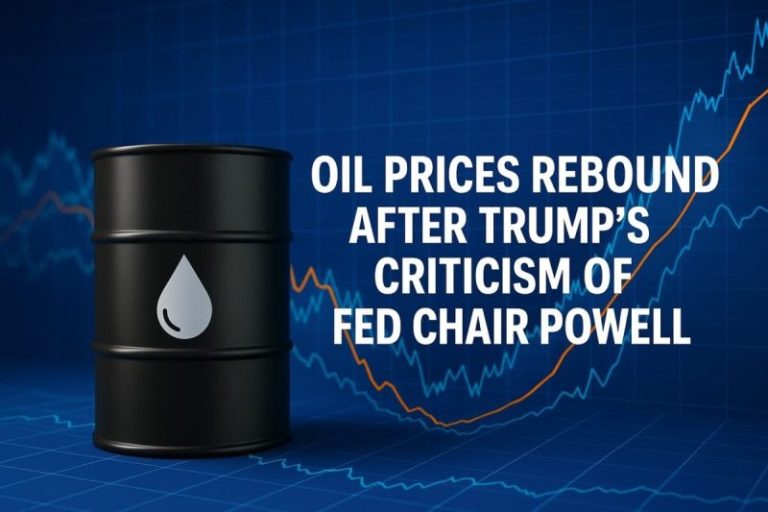
Oil Prices Rebound After Trump’s Criticism of Fed Chair Powell

On April 22, 2025, oil prices rebound experienced a modest rebound following a significant drop the previous day. The initial decline was triggered by President Donald Trump’s renewed criticism of Federal Reserve Chair Jerome Powell, which unsettled financial markets and raised concerns about the central bank’s independence.

Market Reaction to Political Commentary

President Trump’s comments on Monday intensified investor fears regarding the Federal Reserve’s autonomy in setting monetary policy. The criticism led to a broad sell-off in equities and commodities, with oil prices bearing the brunt of the market’s anxiety.

Short-Covering Leads to Price Recovery

Despite the initial plunge, oil prices rebound edged higher on Tuesday as investors engaged in short-covering. Brent crude futures rose 0.5% to $66.62 per barrel, while West Texas Intermediate (WTI) crude for May delivery increased by 1% to $63.73 per barrel. The more actively traded WTI June contract also gained 0.7% to $62.84 per barrel.

Ongoing Economic Concerns

Market participants remain cautious amid ongoing fears of a potential recession linked to U.S. tariff policies and concerns over Federal Reserve independence. These factors have increased worries about the U.S. economy and crude demand. Additionally, progress in U.S.-Iran nuclear deal talks has eased supply concerns, potentially impacting oil prices further.

As the situation evolves, investors will closely monitor geopolitical developments and central bank communications to assess the potential long-term impacts on the energy markets.

Source: BloomBurg

The post Oil Prices Rebound After Trump’s Criticism of Powell appeared first on FinanceBrokerage.

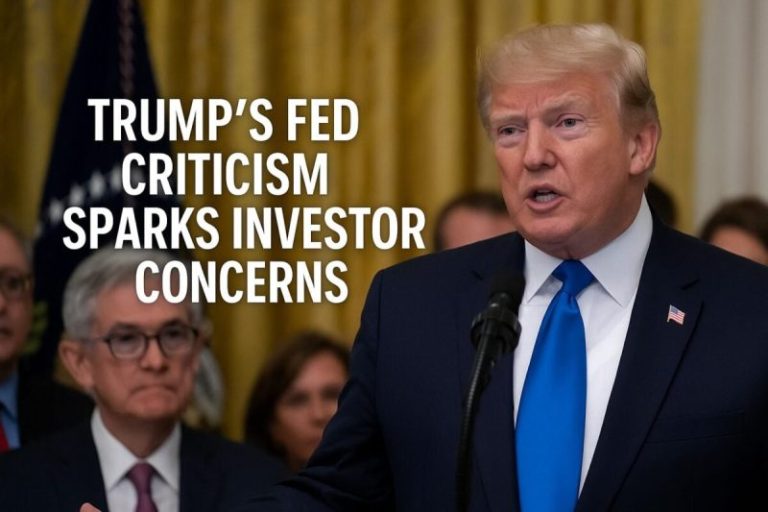
Trump’s Fed Criticism Sparks Investor Concerns

The recent spotlight on Trump’s Fed Criticism has sparked unease among investors and financial analysts alike. President Donald Trump’s repeated public attacks on Federal Reserve Chair Jerome Powell have amplified concerns over the central bank’s independence. As a result, markets have reacted with volatility, and investor sentiment has taken a noticeable hit.

Market Reactions to Political Pressure

Wall Street’s response to Trump’s Fed Criticism was swift. Major stock indices, including the S&P 500 and Nasdaq, posted losses amid uncertainty over future monetary policy decisions. Investors fear that political attempts to sway the Federal Reserve’s agenda may undermine its objectivity. If monetary policy is dictated by short-term political goals rather than long-term economic data, the implications could be severe for inflation, interest rates, and overall economic health.

Why Federal Reserve Independence Matters

One of the cornerstones of a stable economy is a politically neutral central bank. Trump’s Fed Criticism has called that neutrality into question. The Federal Reserve must be able to act without external pressure to maintain credibility in the eyes of global markets. Political interference could compromise its ability to control inflation or manage unemployment rates effectively.

Investor Sentiment and Future Outlook

Investor confidence remains fragile. Many market participants have shifted assets into safer investments such as gold and U.S. treasuries, seeking shelter from potential turmoil. Economic advisors stress the importance of maintaining clear, data-driven policy guidance, especially as the U.S. navigates ongoing trade issues and inflation concerns.

In the coming weeks, the Federal Reserve’s actions will be closely watched. Should Trump’s Fed Criticism intensify, it could further erode market stability and investor trust in U.S. monetary policy.

Source: Yahoo Finance


The post Trump’s Fed Criticism Sparks Investor Concerns appeared first on FinanceBrokerage.

Buy Bitcoin Under $100K Before The Next Bull Run

The opportunity to buy Bitcoin under $100K may not last much longer. On April 21, 2025, Bitcoin (BTC) traded just below the $100,000 mark, a price level many analysts believe could be the last stop before a massive new rally begins. With institutional adoption rising and macroeconomic pressures easing, the case for long-term BTC growth is strengthening.

Why Now Might Be the Time to Buy Bitcoin Under $100K

Market experts point to several factors fueling the bullish sentiment. Firstly, Bitcoin’s halving event earlier this year significantly reduced block rewards, cutting daily supply by half. Historically, halving events have preceded major bull runs. Secondly, growing interest from ETFs and institutional players is creating steady buying pressure. Lastly, declining inflation and improved global liquidity conditions are encouraging investment in risk assets like Bitcoin.

According to Bitwise CIO Matt Hougan, “It’s not too late to buy Bitcoin under $100K. This could be one of the last best opportunities before we see a surge well beyond six figures.”

Long-Term Outlook for BTC Investors

Looking ahead, many analysts predict that Bitcoin could exceed $150,000 by the end of the year. While this isn’t guaranteed, trends in institutional adoption, limited supply, and rising use cases for Bitcoin suggest that prices may continue climbing.

Although short-term volatility persists, long-term investors remain focused on fundamentals. If history repeats itself, buying Bitcoin at sub-$100K levels may prove to be a decision rewarded in the coming cycle.

Final Thoughts

If you’ve been on the sidelines, now could be your moment to enter the market. The chance to buy Bitcoin under $100K might not last much longer. As always, do your research and consider your financial goals before investing.

Source: Yahoo Finance

Related: Bitcoin News | Crypto Analysis

The post Buy Bitcoin Under $100K Before The Next Bull Run appeared first on FinanceBrokerage.

Fast-food restaurants are losing breakfast customers to convenience stores.

Morning meal traffic to fast-food chains rose 1% in the three months ended in July, while visits to food-forward convenience stores climbed 9% in the same period, according to market research firm Circana.

“Over the long run, convenience stores have taken share, really at foodservice overall, but the morning meal has been their strong suit,” David Portalatin, Circana senior vice president and foodservice industry advisor, told CNBC, noting the trend has largely been driven by what the group calls “food-forward convenience stores.”

For decades, McDonald’s and its rivals have tried to lure consumers away from home to eat their early morning offerings, betting that convenience and unique items will win over diners.

While fast-food chains have made some inroads, 87% of what consumers eat and drink in the morning comes from their own refrigerators or pantries, according to Portalatin. That leaves plenty of opportunity for fast-food chains — and anyone else who wants a slice of the breakfast pie.

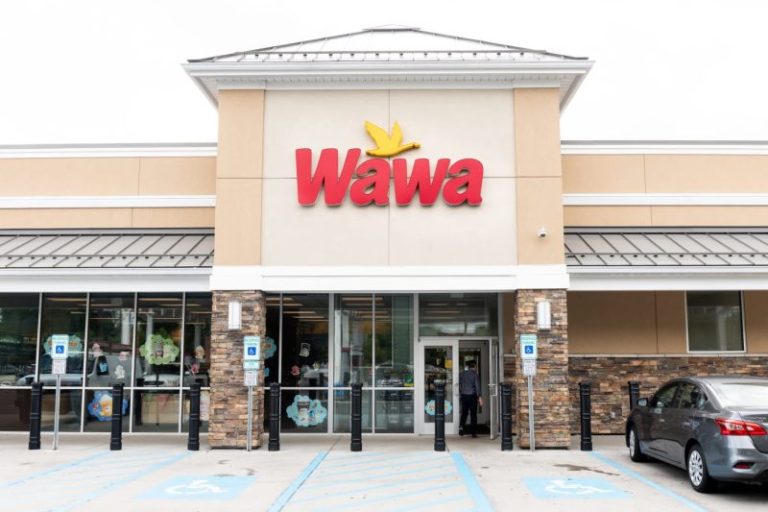
Before the pandemic, fast-food chains started seeing a new rival for their breakfast customers: convenience stores. Regional chains like Wawa in the Northeast and Casey’s General Store in the Midwest were expanding their reach and investing in their foodservice options, taking pages from the fast-food companies’ own playbooks.

For a time, lockdowns and the shift to hybrid work reversed those market share gains. But in the three months ended in July, food-forward convenience stores once again gained the upper hand in the battle to serve consumers breakfast, according to Portalatin.

Circana separates food-forward convenience stores like Buc-ee’s and Sheetz from the broader industry, although more chains may soon fit under that umbrella. 7-Eleven, the biggest convenience, or c-store, in the U.S., is planning to invest more in its prepared foods business, inspired by the success of its Japanese business. C-store chain RaceTrac on Wednesday announced that it’s buying Potbelly for about $566 million, although it’s unclear what its plans for the sandwich chain include beyond expanding its footprint.

In recent years, more diners have been watching their budgets, conscious of rising menu prices and a tight job market.

Year-over-year morning traffic to fast-food chains has fallen every quarter for the last three years, according to data from Revenue Management Solutions, which advises restaurants on how to increase sales and profits. In the second quarter, fast-food breakfast visits fell 8.7%.

To see the struggles, look no further than McDonald’s, which dominates the quick-service breakfast category.

″The breakfast daypart is the most economically sensitive daypart, because it’s the easiest daypart of a stressed consumer to either skip breakfast or choose to eat breakfast at home,” McDonald’s CEO Chris Kempczinski said on the company’s earnings call in late July. “And we, as well as the rest of the industry, are seeing that the breakfast daypart is absolutely the weakest daypart in the day.”

McDonald’s morning visits accounted for 33.5% of its traffic in the first half of 2019 but fell to 29.9% in the first half of 2025, according to Placer.ai data. To try to drum up traffic, the chain has included breakfast items in its new Extra Value Meals, including a deal for a Sausage McMuffin with Egg with a hash brown and a small coffee for $5.

To reverse breakfast’s slide, fast-food chains are taking hints from their competition. After years of convenience stores looking to fast-food chains for ideas on how to grow prepared food sales, from installing ordering kiosks to new menu items, the dynamic has flipped.

″[Quick-service restaurants] are looking at late-night sales and early morning sales, and they are directly looking at convenience stores and saying, ‘What is working? How can we bring that to our stores?’” National Association of Convenience Stores spokesperson Jeff Lenard told CNBC.

Prepared foods have offered a lifeline for convenience stores as demand for gasoline, tobacco and lottery tickets has fallen over time. The industry’s overall foodservice sales reached $121 billion in 2024, according to data from the NACS.

Most customers visit the gas pump during the morning and evening rush hours, on their way to and from work, presenting the perfect opportunity for c-stores to sell them breakfast or dinner. This year, 72% of consumers surveyed by InTouch Insight said they saw c-stores as a real alternative to fast-food chains, up from 56% a year ago and 45% two years ago.

Broadly, the c-stores that have focused on fresh food have been winning over more customers.

For example, Wawa has seen its customer base grow by 11.5% since 2022, while fast-food chains McDonald’s, Burger King and Wendy’s have seen their combined customer base shrink 3.5% in the same time, according to data from Indagari, a transaction data analytics firm.

The majority of 1,170 respondents to an InTouch Insight survey for CNBC said that they have purchased made-to-order breakfast from a c-store in the morning in the past three months. Forty-eight percent of respondents said that when they choose breakfast from a convenience store, they are replacing a visit that they might otherwise make to a fast-food restaurant like McDonald’s or Dunkin’.

Buying coffee and breakfast from a c-store likely won’t be cheaper than making it at home. But consumers perceive it as “good bang for their buck,” according to Sarah Beckett, vice president of sales and marketing for InTouch Insight.

Plus, c-store customers get a wider breadth of options. In addition to coffee, gas stations sell energy drinks, protein shakes and yogurt smoothies. And customers can pick up a granola bar or banana to accompany their breakfast sandwich. Fast-food chains lack that kind of variety.

But above all, what matters to consumers is the food itself.

“While [a] convenience store broadly does have some tailwind from being a lower price point, the ultimate differentiator, and what’s really going to set apart the winners from losers, is that quality aspect of it,” Circana’s Portalatin said.

Brady Caviness, a 33-year-old account executive at Bailiwick who lives in Minneapolis, told CNBC that he indulges in a breakfast pizza from Casey’s General Store when he’s traveling. If he’s back home, where there isn’t a Casey’s nearby, he’ll stop by McDonald’s, Dunkin’ or Starbucks if he’s in the mood to buy his breakfast.

The Iowa-based chain is the country’s third-largest c-store chain and claims to be the fifth-largest pizza concept based on its number of locations. Casey’s reported same-store sales growth of 5.6% for its prepared food and dispensed beverages for the three months ended July 31.

Like Taco Bell’s Mexican Pizza, Casey’s breakfast pizza, topped with cheese, scrambled eggs and a choice of bacon, sausage or vegetables, has grown a cult following since its launch in 2001.

“I think Casey’s is kind of a unique thing,” Caviness said. “My whole life, I’ve had the Egg McMuffins.”

This post appeared first on NBC NEWS

The Labor Department has announced an inquiry into the Bureau of Labor Statistics over recent changes to its data practices.

In a letter published Wednesday, the office of the inspector general for the Labor Department cited the BLS’ recent decision to reduce data collection activities for two key inflation reports, as well as the large downward revision in employment estimates it announced Tuesday. It said it is reviewing the ‘challenges’ the agency has faced ‘in collecting and reporting closely watched economic data.’

The probe comes one month after President Donald Trump fired the head of the BLS as part of a broader pressure campaign that critics say has risked politicizing a part of the government that has long played a crucial role in the business world. The BLS, which is tasked with collecting data on economic indicators such as jobs and inflation, had generally been left alone by previous administrations.

But Trump began zeroing in on the BLS as his frustrations with the Federal Reserve mounted, coinciding with economic numbers that started to warn about a broader U.S. slowdown.

Since then, the labor market has slowed considerably. Just before the head of the BLS was fired, the department released a weaker-than-expected jobs report, citing claims of data manipulation that critics say are unfounded.

Federal Reserve Chair Jerome Powell, another frequent target of Trump’s, has said Fed policymakers are ‘getting the data that we need to do our jobs’ and stressed the importance of the federal statistical agencies.

‘The government data is really the gold standard in data,’ he added. ‘We need it to be good and to be able to rely on it.’

Trump then nominated E.J. Antoni, an economist with the far-right Heritage Foundation, as the new head of the BLS, a move many economists have criticized.

Trump and other BLS critics have focused on the department’s revisions to its reports, a practice that dates back decades and has been generally seen as a necessary part of the challenge of collecting near-term economic data. It has also faced other challenges in data collection, including budget challenges and low response rates to its collection efforts.

The BLS previously said the decision to reduce inflation data surveys was necessary given existing budget constraints. Meanwhile, mainstream economists say the latest downward revisions — while large — are part of a routine annual process known as benchmarking.

While response rates to the bureau’s surveys have been declining, researchers recently found that revisions and falling response rates did not reduce the reliability of the jobs and inflation reports.

This post appeared first on NBC NEWS

Shares of Kenvue fell more than 10% on Friday after a report that Health Secretary Robert F. Kennedy Jr. will likely link autism to the use of the company’s pain medication Tylenol in pregnant women.

HHS will release the report that could draw that link this month, The Wall Street Journal reported on Friday.

That report will also suggest a medicine derived from folate — a water-soluble vitamin — can be used to treat symptoms of the developmental disorder in some people, according to the Journal.

In a statement, an HHS spokesperson said, “We are using gold-standard science to get to the bottom of America’s unprecedented rise in autism rates.”

“Until we release the final report, any claims about its contents are nothing more than speculation,” they added.

Tylenol could be the latest widely used and accepted treatment that Kennedy has undermined at the helm of HHS, which oversees federal health agencies that regulate drugs and other therapies. Kennedy has also taken steps to change vaccine policy in the U.S., and has amplified false claims about safe and effective shots that use mRNA technology.

Kennedy has made the disorder a key focus of HHS, pledging in April that the agency will “know what has caused the autism epidemic” by September and eliminate exposures. He also said that month that the agency has launched a “massive testing and research effort” involving hundreds of scientists worldwide that will determine the cause.

In a statement, Kenvue said it has “continuously evaluated the science and [continues] to believe there is no causal link” between the use of acetaminophen, the generic name for Tylenol, during pregnancy and autism.

The company added that the Food and Drug Administration and leading medical organizations “agree on the safety” of the drug, its use during pregnancy and the information provided on the Tylenol label.

The FDA website says the agency has not found “clear evidence” that appropriate use of acetaminophen during pregnancy causes “adverse pregnancy, birth, neurobehavioral, or developmental outcomes.” But the FDA said it advises pregnant women to speak with their health-care providers before using over-the-counter drugs.

The American College of Obstetricians and Gynecologists maintains that acetaminophen is safe during pregnancy when taken as directed and after consulting a health-care provider.

Some previous studies have suggested the drug poses risks to fetal development, and some parents have brought lawsuits claiming that they gave birth to children with autism after using it.

But a federal judge in Manhattan ruled in 2023 that some of those lawsuits lacked scientific evidence and later ended the litigation in 2024. Some research has also found no association between acetaminophen use and autism.

In a note on Friday, BNP Paribas analyst Navann Ty said the firm believes the “hurdle to proving causation [between the drug and autism] is high, particularly given that the litigation previously concluded in Kenvue’s favor.”

This post appeared first on NBC NEWS

The average rate on the 30-year fixed mortgage dropped 16 basis points to 6.29% Friday, according to Mortgage News Daily, following the release of a weaker-than-expected August employment report.

It’s the lowest rate since Oct. 3 and the biggest one-day drop since August 2024. Rates are finally breaking out of the high 6% range, where they’ve been stuck for months.

“This was a pretty straightforward reaction to a hotly anticipated jobs report,” said Mortgage News Daily Chief Operating Officer Matt Graham. “It’s a good reminder that the market gets to decide what matters in terms of economic data, and the bond market has a clear voting record that suggests the jobs report is always the biggest potential source of volatility for rates.”

Graham said in a post on X that many lenders are “priced better” than Oct. 3 and would be quoting in the high 5% range.

The drop is a major change from May, when the rate on the 30-year fixed peaked at 7.08%. It’s big for buyers out shopping for a home today, especially given high home prices.

Take, for example, someone purchasing a $450,000 home, which is just above August’s national median price, using a 30-year fixed mortgage with a 20% down payment. Not including taxes or insurance, the monthly payment at 7% would be $2,395. At 6.29%, that payment would be $2,226, a difference of $169 per month.

That might not sound like a lot to some, but it can mean the difference in not just affording a home, but qualifying for a mortgage.

Homebuilder stocks reacted favorably Friday, with names like Lennar, DR Horton and Pulte all up roughly 3% midday. Homebuilding ETF ITB has been running hot for the last month as rates slowly moved lower. It’s up close to 13% in the past month.

The big question is whether the drop in rates will be enough to get homebuyers back in the market.

Mortgage demand from homebuyers, an early indicator, have yet to respond to gradually improving rates. Applications for a mortgage to purchase a home last week were 6.6% lower from four weeks before, according to the Mortgage Bankers Association.

“Homebuyers grapple with a lack of affordability, sellers contend with more competition, and builders deal with lower buyer demand,” Danielle Hale, chief economist at Realtor.com, said Friday in a statement after the release of the August employment report. “These conditions haven’t spelled catastrophe, but have created a cruel summer for the housing market.”

Some analysts have argued that buyers need to see mortgage rates in the 5% range before it really makes a difference. Home prices remain stubbornly high, and while the gains have definitely cooled, they are not yet coming down on a national level. In addition, uncertainty about the state of the economy and the job market has left many would-be buyers on the sidelines.

This post appeared first on NBC NEWS