Author

admin

Browsing

Hecla Mining Company (NYSE:HL) has agreed to sell its Casa Berardi gold operation in Québec to Orezone Gold (TSX:ORE,OTCQX:ORZCF) for total consideration of up to US$593 million.

The deal, announced on Monday (January 26), involves the sale of Hecla Québec, a wholly owned subsidiary of Hecla that holds the Casa Berardi mine and related exploration properties.

Under the terms of the agreement, Hecla expects to receive up to US$593 million through a mix of upfront cash, equity, deferred payments and contingent consideration.

Hecla will receive US$160 million in cash at closing, along with about 65.7 million Orezone common shares, representing about 9.9 percent of Orezone’s pro forma shares outstanding, currently valued at roughly US$112 million.

In addition, Hecla is set to receive US$80 million in deferred cash payments, split into US$30 million payable 18 months after closing and US$50 million payable after 30 months.

The remaining consideration is contingent and could total up to US$241 million.

It includes up to US$211 million in production-based royalty payments tied to future open-pit output, calculated at US$80 per ounce for the first 500,000 ounces of gold and US$180 per ounce thereafter.

Hecla may also receive a US$20 million payment upon the granting of certain permits, as well as up to US$10 million linked to a gold price exceeding US$4,200 per ounce.

The transaction is supported by Franco-Nevada (TSX:FNV,NYSE:FNV), which Orezone said is a sponsor in the acquisition.

“The sale of Hecla Quebec represents an important milestone in Hecla’s transformation as we concentrate capital allocation and operational focus on our world-class silver portfolio,” said Rob Krcmarov, president and CEO of Hecla.

For Orezone, the acquisition marks a major expansion into Canada and adds a producing gold mine to its portfolio. The company said Casa Berardi will complement its Bomboré project in Burkina Faso and will provide diversification in a jurisdiction known for stable mining regulations and established infrastructure.

“This Transaction marks a significant inflection point for Orezone as it adds a proven, cash-flow-generating asset to our portfolio, and provides asset diversification in a Tier 1 Jurisdiction,” said Patrick Downey, president and CEO of Orezone.

Casa Berardi is an underground and open-pit mine located in Québec’s Abitibi region that has been in operation since the late 1980s. It has produced over 3.2 million ounces of gold to date.

As of the end of 2024, its proven and probable reserves stood at 1.3 million ounces, with additional measured, indicated and inferred resources supporting future operations.

Casa Berardi’s gold production guidance for 2026 is between 83,000 and 91,000 ounces.

Securities Disclosure: I, Giann Liguid, hold no direct investment interest in any company mentioned in this article.

This post appeared first on investingnews.com

Secretary of State Marco Rubio will publicly testify on the Trump administration’s policy in Venezuela Wednesday morning after vowing to lawmakers that no more military action was expected in the region. 

Rubio’s return to the Hill, an increasingly frequent occurrence in recent months, comes after he, President Donald Trump, administration officials and Senate Republican leadership successfully killed a bipartisan push to rein in the president’s war authorities in Venezuela. 

His scheduled appearance before the Senate Foreign Relations Committee Wednesday at 10 a.m. comes just weeks after he helped to convince two lawmakers, Sens. Todd Young, R-Ind., and Josh Hawley, R-Mo., to flip their votes and back the administration. 

Both were concerned about boots on the ground in Venezuela and Congress’ constitutional authority to weigh in on the matter.

They were convinced by Rubio and the administration that no further military action would take place, and that if it were, President Donald Trump would come to Congress first. 

Young said at the time that the effort, spurred by Sen. Tim Kaine, D-Va., was ultimately just a messaging exercise that never would have survived in the House, nor evaded a veto from Trump. 

‘I had to accept that this was all a communications exercise,’ Young said. ‘I think we [used] this moment to shine a bright light on Congress’ shortcomings as it relates to war powers in recent history.’

Rubio also wrote to Senate Foreign Relations Chair James Risch, R-Idaho, to spell out that the administration would clue in Congress should any future military action take place in the region.

‘Should there be any new military operations that introduce U.S. Armed Forces into hostilities, they will be undertaken consistent with the Constitution of the United States, and we will transmit written notifications consistent with section 4(a) of the War Powers Resolution (Public Law 93-148),’ he said.

However, Rubio’s appearance before the panel comes on the heels of unrest stateside following another fatal shooting in Minnesota, where Alex Pretti was killed in the midst of a Department of Homeland Security-led immigration operation in Minneapolis.

While he won’t have to answer for that situation, it has drastically shifted the Senate’s attention over the last several days. 

It also follows Kaine’s vow to file several more war powers resolutions against Trump, specifically against action in Greenland, Iran and elsewhere. 

Kaine believed that he could take advantage of cracks that formed in Republicans’ unified front earlier this month, when five joined all Senate Democrats to advance his resolution to require any future military action in Venezuela would need Congress’ approval.

‘The way cracks grow is through pressure and the pressure campaign that I sort of decided to launch by use of these privileged motions,’ Kaine said after his initial push failed. 

‘I’m going to file every one I can to challenge emergencies, to challenge unlawful wars, to seek human rights reports, arms transfers if they’re wrong,’ he continued.

This post appeared first on FOX NEWS

VANCOUVER, BRITISH COLUMBIA / ACCESS Newswire / January 27, 2026 / Prince Silver Corp. (CSE:PRNC,OTC:PRNCF)(OTCQB:PRNCF)(T130:Frankfurt) (‘Prince Silver’or theCompany’) is pleased to announce a non-brokered private placement of up to 4,687,500 units of the Company (‘Units‘) at a price of $0.70 per Unit for aggregate gross proceeds of up to $3,000,000 (the ‘Private Placement‘). Each Unit will consist of one common share (a ‘Common Share‘) and one-half common share purchase warrant, with each full warrant (a ‘Warrant‘) being exercisable to purchase one Common Share at a price of $1.00 for 24 months from the date of issuance ; provided that if the closing price of the Company’s Common Shares for a period of 10 consecutive trading days is $1.40 or higher, the Company will have the right to accelerate the expiry date of the Warrants upon notice given by press release and the Warrants will thereafter expire on the 30th calendar day after the date of such press release.

The Company intends to pay finders’ fees in an amount equal to 7% to eligible finders, in accordance with applicable securities laws and the policies of the Canadian Stock Exchange (‘CSE‘). The Private Placement is subject to approval of the CSE, and all securities issued under the Private Placement will be subject to statutory hold periods expiring four months and one day from the date of closing of the Private Placement pursuant to applicable securities laws and CSE policy.

The Company intends to use the net proceeds of the Offering to advance exploration and development activities at its Prince Silver Project in Nevada, as well as for working capital and general corporate purposes. Closing of the Offering is subject to customary conditions, including approval of the Canadian Securities Exchange.

About Prince Silver Corp.

Prince Silver Corp. is a silver exploration company advancing its past-producing Prince Silver-Zinc-Manganese-Lead Mine in Nevada, USA. Featuring near-surface mineralization that was historically drill tested by over 129 holes and is open in all directions, the Prince Project offers a clear path toward a maiden 43-101 compliant resource estimate. The Company also holds an interest in the Stampede Gap Project, a district-scale copper-gold-molybdenum porphyry system located 15 km north-northwest of the Prince Silver Project, highlighting Prince Silver’s focus on high-potential, strategically located exploration assets.

On Behalf of the Board of Directors

Derek Iwanaka, CEO & Director
Tel: 604-928-2797
Email: info@princesilvercorp.com
Website: www.princesilvercorp.com

Forward-Looking Information

Certain statements in this news release are forward-looking statements, including with respect to future plans, and other matters. Forward-looking statements consist of statements that are not purely historical, including any statements regarding beliefs, plans, expectations, or intentions regarding the future. Such information can generally be identified by the use of forwarding-looking wording such as ‘may’, ‘expect’, ‘estimate’, ‘anticipate’, ‘intend’, ‘believe’ and ‘continue’ or the negative thereof or similar variations. Some of the specific forward-looking information in this news release includes, but is not limited to, statements with respect to: ongoing and proposed drill programs, amendments to the Company’s website, property option payments and regulatory and corporate approvals. The reader is cautioned that assumptions used in the preparation of any forward-looking information may prove to be incorrect. Events or circumstances may cause actual results to differ materially from those predicted, as a result of numerous known and unknown risks, uncertainties, and other factors, many of which are beyond the control of the Company, including but not limited to, business, economic and capital market conditions, the ability to manage operating expenses, dependence on key personnel, completion of satisfactory due diligence in respect of the Acquisition and related transactions, and compliance with property option agreements. Such statements and information are based on numerous assumptions regarding present and future business strategies and the environment in which the Company will operate in the future, anticipated costs, and the ability to achieve goals. Factors that could cause the actual results to differ materially from those in forward-looking statements include, the continued availability of capital and financing, litigation, failure of counterparties to perform their contractual obligations, failure to obtain regulatory or corporate approvals, exploration results, loss of key employees and consultants, and general economic, market or business conditions. Forward-looking statements contained in this news release are expressly qualified by this cautionary statement. The reader is cautioned not to place undue reliance on any forward-looking information.

The forward-looking statements contained in this news release are made as of the date of this news release. Except as required by law, the Company disclaims any intention and assumes no obligation to update or revise any forward-looking statements, whether as a result of new information, future events or otherwise.

This news release does not constitute an offer to sell, or a solicitation of an offer to buy, any securities in the United States. The securities have not been and will not be registered under the United States Securities Act of 1933, as amended (the ‘U.S. Securities Act’) or any state securities laws and may not be offered or sold within the United States or to U.S. Persons (as defined under the U.S. Securities Act) unless registered under the U.S. Securities Act and applicable state securities laws or an exemption from such registration is available.

SOURCE: Prince Silver Corp.

View the original press release on ACCESS Newswire

News Provided by ACCESS Newswire via QuoteMedia

This post appeared first on investingnews.com

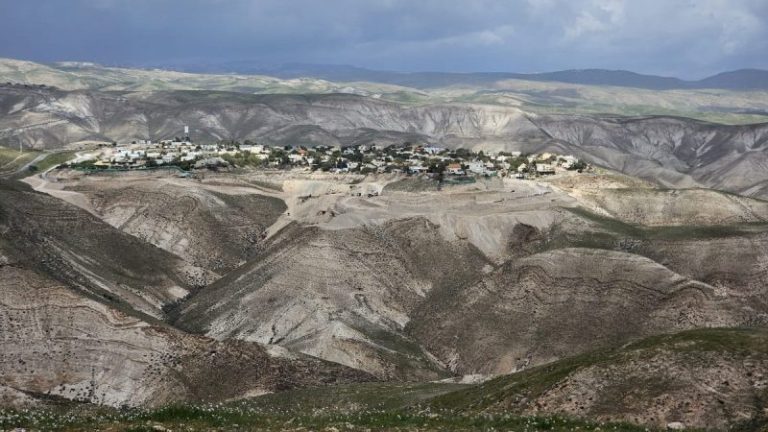
The Israel Defense Forces conducted approximately 80 brigade-level counterterrorism operations over the past year in the West Bank — known to Israelis as Judea and Samaria — neutralizing hundreds of terrorists and seizing more than 1,300 weapons, according to data released by the military.

The IDF said overall Palestinian terrorist activity in the area declined sharply in 2025, with incidents down 78% compared to the previous year. Attacks involving firearms dropped by 86%, the data showed.

Security remains essential in Israel’s ancient heartland, home to more than 500,000 Jews and up to 3 million Palestinians, and is at the center of intense political and diplomatic debate. Many Israeli officials argue that Jerusalem must assert sovereignty over the territory. 

Under the 1993 Oslo Accords, brokered during the Clinton administration, the West Bank was divided into three areas: Area A, under full Palestinian control; Area B, under Palestinian civil authority and Israeli security control; and Area C, under full Israeli authority.

A 2020 plan by the Trump administration, known as ‘Peace to Prosperity,’ envisioned Israeli annexation of parts of Judea and Samaria but was shelved in favor of the Abraham Accords, which normalized Israel’s relations with four Arab countries. In July 2024, the Knesset plenum overwhelmingly rejected the establishment of a Palestinian state, and in July 2025, approved a declaration calling on the government to apply sovereignty in Judea and Samaria as well as the Jordan Valley, something Vice President JD Vance described as a ‘very stupid political stunt,’ when asked his thoughts on the vote.

On a visit to Israel, he said, ‘The West Bank is not going to be annexed by Israel… The policy of the Trump administration is that the West Bank will not be annexed by Israel. That will continue to be our policy. And if people want to take symbolic votes, they can do that, but we certainly weren’t happy about it.’

Why Israel Says It Can’t Give Up Judea and Samaria

Focusing on the national security significance of the area, Lt. Col. (Ret.) Jonathan Conricus, a former IDF international spokesperson and now a senior fellow at the Foundation for Defense of Democracies, told Fox News Digital that fundamental principles of warfare apply to the area.

‘High ground, or elevated terrain, remains critical and extremely important in defending a country, its people and its sovereignty,’ Conricus said. ‘I cannot identify any credible professional military assessment that would suggest it is wise for Israel to allow a hostile entity to dominate high terrain that controls, by line of sight and fire, most of modern Israel west of the 1949 armistice line, where 80% of Israel’s GDP and 70% of its population reside.’

Conricus said that no Israeli government could relinquish military control over the area without endangering the most basic security of the State of Israel.

He emphasized that the area defines Israel’s eastern border and noted that, while Israel currently maintains strategic peace with Jordan, the kingdom remains unstable and vulnerable to both internal and external pressures.

‘It could be jihadist elements, the Muslim Brotherhood, Hamas or the Iranian regime,’ he said. ‘Israel has to have an eastern border that is a natural barrier. The Jordan River is a natural barrier that limits the movement of troops, tanks and vehicles, and provides a border that is defensible,’ he said.

Dan Diker, president of the Jerusalem Center for Security and Foreign Affairs, pointed to the concept of defensible borders that emerged after the 1967 Six-Day War.

‘As a result, Israel gained a major defensive position and strategic depth it had never previously possessed,’ Diker said, noting that Israel had been only nine miles wide at its narrowest point in the north.

After the Hamas-led Oct. 7, 2023, massacre, Diker said its strategic importance has increased amid concerns that a similar large-scale attack could occur there, given the widespread flow of weapons.

‘Although we control between 60% and 75% of the region, Iran has been penetrating the Jordanian border,’ he said, adding that Hamas incitement has energized jihadist networks.

Biblical, Historical and National Identity

Yishai Fleisher, international spokesman for Hebron — the cradle of Jewish civilization located in Judea — told Fox News Digital that the vast majority of events described in the Bible took place in Judea and Samaria.

Hebron, he said, is home to the Tomb of the Patriarchs and Matriarchs, while Jerusalem is where the two Jewish Temples stood and where King David reigned. In Bet El, the Biblical account of Jacob’s dream of the ladder took place.

‘The reason we have national aspirations in the Land of Israel is because of our history,’ Fleisher said. He also cited an initiative to rename Route 60 — which runs through many Biblical cities — the ‘Biblical Highway.’

Who Are the Hilltop Youth — and Why Israel Sees Them as a Problem

Earlier this month, IDF troops were dispatched to the Shavei Shomron Junction following reports that dozens of masked Israeli suspects had vandalized property in the area. Several Palestinian vehicles were torched, and two Palestinians were injured. A day later, IDF troops were dispatched to the area of Jalud following reports that Israeli civilians had vandalized a local school. In a separate incident in the Bizzariya area, several Palestinian vehicles were set on fire and property was damaged.

In 2025, the IDF recorded an increase of approximately 27% in anti-Palestinian crimes.

Governor of Binyamin and Chairman of the Yesha Council Yisrael Ganz told Fox News Digital that Judea and Samaria has been in a state of war since Oct. 7. Over the past year, he said, citing Shin Bet data, there were more than 4,000 attempted attacks against Israelis.

Ganz cited former Shin Bet head Yoram Cohen, who said only 1.5% of Shin Bet cases involve Jews, while roughly 80% focus on Arab terrorism.

‘Yes, there are incidents of violence, but the number of Jews who attack Arabs is negligible,’ Ganz said, condemning extremist youth as a small and unrepresentative minority.

Ganz argued that the absence of Israeli sovereignty creates a legal gray zone that enables extremism.

‘When there is governance, security and economic opportunity, there is no room for anarchy or violence,’ he said, envisioning Judea and Samaria as ‘the Israeli Tuscany.’

Is the Two-State Solution Still Viable — or Just Diplomatic Habit?

Former Israeli Ambassador to the United States Michael Oren told Fox News Digital that the two-state solution was never viable but rather a diplomatic reflex.

‘The Palestinians hold the world record for a people who have been offered a two-state solution and have rejected it,’ Oren said. ‘They rejected it in 1937, the British offer in 1947, the American-Israeli offer in 2001, and the subsequent offer in 2008.’

According to polls, Oren said, most Palestinians oppose a two-state solution and support the Oct. 7 attacks.

‘Rather, the two-state solution is viewed as an interim stage toward a one-state solution,’ he said, a phrase often used as a euphemism for the eventual destruction of Israel through demographic change.

While acknowledging Palestinian self-rule in Areas A and B, Oren said a fully sovereign Palestinian state is impossible.

‘It could not have control over its borders, nor control over strategic affairs, such as entering a defense pact with Iran. It will never be a classic sovereign state, but it could be more than what they have today,’ he said.

While a two-state solution once seemed inevitable, Dan Shapiro — who served as U.S. ambassador to Israel under President Barack Obama and as deputy assistant secretary of Defense for the Middle East under President Joe Biden — told Fox News Digital that it has not been viable for many years and may now be harder to envision than ever, particularly in the aftermath of Oct. 7.

Still, Shapiro said, the framework remains a fixture of Middle East diplomacy due to the lack of viable alternatives for resolving the conflict between two peoples living in one land, each with legitimate claims to a homeland.

‘President Trump includes a credible pathway to a Palestinian state in his 20-point plan to stabilize Gaza and remove Hamas from power. Presidents Biden and Trump have both viewed progress toward a Palestinian state as part of the formula to achieve Saudi normalization with Israel,’ Shapiro said.

‘None of this means it can happen soon, or perhaps at all. If it ever does, it will take longer and look different from earlier efforts. It is not a copy-and-paste of ideas from the Oslo era. But that credible pathway to a Palestinian state — one that would live peacefully alongside a secure Israel — difficult as it is, remains relevant,’ he added.

Shapiro noted that even Israel’s current government — the most right-wing in the country’s history and one that includes multiple proponents of annexation — has stopped short of applying sovereignty across the West Bank, a sign, he said, that the political and diplomatic costs remain too high.

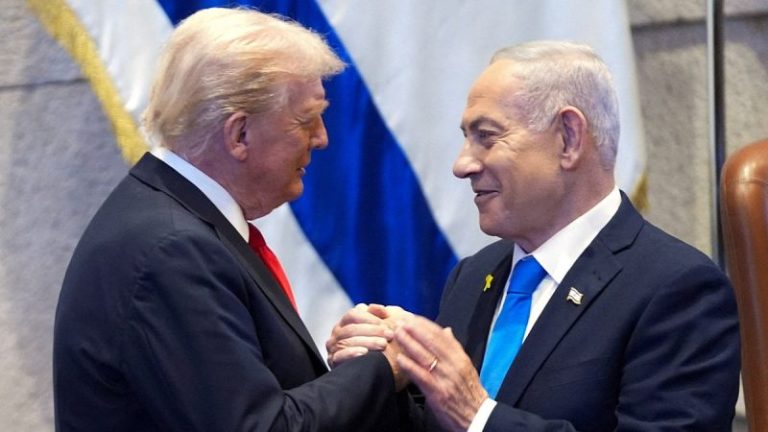
‘President Trump has announced that it will not happen because he promised Arab states — the same ones he does business with and relies on to help stabilize Gaza — that it will not happen, and Netanyahu will not oppose him on it,’ Shapiro said.

Shapiro said that preserving the possibility of establishing a Palestinian state on some portion of the territory — even if it appears distant and would require major changes in Palestinian leadership and society — has remained relevant, even under Israeli governments that profess to oppose any two-state outcome. 

This post appeared first on FOX NEWS

President Donald Trump on Thursday filed a $5 billion lawsuit against JPMorgan Chase and its CEO Jamie Dimon, claiming that the bank improperly closed his accounts for political reasons.

‘While we regret President Trump has sued us, we believe the suit has no merit,’ a JPMorgan Chase spokesperson said. ‘We respect the President’s right to sue us and our right to defend ourselves – that’s what courts are for.’

The suit accuses the bank of libel and breach of implied covenant of good faith and fair dealing. It also says the bank and its chief executive violated Florida trade practices laws.

The suit says Trump held ‘several’ accounts at the firm which were closed.

On Feb. 19, 2021, shortly after the Jan. 6 Capitol Hill riot, the bank notified Trump that the accounts would be closed within two months, the suit also says.

The lawsuit adds to a still-growing list of legal efforts from Trump directed at a wide variety of institutions — from media outlets to tech platforms — many of which have resulted in multimillion-dollar settlements. The president’s company, the Trump Organization, sued Capital One Bank last year over allegations of improper account closures. Capital One said at the time that the allegations have no merit.

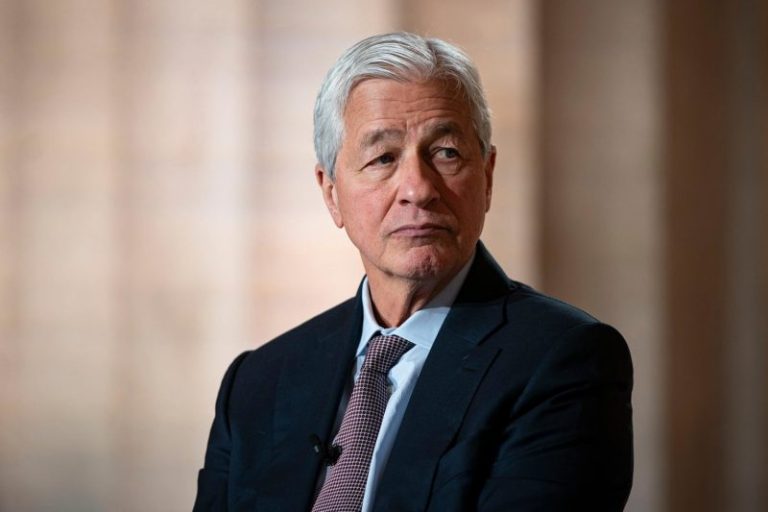
Dimon, as head of JPMorgan Chase, the nation’s largest bank, is among the most influential people in the business world and someone who has been courted for years by Republicans and Democrats. In the run-up to the 2024 election, Trump falsely claimed that Dimon had endorsed him.

Dimon has at times been critical of some Trump policies — most notably inflation — while supportive of others, including efforts to streamline the U.S. government.

On Wednesday, Dimon criticized the Trump administration over its immigration policies.

‘I don’t like what I’m seeing,’ Dimon told attendees at the World Economic Forum in Davos, Switzerland. Dimon also said that while he doesn’t agree with everything the administration does, he does agree with some of its economic policies.

On Saturday, Trump threatened the lawsuit in a Truth Social post. Over the weekend, JPMorgan Chase said it appreciated ‘that this administration has moved to address political debanking and we support those efforts.’

Almost exactly one year ago, Trump used an address at the World Economic Forum to take a shot at JPMorgan and its competitor, Bank of America.

‘I hope you start opening your bank to conservatives because many conservatives complain that the banks are not allowing them to do business,’ Trump said.

“You and Jamie and everybody, I hope you’re going to open your banks to conservatives because what you’re doing is wrong,” Trump said.

Bank of America said that it serves over 70 million consumers and does not close accounts for political reasons. JPMorgan says that it also serves tens of millions of accounts and likewise does not close accounts on political grounds.

In an expletive-laden interview with CNBC last year, Trump vented his frustrations at big banks that close accounts for legal and regulatory reasons.

‘I had JPMorgan Chase — I had hundreds of millions of dollars in cash,’ Trump told the cable network on Aug. 5. ‘I was loaded up with cash, and they told me, ‘I’m sorry, sir, we can’t have you.”

Trump says he was informed he had 20 days to move his assets out of the bank. ‘I said, ‘You got to be kidding. I’ve been with you for 35, 40 years,” the president recounted.

Trump said, ‘then what happens is I call a Bank of America.’

‘And they have zero interest,’ he said. CEO Brian Moynihan ‘was kissing my a– when I was president, and when I called him after I was president to deposit a billion dollars plus and a lot of other things … and he said, ‘we can’t do it.”

The JPMorgan Chase spokesperson said Thursday that the bank ‘does not not close accounts for political or religious reasons. We do close accounts because they create legal or regulatory risk for the company.’

Trump was indicted multiple times after his first term in office. In 2024, he was indicted on charges that he conspired to defraud the United States, conspiracy to to obstruct an official proceeding, obstruction of and attempt to obstruct an official proceeding and conspiracy against rights.

In recent years, banks have faced intense pressure from conservatives leveling ‘debanking’ claims against them. However, banks and their lobbying groups have long maintained that they do not close accounts for political or religious reasons, but they close accounts based primarily on legal or regulatory grounds.

Trump’s administration has sought to ease those regulations in order to make it harder for a bank to close a customer’s account. In August, Trump signed an executive order which sought to end ‘politicized or unlawful debanking activities.’

In September, the Office of the Comptroller of the Currency, one of the top banking regulators, began a review of banking rules to ‘depoliticize the banking system.’

This post appeared first on NBC NEWS

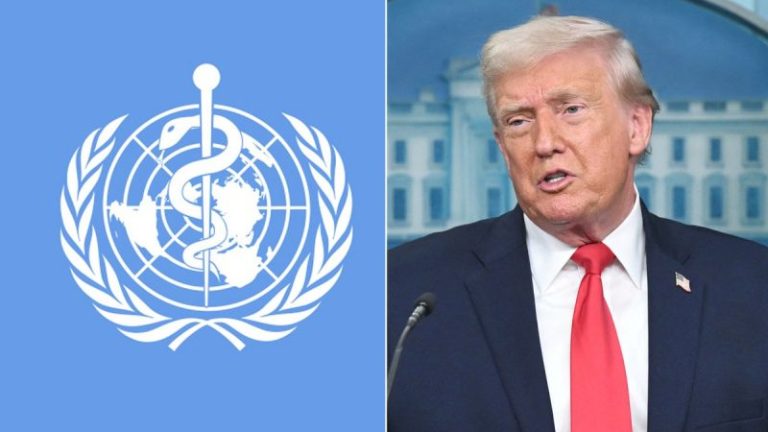
The World Health Organization on Saturday warned that America’s withdrawal from the agency will make the country and the world ‘less safe.’

The globalist body said in part of a January 24 statement that it ‘regrets the United States’ notification of withdrawal from WHO – a decision that makes both the United States and the world less safe.’ 

‘We hope that in the future, the United States will return to active participation in WHO,’ the statement noted.

The U.S. announced its withdrawal from the WHO last week, after President Donald Trump got the ball rolling on his first day back in office last year.

‘Today, the United States withdrew from the World Health Organization (WHO), freeing itself from its constraints, as President Trump promised on his first day in office by signing E.O. 14155,’ U.S. Secretary of State Marco Rubio and Secretary of Health and Human Services Secretary Robert F. Kennedy Jr. said in part of a January 22, 2026, joint statement.

‘Going forward, U.S. engagement with the WHO will be limited strictly to effectuate our withdrawal and to safeguard the health and safety of the American people. All U.S. funding for, and staffing of, WHO initiatives has ceased,’ their statement said.

They claimed the WHO ‘pursued a politicized, bureaucratic agenda driven by nations hostile to American interests.’ But the WHO pushed back.

‘This is untrue. As a specialized agency of the United Nations, governed by 194 Member States, WHO has always been and remains impartial and exists to serve all countries, with respect for their sovereignty, and without fear or favor,’ the WHO said in its statement.

This post appeared first on FOX NEWS
The horrific regime slaughter in Iran and President Trump’s aggressive campaign to acquire Greenland have resulted in the neglect of a major case now underway at the International Court of Justice (ICJ).

The ICJ last week began hearings brought by Gambia against Myanmar alleging genocide against the Rohingya people—about 1.4 million of whom live in Myanmar. Several other states have intervened in support of Gambia, which has presented the court with evidence it contends proves that Myanmar’s military forces committed a genocide against the Rohingya population. Myanmar vehemently denies the allegation.

While this case does not concern Israel directly, the ICJ’s determinations may have major ramifications for the case Israel is now defending at the tribunal against South Africa.

This is especially true since one of the judges hand-picked by Gambia to sit on its ICJ panel is South African national Navi Pillay. That would be the same Navi Pillay who recently rushed to publish a report accusing Israel of genocide before retiring as head of the UN Human Rights Council commission of inquiry—a panel widely criticized for its flagrant institutional bias against Israel and the anti-Semitic remarks of its members.

In reality, South Africa’s ICJ case against Israel is riddled with flaws. It is also pushing to redefine a term that been held sacrosanct since the end of the World War II.

The term ‘genocide’ was coined by Raphael Lemkin, a Holocaust survivor who in 1944 strived for its incorporation into modern international law. That occurred in 1948 via the UN Genocide Convention.

The prohibition on genocide is considered a jus cogens norm—that is, a non-derogable rule accepted by all of the first-world community with no exceptions. The definition of ‘genocide’ requires no law degree to understand, and it should never, ever be politicized.

For a genocide to take place under Geneva, there must be acts committed ‘with intent to destroy, in whole or in part, a national, ethnic, racial, or religious group.’ The phrase ‘intent’ here is of paramount importance.

South Africa’s pending case before the ICJ alleges Israeli intent to destroy the Palestinian-Arab population of Gaza. Israel, by contrast, (correctly) maintains that its recent actions in Gaza have been a just and proper military response to the war of annihilationist jihad and unspeakable atrocities launched against it by the Hamas terrorist organization on Oct. 7, 2023.

Israel’s ‘intent’ is to free Gaza from Hamas, to return hostages abducted and held by Hamas, and to ensure Hamas has no future role in Gaza and cannot undertake another October 7-style massacre. It repeatedly offered to end the war if Hamas laid down its arms and released all hostages.

Hamas, on the other hand, has shown a complete disregard for human life and has openly stated that its sacrifice of Gazan civilians is a cynical strategic necessity to turn public opinion against Israel. It has for years embedded military infrastructure within Gazan civilian infrastructure—schools, hospitals, UN facilities, mosques, and children’s bedrooms. Israel has waged a defensive campaign in one of the most complex operational environments of any modern war.

At the same time, it has worked with states and NGOs to allow and facilitate extensive amounts of humanitarian aid, rebuilt water supplies, coordinated the vaccination of young Gazans against polio, and helped coordinate and approve the evacuation of those in need of urgent medical care.

Israel repeatedly provides advanced warnings of impending military strikes and has held off strikes where intelligence of nearby civilians has come to light. For a fighting party to so often relinquish the element of surprise to reduce harm to the local civilian population of its enemy is extraordinary.

None of this constitutes a ‘genocide’—and clearly shows the lack of any intent by Israel to destroy the local Palestinian-Arab population in Gaza.

Nonetheless, since South Africa brought its case before the ICJ, numerous groups and states have leapt at the opportunity to join in on the anti-Israel campaign. This has ranged from tendentious so-called online genocide scholars to anti-Semitic mobs to deeply politicized NGOs. Amnesty International, for instance, shamelessly waited more than two years before publishing a report focusing on Hamas’ crimes on Oct. 7, while straining to remind readers of its slanderous accusation of genocide made against Israel a year prior.

Together, they have all been involved in a campaign to redefine the term ‘genocide’ to suit their narrative—all while ignoring the reality of Hamas’ own Nazi-esque barbarism.

The politically motivated efforts to undermine the concept should be of grave concern to us all. If successful, it will result in the ICJ’s further self-discrediting as an institution of political point scoring, rather than meaningful justice.

Israel has legitimately responded to genocidal attacks by a terrorist organization that has repeatedly called for its entire annihilation and the murder of all global Jewry—something it broadcast live to the world on Oct. 7, 2023.

The term ‘genocide’ is one too important to be cheapened. Those pushing for its redefinition must be stopped in their tracks.

This post appeared first on FOX NEWS
Wording in 3rd paragraph ‘Engagement of Michael Pound’ has been corrected to reflect that Mr. Pound is no longer at arm’s length of the company.

Domestic Metals Corp. (the ‘Company‘ or ‘Domestic‘) – (TSXV: DMCU,OTC:DMCUF; OTCQB: DMCUF; FSE: 03E) announces that it has engaged the services of ICP Securities Inc. (‘ICP‘) to provide automated market making services, including use of its proprietary algorithm, ICP Premium, in compliance with the policies and guidelines of the TSX Venture Exchange and other applicable legislation. ICP will be paid a monthly fee of C$7,500, plus applicable taxes. The agreement between the Company and ICP was signed with a start date of January 23, 2026 and is for four (4) months (the ‘Initial Term’) and shall be automatically renewed for subsequent one (1) month terms (each month called an ‘Additional Term’) unless either party provides at least thirty (30) days written notice prior to the end of the Initial Term or an Additional Term, as applicable. There are no performance factors contained in the agreement and no stock options or other compensation in connection with the engagement. ICP and its clients may acquire an interest in the securities of the Company in the future.

ICP is an arm’s length party to the Company. ICP’s market making activity will be primarily to correct temporary imbalances in the supply and demand of the Company’s shares. ICP will be responsible for the costs it incurs in buying and selling the Company’s shares, and no third party will be providing funds or securities for the market making activities.

Engagement of Michael Pound

Pursuant to the Company’s news release dated December 11, 2025, the Company provides additional clarification pursuant to Michael Pound’s engagement. The Company added Michael Pound to its Investor Relations team. Michael has over 30 years of Market experience and also holds a wealth of knowledge including an extensive network within the small cap community. Mr. Pound will be focused on investor outreach to that community and provide shareholder and corporate communication services and other investor relations related services. Mr. Pound will be paid a monthly cash fee of C$7,500 per month plus applicable taxes. The agreement was entered into on February 17, 2025 and is for twelve (12) month term which will automatically renew for an additional one-year term, and shall thereafter renew for further one-year terms unless terminated pursuant to the terms of the agreement. On February 17, 2025, Mr. Pound was granted 500,000 options at an exercise price of $0.10 for a period of five years and includes vesting provisions whereby one-quarter of the options vest every four months. Mr. Pound is no longer at arm’s length to the Company as he holds stock options and is a less than 5% shareholder of the Company.

Opportunity to Meet with Domestic’s Management

We appreciate meeting with our supporters and shareholders in person to provide a detailed update and as such are looking forward to seeing you at our booth #1101 at the VRIC in Vancouver on January 25-26, 2026 and booth #3139 at the Investors Exchange at the PDAC, March 1-4, 2026, in Toronto.

About ICP Securities Inc.

ICP Securities Inc. is a Toronto based CIRO dealer-member that specializes in automated market making and liquidity provision, as well as having a proprietary market making algorithm, ICP Premium, that enhances liquidity and quote health. Established in 2023, with a focus on market structure, execution, and trading, ICP has leveraged its own proprietary technology to deliver high quality liquidity provision and execution services to a broad array of public issuers and institutional investors.

About Domestic Metals Corp.

Domestic Metals Corp. is a mineral exploration company focused on the discovery of large-scale, copper and gold deposits in exceptional, historical mining project areas in the Americas.

The Company aims to discover new economic mineral deposits in historical mining districts that have seen exploration in geologically attractive mining jurisdictions, where economically favorable grades have been indicated by historic drilling and outcrop sampling.

The Smart Creek Project is strategically located in the mining-friendly state of Montana, containing widespread copper mineralization at surface and hosts 4 attractive porphyry copper, epithermal gold, replacement and exotic copper exploration targets with excellent host rocks for mineral deposition.

Domestic Metals Corp. is led by an experienced management team and an accomplished technical team, with successful track records in mine discovery, mining development and financing.

On behalf of Domestic Metals Corp.

Gord Neal, CEO and Director
(604) 657 7813

Follow us on:
X, LinkedIn, Facebook and Instagram

For more information on Domestic Metals, please contact:
Gord Neal, Phone: 604 657-7813 or Michael Pound, Phone: 604 363-2885

Please visit the Company website at www.domesticmetals.com or contact us at info@domesticmetals.com.

For all investor relations inquiries, please contact:
John Liviakis, Liviakis Financial Communications Inc., Phone: 415-389-4670

Neither TSX Venture Exchange nor its Regulation Services Provider (as that term is defined in the policies of the TSX Venture Exchange) accepts responsibility for the adequacy or accuracy of this release.

Cautionary Note Regarding Forward-Looking Statements

This news release contains certain statements that may be deemed ‘forward-looking statements’. Forward-looking statements are statements that are not historical facts and are generally, but not always, identified by the words ‘expects’, ‘plans’, ‘anticipates’, ‘believes’, ‘intends’, ‘estimates’, ‘projects’, ‘potential’ and similar expressions, or that events or conditions ‘will’, ‘would’, ‘may’, ‘could’ or ‘should’ occur. Forward-looking statements may include, without limitation, statements relating to the Company’s continued stock exchange listings and the planned exploration activities on properties. Although the Company believes the expectations expressed in such forward-looking statements are based on reasonable assumptions, such statements are not guarantees of future performance, are subject to risks and uncertainties, and actual results or realities may differ materially from those in the forward-looking statements. Such material risks and uncertainties include, but are not limited to: competition within the industry; actual results of current exploration activities; environmental risks; changes in project parameters as plans continue to be refined; future price of commodities; failure of equipment or processes to operate as anticipated; accidents, and other risks of the mining industry; delays in obtaining approvals or financing; risks related to indebtedness and the service of such indebtedness; as well as those factors, risks and uncertainties identified and reported in the Company’s public filings under the Company’s SEDAR+ profile at www.sedarplus.ca. Although the Company has attempted to identify important factors that could cause actual actions, events or results to differ materially from those described in forward-looking information, there may be other factors that cause actions, events or results not to be as anticipated, estimated or intended. Accordingly, readers should not place undue reliance on forward-looking statements. There can be no assurance that such information will prove to be accurate as actual results and future events could differ materially from those anticipated in such statements. Forward-looking statements are made as of the date hereof and, accordingly, are subject to change after such date. The Company disclaims any intention or obligation to update or revise any forward-looking information, whether as a result of new information, future events or otherwise unless required by law.

News Provided by GlobeNewswire via QuoteMedia

This post appeared first on investingnews.com

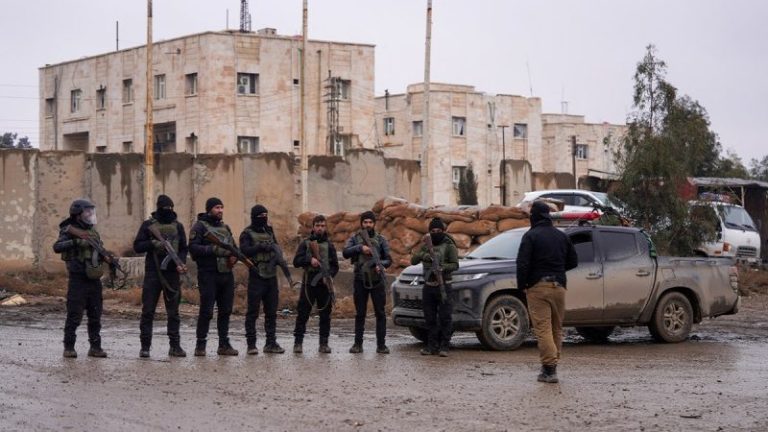
Chaos engulfing northeastern Syria has sparked fresh security fears after Syria’s new governing authorities moved against U.S.-backed Kurdish forces, forcing the U.S. military to rush ISIS detainees out of Syria and into Iraq.

The U.S. military launched an operation Wednesday to relocate ISIS detainees amid fears that instability could trigger mass prison breaks. So far, about 150 detainees have been transferred from a detention center in Hasakah, Syria, with plans to move up to 7,000 of the roughly 9,000 to 10,000 ISIS detainees held in Syria, U.S. officials said.

The operation comes as Syria’s new government, led by President Ahmed al-Sharaa, ordered the Kurdish-led Syrian Democratic Forces (SDF) — Washington’s longtime partner in the fight against ISIS — to disband following a rapid offensive over the weekend that severely weakened the group.

Syrian government forces have since assumed control of several detention facilities previously guarded by the SDF. At least 120 ISIS detainees escaped during a breakout at the al-Shaddadi prison in Hasakah this week, according to Syrian authorities, who say many have been recaptured. U.S. and regional officials caution that some escapees remain at large.

The deteriorating security situation also has raised alarms around al-Hol camp, a sprawling detention site housing the families of ISIS fighters and long viewed by Western officials as a breeding ground for radicalization.

Kurdish forces announced they would withdraw from overseeing the camp, citing what they described as international indifference to the ISIS threat.

‘Due to the international community’s indifference towards the ISIS issue and its failure to assume its responsibilities in addressing this serious matter, our forces were compelled to withdraw from al-Hol camp and redeploy,’ the SDF said in a statement.

The camp is currently home to about 24,000 people, mostly women and children linked to ISIS fighters from across the Middle East and Europe. Many residents have no formal charges, according to aid groups, and humanitarian organizations have long warned that extremist networks operate inside the camp.

The SDF said guards were redeployed to confront the threat posed by Syrian government forces advancing into Kurdish-held territory. On Tuesday evening, Kurdish forces and Syrian government troops agreed to a four-day ceasefire, though officials warned the truce remains fragile.

Meanwhile, The Wall Street Journal reported that U.S. officials are weighing whether to withdraw the roughly 1,000 American troops still stationed in Syria, raising questions about Washington’s long-term ability to secure ISIS detainees as local alliances shift.

Two U.S. Army soldiers were killed in Syria in December 2025 by a lone ISIS gunman.

ISIS lost its last territorial stronghold in Syria in 2019, when U.S. forces and their SDF partners overran the group’s enclave in Baghouz. While the defeat ended the group’s self-declared caliphate, U.S. and allied officials say ISIS has since regrouped as a decentralized insurgency, repeatedly targeting prisons and detention camps in Syria and Iraq.

Western governments have cautiously backed al-Sharaa — a former militant once designated as a terrorist — since his forces overthrew longtime Syrian leader Bashar al-Assad, framing the support as a pragmatic security calculation rather than an endorsement of his past.

U.S. envoy to Syria Tom Barrack urged Kurdish leaders to reach a permanent deal with the new Syrian government, emphasizing Washington’s focus on preventing an ISIS resurgence rather than maintaining an indefinite military presence.

‘The United States has no interest in a long-term military presence,’ Barrack said, adding that U.S. priorities include securing ISIS detention facilities and facilitating talks between the SDF and the Syrian government.

This post appeared first on FOX NEWS

Aura Energy Limited (ASX: AEE, AIM: AURA) (“Aura” or “the Company”) is pleased to announce that MMCAP International Inc. SPC (‘MMCAP’) and certain other strategic investors (together the ‘Strategic Investors’) will provide funding of C$10 million for a 19.7% interest in the Company’s polymetallic Häggån project (‘the Häggån Project’) located in Sweden, establishing its value at C$50 million.

Aura has entered into a binding agreement to transfer 100% of the Häggån Project to SIU Metals Corp. (‘SIU Metals‘), an unlisted Canadian public company, in consideration for acquiring shares in SIU Metals. The agreement will result in SIU Metals being the 100% owner of the Häggån Project.

Aura will retain 78.7% ownership of SIU Metals and the Strategic Investors will own 19.7% after contributing C$10 million via a private placement. SIU Metals intends to seek a stock market listing on the TSX Venture Exchange (‘TSXV’) in connection with the transaction.

HIGHLIGHTS

  • Valuation for Häggån project established at C$50 million (A$55 million)
  • Agreement with MMCAP and certain other strategic investors to provide aggregate gross proceeds of C$10 million to SIU Metals, which will be renamed following the transaction
  • Proceeds to be used for the advancement of the Häggån project, including permitting and resource expansion through continued exploration including on surrounding tenements
  • Aura will retain ownership of 78.7% of SIU Metals and consequently will retain indirect exposure to the Häggån project post-transaction
  • Aura to appoint new officers and directors to SIU Metals on closing of transaction
  • Financing is expected to complete in February 2026, with the transaction expected to complete in June 2026
  • New Canadian listed company to benefit from increased visibility and direct comparison with valuation of other public companies with similar deposits
  • On 1 January 2026, the Minerals Act in Sweden was amended to allow exploration for and extraction of uranium
Phil Mitchell, Executive Chairman Aura Energy, said:

“We are delighted to welcome investors of the calibre of MMCAP, Aura’s largest shareholder, and other high-quality investors into this new vehicle for Aura’s Häggån project, and the future support they can bring. We believe their investment is a demonstration of the quality and potential of the project, and its exciting future as, following legislation changes brought into effect on 1 January 2026, mining of uranium is now allowed again in Sweden. This transaction shines a spotlight on the under-recognized value of Häggån within Aura Energy, and creates an independent and dedicated pathway for funding, growth and management of the project.

Upon successful completion of the transaction, Aura’s existing shareholders will continue to benefit from Häggån’s upside potential, and by way of a direct comparison with the valuation of other companies with similar deposits in the region.”

Click here for the full ASX Release

This post appeared first on investingnews.com