Author

admin

Browsing

The U.S. seizure of the tanker formerly known as Bella I marks a rare escalation in sanctions enforcement against Russia’s so-called ‘dark fleet,’ but experts say the move is unlikely to trigger a broader confrontation with Moscow, at least in the near term.

Analysts largely agree that the interdiction — one of the most direct U.S. actions against a vessel Russia claims was operating under its flag — comes at a moment when the Kremlin has limited appetite for escalation outside Europe and is focused primarily on its war against neighboring Ukraine.

‘This is unique,’ said Brent Sadler, senior research fellow at the Washington conservative Heritage Foundation think tank. 

The U.S. rarely boards foreign-flagged vessels on the high seas unless the ship’s nationality is in doubt, which he said was the case here due to rapid reflagging and a pattern of sanctions violations.

Peter Rough, a senior fellow and director of the Center on Europe and Eurasia at the Hudson Institute think tank, said that the seizure of the tanker reinforces the message that the U.S. is aiming to ‘call the shots in its own backyard.’ Meanwhile, he said that Russia is bogged down fighting its war against Ukraine, meaning it will be challenging for it to engage in a significant way in Latin America. 

Likewise, Russia is also attempting to curry favor with the Trump administration for a favorable outcome in a peace deal ending the conflict with Ukraine, he said. 

‘The Donroe Doctrine,’ as President Donald Trump has called it, fashions the 1823 Monroe Doctrine warning against European expansion into Latin America after himself. 

The empty vessel was seized in international waters during an operation overseen by U.S. European Command. The Wall Street Journal reported that Russia dispatched a submarine to escort the tanker after the U.S. attempted to seize it off Venezuela, heightening the risk of a naval standoff between two nuclear-armed states.

Russia has operated a so-called ‘shadow fleet’ of oil tankers for years to evade sanctions imposed after its 2022 invasion of Ukraine. Wednesday’s seizure marks one of the most direct U.S. enforcement actions to date against a vessel tied to that network.

‘There’s really not a whole lot of cards the Russians have to play at this point,’ Sadler said, anticipating a muted response. 

Rough also noted that similar actions like the one on Wednesday have not triggered major escalation previously. In October, French authorities boarded and detained a Russia-linked tanker suspected of being part of the shadow fleet off the coast of France without sparking a new crisis. 

In that instance, the tanker was not a Russian-flagged vessel. 

‘The upshot is that in light of the administration’s determination to dictate terms on Venezuela-related issues like this and Putin’s desire to work with Trump on what matters most to the Kremlin — Ukraine — I’m inclined to say that Moscow’s response will consist mostly of protesting this action and lodging political and legal complaints,’ Rough said in an email to Fox News Digital. ‘I don’t think it will lead to a full-blown political crisis in U.S.-Russian relations.’

John Hardie, deputy director of the Russia program at the Foundation for Defense of Democracies, also predicted the seizure of the Bella I tanker wouldn’t dramatically impact relations between Washington and Moscow. 

‘I suspect Moscow reacted the way it did because it worries about a precedent that could lead to U.S. interdiction of tankers moving Russian oil,’ Hardie said. ‘That said, I don’t think the Bella incident alone will have significant impact on relations between the Trump administration and Moscow or the peace talks.’

Russia has accused U.S. naval forces of illegally boarding the vessel — which had been reflagged as the Merinera under temporary Russian authorization Dec. 24 — arguing the action violated international maritime law. U.S. officials have not publicly detailed the legal justification for the seizure.

While Moscow’s response has so far been limited to diplomatic and legal objections, the incident has drawn attention because of how unusual the operation was. 

Mark Cancian, a senior adviser with the Center for Strategic & International Studies’ defense and security department, said that there are hundreds of sanctioned oil ships in the sea — with at least 100 of them belonging to Russia. If the U.S. started targeting more tankers, that would have a ‘huge’ impact on countries like Russia and Iran, he said. 

‘The one tanker will be an annoyance to Russia, and they’ll complain,’ Cancian told Fox News Digital Wednesday. ‘I think the bigger issue is whether we or other countries, start going after other tankers with sanctioned oil.’ 

This post appeared first on FOX NEWS

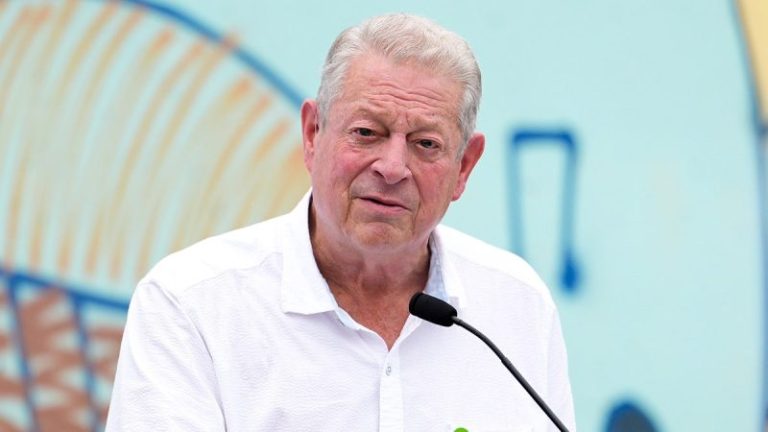
Former Vice President Al Gore on Wednesday condemned President Donald Trump’s move to withdraw the U.S. from United Nations-linked climate initiatives.

Gore claimed in a post on X that ‘the most significant challenge of our lifetimes’ is ‘the climate crisis.’ 

‘The ongoing work of the IPCC, UNFCCC, and other global institutions remains essential to safeguarding humanity’s future,’ he asserted, referring to the Intergovernmental Panel on Climate Change (IPCC), the United Nations Framework Convention on Climate Change (UNFCC).

‘By withdrawing from the IPCC, UNFCCC, and the other vital international partnerships, the Trump Administration is undoing decades of hard-won diplomacy, attempting to undermine climate science, and sowing distrust around the world,’ he wrote.

Trump issued a memorandum ordering U.S. withdrawal from the two initiatives that Gore mentioned as well as scads of other entities.

The president’s memorandum lists the Intergovernmental Panel on Climate Change under a grouping of ‘Non-United Nations Organizations.’ But the website ipcc.ch states, ‘The Intergovernmental Panel on Climate Change (IPCC) is the United Nations body for assessing the science related to climate change.’

In the memorandum, the president declared that he has ‘determined that it is contrary to the interests of the United States to remain a member of, participate in, or otherwise provide support to the organizations listed in section 2 of this memorandum.’

Secretary of State Marco Rubio said in a statement, ‘As this list begins to demonstrate, what started as a pragmatic framework of international organizations for peace and cooperation has morphed into a sprawling architecture of global governance, often dominated by progressive ideology and detached from national interests.’

Gore, who served as vice president alongside Democratic President Bill Clinton, lost the 2000 presidential contest to Republican George W. Bush.

This post appeared first on FOX NEWS

Alain Corbani, head of mining at Montbleu Finance and manager of the Global Gold and Precious Fund, sees the gold price reaching US$5,000 per ounce in the near term.

He sees real interest rates and the US dollar as the key factors to watch, but noted that other elements are also adding tailwinds.

Securities Disclosure: I, Charlotte McLeod, hold no direct investment interest in any company mentioned in this article.

This post appeared first on investingnews.com

A bipartisan group of senators is still working on a fix for the now-expired Obamacare subsidies and believe that they may be nearing a proposal that could hit the Senate floor.

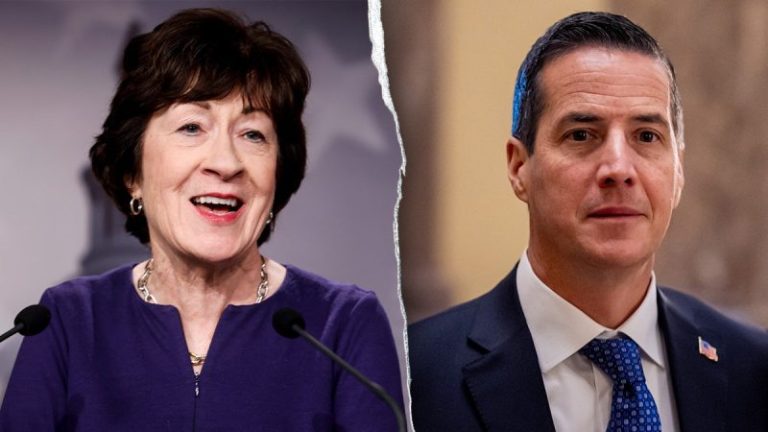
The confab, which met a handful of times during Congress’ holiday break, adjourned once more behind closed doors on Monday night. Sens. Susan Collins, R-Maine, and Bernie Moreno, R-Ohio, are leading the talks among several Senate Republicans and Democrats looking for a compromise solution.

Most who attended the meeting were tight-lipped on specifics of the still-simmering proposal, but Collins noted the plan was similar to the initial offering from her and Moreno.

‘Parts of the bill are similar to what Senator Moreno and I proposed originally, with a two-year extension, with some reforms in the first year and then more substantial reforms in the second year,’ she said.

Their original plan — one of several floating around in the upper chamber — would have extended the subsidies by two years, put an income cap onto the credits for households making up to $200,000 and eliminated zero-cost premiums as a fraud preventive measure by requiring a $25 minimum monthly payment.

Sen. Tim Kaine, D-Va., one of the lawmakers who has routinely attended the meetings, said the talks were going well.

‘We had a really good discussion last night,’ Kaine said. ‘I don’t want to characterize it other than we had a really good discussion.’

And Senate Majority Leader John Thune, R-S.D., said that he had gotten an update on negotiations from Moreno Tuesday morning and believed that the bipartisan huddles had been productive.

Still, any plan that hits the floor has to hit several benchmarks for Republicans, including antifraud guardrails, a transition into health savings accounts (HSAs) and more stringent anti-abortion language.

‘The keys are reforms, obviously, and then how do you navigate [the Hyde Amendment],’ Thune said. ‘I think that’s probably the most challenging part of this. But again, I think there’s potentially a path forward, but it’s something that has to get a big vote, certainly a big vote.’

The Hyde Amendment issue is a barrier for both sides of the aisle, given that Senate Republicans demand that changes be made to the subsidies, and more broadly Obamacare, to prevent any taxpayer dollars from funding abortions.

That debate received a wrinkle Tuesday when President Donald Trump told House Republicans ‘you have to be a little flexible’ when it comes to the Hyde Amendment.

That triggered mixed reactions from Republicans in the upper chamber.

Sen. James Lankford, R-Okla., said that he had ‘no idea the context’ of Trump’s remarks but affirmed that he was ardently against funding abortions.

‘I’m saying I’m not flexible in the value of human life,’ Lankford said. ‘Life is valuable. I don’t believe some children are disposable, and some children are valuable. I think all children are valuable.’

Senate Democrats largely viewed Trump’s comments as a sign of progress — that maybe Republicans would budge on the Hyde issue. But flexibility goes both ways, and Sen. Ron Wyden, D-Ore., and top-ranking Democrat on the Senate Finance Committee, wasn’t ready to budge on the matter.

‘I am not going to open the door to Hyde, given what happens and what has been seen historically when you do that,’ he said. ‘If you open the door, it will get drafty in a hurry, and I’m not going to let it happen.’

Moreno signaled that Republicans might have to make a compromise on the issue if they wanted to move ahead with any kind of healthcare fix that could pass muster in the Senate.

He noted that there was a sense that ‘maybe the Obamacare language wasn’t as adherent to that philosophy [of Hyde] as it should be.’

‘But that’s not something that we’re looking — able to change right now,’ he said. ‘Because, quite frankly, if you put Hyde up to a vote among Democrats today, as opposed to Democrats 20 years ago, it would probably fail 46 to one on the Democrat side. So unfortunately, most Democrats today feel that there should be federal funding for abortion.’

This post appeared first on FOX NEWS

(TheNewswire)

Anchors to:

Drill hole LBX25-095

  • 3.50 m@ 1.40 g/t Au and 2.30% Zn (162.50 m to 166.00 m) 

including:

  • 0.70 m @ 5.97 g/t Au,18.4 g/t Ag and 10.8% Zn. 

  • 4.50 m@ 2.00 g/t Au, 5.75 g/t Ag and 1.22% Zn(188.00 m to 192.50 m), 

including:

  • 0.50 m @ 3.30 g/t Au,17.8 g/t Ag and 6.84% Zn (188.00 m to 188.50 m),  

  • 2.40 m @ 3.00 g/t Au and 0.78% Zn (190.10 m to 192.50 m), and 

  • 0.55 m @ 12.15 g/t Au, 16.1 g/t Ag and 2.66% Zn (191.10 m to 192.50 m). 

Drill hole LBX25-096

  •          3.85 m @ 1.92 g/t Au and 0.13% Zn (38.70 m to 42.55 m),
    including:
     

  • 0.60 m @ 2.78 g/t Au, 6.30 g/t Ag and 0.62% Zn (40.60 m to 41.20 m), and 

  • 55 m @ 9.59 g/t Au, 5.50 g/t Ag and 0.11% Zn (42.00 m to 42.55 m). 

TORONTO, ONTARIO (January 7, 2026) – TheNewswire – LAURION Mineral Exploration Inc. (TSX-V: LME | OTC: LMEFF | FSE: 5YD) (‘LAURION’ or the ‘Corporation’) is very pleased to report assay results of the first two drill holes from recent diamond drilling at the A-Zone/McLeod/CRK Zone at the Ishkōday Project, located in the Beardmore–Geraldton Greenstone Belt of north-western Ontario, approximately 220 kilometres northeast of Thunder Bay.

The current drill program focuses on the A-Zone/McLeod/CRK Zone, a structurally controlled gold-base metal corridor where historic drilling, surface work, and more recent LAURION drilling demonstrate repeated gold, silver, zinc, and copper mineralization along strike and at depth.

‘These results reinforce what we have been methodically building at Ishkōday — a structurally controlled gold-zinc system with repeated mineralization along a coherent corridor, stated Cynthia Le Sueur Aquin, President and CEO of LAURION. ‘The combination of higher-grade intervals within broader mineralized zones, supported by both historic and recent drilling, gives us confidence that our targeting approach is working as intended. As we continue drilling, our focus remains on understanding continuity, structure, and scale.’

Drill hole LBX25-095 was designed to test a segment of the A-Zone/McLeod/CRK Zone structural corridor supported by proximal historic drill holes 90-41 and 90-49, as well as modern LAURION drill holes LBX20-021 and LBX20-017. Historic drill hole 90-41 intersected multiple gold-bearing intervals at various depths, including 0.55 m grading 3.69 g/t Au and 1.70% Zn, 0.55 m grading 11.88 g/t Au, 8.0 g/t Ag and 8.6% Zn, and deeper intersections including 0.91 m grading 1.63 g/t Au,16.0 g/t Ag, 0.16% Cu and 6.7% Zn, 0.66 m grading 2.12 g/t Au, 14.0 g/t Ag and 10.3% Zn, and 5.36 m grading 0.44 g/t Au, 6.16 g/t Ag and 4.28% Zn (Orient Resources Inc., Sturgeon River Property Diamond Drill Program Report, Claude Larouche, 1990). Nearby historic drill hole 90-49 returned 0.31 m grading 3.87 g/t Au and 1.73 m grading 3.46 g/t Au, 20.36 g/t Ag and 3.72% Zn (Orient Resources Inc., Claude Larouche, 1990). More recent drilling confirmed continuity of mineralization within the same corridor, including 14.08 m grading 0.89 g/t Au in drill hole LBX20-021 and additional gold-silver intervals in LBX20-017 (LAURION press release dated July 28, 2020).

Drill hole LBX25-095 intersected multiple gold-and-zinc-bearing intervals hosted within sheared and altered volcanic rocks consistent with the main A-Zone/McLeod/CRK Zone geological framework.

Reported assay results include 2.60 m grading 1.84 g/t Au from 27.40 to 30.00 m, including 0.60 m grading 7.25 g/t Au, 1.00 m grading 1.02 g/t Au from 45.30 to 46.30 m, and several broader intervals of lower-grade gold with elevated zinc.

A mid-depth mineralized zone returned 3.50 m grading 1.40 g/t Au and 2.30% Zn from 162.50 to 166.00 m, including a higher-grade interval of 0.70 m grading 5.97 g/t Au, 18.4 g/t Ag, 0.22% Cu and 10.8% Zn from 163.05 to 163.75 m.

Deeper in the hole, drilling intersected 4.50 m grading 2.00 g/t Au, 5.75 g/t Ag and 1.22% Zn from 188.00 to 192.50 m, including 0.50 m grading 3.30 g/t Au,17.8 g/t Ag and 6.84% Zn, 2.40 m grading 3.00 g/t Au, and 0.55 m grading 12.15 g/t Au,16.1 g/t Ag and 2.66% Zn.  

Drill hole LBX25-096, located approximately 52 metres east of LBX25-095, was designed to test the eastern continuation of the same structurally controlled mineralized corridor. Targeting for LBX25-096 was informed by proximal drill holes LBX12-006, LBX20-020, and LBX22-089, which intersected gold-bearing mineralization within the same stratigraphic and structural package. Notably, drill hole LBX20-020 returned broad gold-bearing intervals including 6.86 m grading 0.47 g/t Au and 10.84 m grading 0.48 g/t Au, demonstrating mineralized width and continuity and supporting step-out drilling to the east (LAURION press release dated July 28, 2020). Drill hole LBX25-096 subsequently intersected multiple gold-bearing intervals within this corridor, including 3.85 m from 38.70 m to 42.55 m grading 1.92 g/t Au, including a higher-grade interval of 0.55 m from 42.00 m to 42.55 m grading 9.59 g/t Au, and a shallow interval of 1.15 m from 8.35 m to 9.50 m grading 2.14 g/t Au, including 0.50 m from 9.00 m to 9.50 m grading 4.76 g/t Au.

Gold mineralization at Ishkōday occurs within an orogenic gold framework and is commonly accompanied by silver, consistent with orogenic systems globally. In addition, localized enrichment in silver and base metals reflects polymetallic mineralizing events that are overprinted and locally modified by the orogenic gold event. These observations align with structural and geochemical interpretations supporting a multi-phase mineralizing history, as outlined in the Keaton Strongman Report 2024 on the Ishkōday: Ancestral structural controls between Archean epithermal and orogenic gold mineralization.

TABLE Of ASSAYS FOR DRILL HOLES LBX25-095 AND LBX25-096


Hole ID

From (m)

To (m)

Core Length (m)

Au (g/t)

Ag (g/t)

Zn (%)

LBX25-095

27.40

30.00

2.60

1.84

0.45

0.02

including

27.90

28.50

0.60

7.25

1.10

LBX25-095

45.30

46.30

1.00

1.02

0.25

0.15

LBX25-095

91.25

95.25

4.00

0.11

0.25

0.01

LBX25-095

132.10

132.60

0.50

0.27

1.40

1.27

LBX25-095

135.20

135.70

0.50

0.53

6.10

0.24

LBX25-095

141.00

141.60

0.50

0.13

1.00

0.13

LBX25-095

143.80

147.80

4.00

0.12

1.71

0.17

LBX25-095

145.00

147.80

2.80

0.14

2.16

0.21

LBX25-095

162.50

166.00

3.50

1.40

4.27

2.30

Including

163.05

163.75

0.70

5.97

18.40

10.80

LBX25-095

167.20

169.35

2.15

0.21

1.36

0.18

LBX25-095

188.00

192.50

4.50

2.00

5.75

1.22

Including

188.00

188.50

0.50

3.30

17.80

6.84

Including

190.10

192.50

2.40

3.00

4.80

0.78

Including

191.1

192.50

0.55

12.15

16.10

2.66

LBX25-096

8.35

9.50

1.15

2.14

5.18

0.61

Including

9.00

9.50

0.50

4.76

8.40

1.35

LBX25-096

10.90

11.40

0.50

0.52

0.70

0.02

LBX25-096

35.75

36.25

0.50

0.31

1.70

0.02

LBX25-096

38.70

42.55

3.85

1.92

2.41

0.13

Including

40.60

41.20

0.60

2.78

6.30

0.62

Including

42.00

42.55

0.55

9.59

5.50

0.11

LBX25-096

98.20

98.70

0.50

0.47

1.80

0.03

LBX25-096

106.80

108.50

1.70

1.19

1.49

0.07

Including

106.80

107.30

0.50

3.14

2.20

0.07

LBX25-096

118.70

121.60

2.90

0.28

3.65

1.41

Including

118.70

119.20

0.50

0.90

14.90

8.18

LBX25-096

129.60

130.10

0.50

2.22

10.10

3.05


Name

Elevation

Azimuth

Dip

Easting

Northing

Depth (m)

LBX25-095

332.5

124

-47

446115.3

5512416

201

LBX25-096

331.4

125

-45

446168

5512429

168

TOTAL


369

Mineralization on the A-Zone/McLeod/CRK Zone is interpreted to be controlled by the interaction of north–south-trending quartz-gold extensional veins and northeast–southwest-trending sulphide-rich shear veins. Reactivation of earlier sulphide zones during later deformation, locally associated with magnetite-rich assemblages, provides a structural framework that explains repeated gold enrichment, localized grade enhancement within wider base metal envelopes, and strong strike continuity beneath cover.

The current drilling on the A-Zone/McLeod/CRK Zone has focused on refining LAURION’s understanding of the geometry, continuity, and structural controls of the mineralized system. Ongoing work by the LAURION’s technical team and independent consultants is centred on consolidating historical and modern drilling, validating geological interpretations, and strengthening the 3D structural framework. This work is intended to ensure that any future technical milestones are based on a robust, well-constrained geological model, while preserving strategic flexibility as the Ishkōday Project continues to evolve.

Sampling and QA/QC Protocols

All drill core is transported and stored inside the core facility located at the Ishkōday Project in Greenstone, Ontario. LAURION employs an industry standard system of external standards, blanks and duplicates for all of its sampling, in addition to the QA/QC protocol employed by the laboratory. After logging, core samples were identified and then cut in half along core axis in the same building and then zip tied individually in plastic sample bags with a bar code. Approximately five or six of these individual bags were then stacked into a ‘rice’ white material bag and stored on a skid for final shipment to the laboratory.

All core samples were shipped to the ALS facility in Thunder Bay, Ontario, which were then prepared by ALS Global Geochemistry in Thunder Bay and analyzed by ALS Global Analytical Lab in North Vancouver, British Columbia. Samples are processed by 4-acid digestion and analyzed by fire assay on 50 g pulps and ICP-AES (Inductively Coupled Plasma – Atomic Emission Spectroscopy). Over limit analyses are reprocessed with gravimetric finish.

A total of 5% blanks and 5% standard are inserted randomly within all samples. 5% of the best assay result pulps were sent for re-assays. All QA/QC were verified, and no contamination or bias have been observed. The remaining half of the core, as well as the unsampled core, is stored in temporary core racks at the core logging facility in Beardmore and moved to the core storage facility at the Ishkōday Project.

Note: QA/QC review of standards and duplicates indicates analytical results are reliable. One zinc standard adjacent to a high-grade zinc interval returned elevated values consistent with expected analytical behaviour following high-grade samples.

Qualified Person

The technical contents of this release were reviewed and approved by Jean-Philippe Paiement, P.Geo, MSc, a consultant to LAURION and a Qualified Person as defined by National Instrument 43-101 – Standards of Disclosure for Mineral Projects.

About LAURION Mineral Exploration Inc.

The Corporation is a mid-stage junior mineral exploration and development company listed on the TSXV under the symbol LME and on the OTCPINK under the symbol LMEFF. LAURION now has 278,716,413 outstanding shares, of which approximately 73.6% are owned and controlled by insiders who are eligible investors under the ‘Friends and Family’ categories.

LAURION’s emphasis is on the exploration and development of its flagship project, the 100% owned mid-stage 57 km2 Ishkōday Project, and its gold-rich polymetallic mineralization.

LAURION’s chief priority remains maximizing shareholder value. A large portion of the Corporation’s focus in this regard falls within the scope of its mineral exploration activities and more specifically, advancing the Ishkōday Project. A consequence of LAURION’s success and advancement over the past several years is that the Corporation has become positioned as an acquisition target for appropriate potential acquirors. Accordingly, the Corporation’s Board of Directors is aware that possible strategic alternatives and transactional opportunities may arise and/or could be procured in the short or medium terms. The Corporation will promptly issue a press release if any material change occurs.

FOR FURTHER INFORMATION, CONTACT:

Laurion Mineral Exploration Inc.

Cynthia Le Sueur-Aquin – President and CEO

Tel: 1-705-788-9186 Fax: 1-705-805-9256


Douglas Vass – Investor Relations Consultant

Email: info@laurion.ca

Website: http://www.LAURION.ca

Follow us on: X (@LAURION_LME), Instagram (laurionmineral) and LinkedIn ()


Caution Regarding Forward-Looking Information

This press release contains forward-looking statements, which reflect the Corporation’s current expectations regarding future events including with respect to LAURION’s business, operations and condition, management’s objectives, strategies, beliefs and intentions, the Corporation’s ability to advance the Ishkōday Project, the nature, focus, timing and potential results of the Corporation’s exploration, drilling and prospecting activities in 2026 and beyond, including the Corporation’s diamond drill program described in this press release and the Corporation’s other planned activities for the Ishkōday Project for the remainder of 2026, and the statements regarding the Corporation’s exploration or consideration of any possible strategic alternatives and transactional opportunities, as well as the potential outcome(s) of this process, the possible impact of any potential transactions referenced herein on the Corporation or any of its stakeholders, and the ability of the Corporation to identify and complete any potential acquisitions, mergers, financings or other transactions referenced herein, and the timing of any such transactions. The forward-looking statements involve risks and uncertainties. Actual events and future results, performance or achievements expressed or implied by such forward-looking statements could differ materially from those projected herein including as a result of a change in the trading price of the common shares of LAURION, the TSX Venture Exchange or any other applicable regulator not providing its approval for any strategic alternatives or transactional opportunities, the interpretation and actual results of current exploration activities, changes in project parameters as plans continue to be refined, future prices of gold and/or other metals, possible variations in grade or recovery rates, failure of equipment or processes to operate as anticipated, the failure of contracted parties to perform, labor disputes and other risks of the mining industry, delays in obtaining governmental approvals or financing or in the completion of exploration, as well as those factors disclosed in the Corporation’s publicly filed documents. Investors should consult the Corporation’s ongoing quarterly and annual filings, as well as any other additional documentation comprising the Corporation’s public disclosure record, for additional information on risks and uncertainties relating to these forward-looking statements. The reader is cautioned not to rely on these forward-looking statements. Subject to applicable law, the Corporation disclaims any obligation to update these forward-looking statements. All sample values are from grab samples and channel samples, which by their nature, are not necessarily representative of overall grades of mineralized areas. Readers are cautioned to not place undue reliance on the assay values reported in this press release.

NEITHER THE TSX VENTURE EXCHANGE NOR ITS REGULATION SERVICE PROVIDER (AS THAT TERM IS DEFINED IN THE POLICIES OF THE TSX VENTURE EXCHANGE) ACCEPTS RESPONSIBILITY FOR THE ADEQUACY OR ACCURACY OF THE CONTENT OF THIS NEWS RELEASE.


Copyright (c) 2026 TheNewswire – All rights reserved.

News Provided by TheNewsWire via QuoteMedia

This post appeared first on investingnews.com

Investor Insight

Centurion Minerals offers investors an early-stage entry point into a strategically located gold exploration company positioned within one of North America’s most prolific and active mining districts. With a restructured corporate foundation, and a highly experienced geological and corporate finance team, the company is primed for value-creating discoveries.

investingnews.com

Overview

Centurion Minerals (TSXV:CTN) is a Canadian exploration company focused on the acquisition, exploration and development of precious metals projects in the Americas.

The company’s strategy is centered on advancing high-quality, early-stage gold assets through systematic exploration to define drill-ready targets and unlock the discovery potential inherent in its three-part claim package: the Newman, Noseworthy and Hepburn properties. Situated near major operations and new discoveries, these claims benefit from excellent infrastructure, year-round road access and proximity to proven mineralized structural corridors. Centurion intends to increase shareholder value through targeted geophysics, ground truthing and drilling programs designed to reveal new high-grade zones, as well as through potential future acquisitions of complementary gold assets across the Americas.

Backed by a leadership team with decades of exploration, geology, corporate finance and project development experience, Centurion is positioned to capitalize on strong gold market fundamentals and renewed investor interest in junior exploration companies. With a low current valuation and advancing work program, the company provides leverage to both exploration success and broader trends in the gold sector.

Company Highlights

  • Highly prospective gold project in a world-class district located in the central north Abitibi greenstone belt, adjacent to major deposits and producing mines including Hecla Mining’s (NYSE:HL) Casa Berardi mine and Agnico Eagle’s (TSX:AEM) Detour Lake operations.
  • Exceptional closeology advantage, with its Casa Berardi West project situated just 12 km from AMEX Exploration’s (TSXV:AMX) 1.6 Moz “Perron” discovery and along the same structural corridors that have produced multi-million-ounce deposits.
  • Significant historic drilling across the three claim groups, including results up to 38 g/t gold and multiple intervals indicating gold-bearing iron formations and shear zones.
  • Clear exploration strategy including historic data compilation, geophysical surveys, target generation and a planned program to define new mineralized zones.
  • Experienced management and technical team with decades of experience in mineral exploration, and international corporate finance, enhances the potential of uncovering additional exploration opportunities.
  • Low market capitalization and recently reactivated corporate structure, offering investors a low entry point ahead of meaningful upside catalysts.

Key Project

Casa Berardi West Gold Project

The Casa Berardi West project is Centurion’s flagship gold exploration asset, encompassing approximately 6,732 hectares across three contiguous claim groups – Newman, Noseworthy and Hepburn – located 66 km northeast of Cochrane, Ontario. The project sits along structural corridors that host some of the region’s most significant deposits, including Hecla Mining’s Casa Berardi mine (3 Moz past production, plus 4 Moz in reserves and resources), Agnico Eagle’s Detour Lake mine (15 Moz reserve, producing ~659,000 oz of gold per year ), and AMEX Exploration’s Perron discovery (1.6 Moz measured and indicated resource at 6.14 g/t gold).

Location of the three claim groups at Casa Berardi West

Geological Setting & Closeology Advantage

The project is situated within the central north Abitibi Subprovince, an Archean greenstone belt known globally for its prolific endowment of gold and base metals. The claims lie adjacent to geological features associated with multiple major deposits – iron formations, shear zones and VMS trends – creating strong analogues to high-grade gold mines such as the Musselwhite mine in Northern Ontario.

This “closeology” positioning significantly enhances the potential for Centurion’s ground to host similar mineralization.

Historic Results & Target Areas

Historic exploration across the Casa Berardi West project – spanning more than 70 RC and diamond drill holes – has already confirmed the presence of gold-bearing structures and favorable host rocks. Notably, previous work returned multiple samples above 1 g/t gold, including a standout result of 38 g/t gold, demonstrating strong mineralization potential across the claim area.

Significant historic drill results at Newman target

Across the three claim groups, drilling and geophysical surveys have identified key geological features associated with major deposits in the region, including iron formations, shear zones and sulphidized horizons. Several zones of interest remain untested or underexplored, particularly along structural trends that extend from nearby high-grade gold and VMS systems such as the Perron and Normetal areas.

These findings provide Centurion with multiple high-priority target areas for follow-up exploration, forming the foundation for its next phase of geophysical work and upcoming drill targeting.

Management Team

David Tafel – Director, President and CEO

David Tafel brings over 30 years of experience in corporate structuring, strategic planning, financing and executive management across multiple public and private resource companies. He has raised several hundred million dollars for ventures in mining, technology and life sciences, and previously managed private investment funds at Canada’s largest independent securities firm.

Jeremy Wright – Director and CFO

A seasoned financial executive with more than 20 years of experience, Jeremy Wright serves as president & CEO of Seatrend Strategy Group and has held CFO roles across numerous public companies in the resource and technology sectors. His background includes financial management, negotiations and environmental economics, supported by extensive board leadership experience.

Joseph Del Campo – Director

Joseph Del Campo has served as CFO and Interim CEO across several mining companies, including Unigold and First Nickel. With decades of corporate financial leadership and board experience, he contributes deep governance, audit and operational oversight expertise to Centurion’s board.

Mike Kilbourne – Geological Consultant

A veteran geologist with 40+ years of industry experience, Mike Kilbourne has managed over 100,000 metres of drilling across North America and Mexico, worked as a production geologist in multiple mining environments, and generated over 700 exploration targets for private and public companies.

Jamie Lavigne – Geological Consultant

Jamie Lavigne is a senior exploration geologist with more than 30 years of experience in base and precious metals. He has held senior technical roles with major mining companies and specializes in advanced exploration, resource delineation and geological modeling across global mineral belts.

This post appeared first on investingnews.com

President Donald Trump’s announcement that the United States will temporarily ‘run’ Venezuela following the capture of Nicolás Maduro may prove to be a defining moment for the Western Hemisphere — either a disciplined effort to restore regional stability or the opening chapter of an avoidable, open-ended entanglement.

At his Mar-a-Lago press conference on Saturday, the president stated plainly, ‘We will run the country until such time as we can do a safe, proper and judicious transition.’ He added that members of his national security team standing behind him would oversee the effort and did not rule out ‘boots on the ground.’ Hours later, speaking aboard Air Force One, he sharpened the message further: ‘We’re going to run it, fix it.’

The strategic logic is easy to understand. Venezuela sits atop the world’s largest proven oil reserves and has become a hub for narcotics trafficking, corruption and malign outside influence. The administration’s December 2025 National Security Strategy explicitly embraces what it calls a ‘Trump Corollary’ to the Monroe Doctrine — pledging to deny non-hemispheric competitors such as China, Russia and Iran control over strategically vital assets in the Americas. In that framework, Venezuela is not merely a humanitarian tragedy; it is a test case.

But this is precisely where experience should sober ambition.

The first problem: Who is actually in charge?

A central contradiction now confronts Washington. How does the United States ‘run’ Venezuela when its constitutionally designated vice president, Delcy Rodríguez, has already been sworn in domestically as interim president following Maduro’s removal?

Rodríguez’s claim to authority — backed by Venezuela’s Supreme Tribunal of Justice and regime-loyal institutions — is rejected by Washington as illegitimate. Yet in practical terms, ministries, security forces and regional authorities inside Venezuela remain staffed by officials loyal to the old system. That means the United States is not governing Venezuela in name, law or day-to-day administration — even as presidential rhetoric suggests otherwise.

This disconnect between declared authority and actual control is where post-conflict operations often fail.

Lessons written in blood: Iraq and the cost of improvisation

I learned that lesson firsthand. In 2002 and 2003, I served as a member of then–Defense Secretary Donald Rumsfeld’s Military Analyst Group. We were given extensive access — briefings, travel and candid discussions with officials planning both the Iraq invasion and what would follow.

In early 2003, several of us met with retired officers outlining postwar governance plans. We asked basic but essential questions: Who would secure ministries? How would local governance function? How would electricity, water and fuel distribution be restored? The answers were often vague, more aspirational than operational.

After the invasion, I visited Baghdad and met with Coalition Provisional Authority officials under Ambassador Paul Bremer. Again, the gaps were obvious. We had removed a regime but had not built the machinery needed to prevent the vacuum that follows. 

One decision still echoes: the CPA’s order dissolving Iraq’s security institutions, including the Ministry of Defense. RAND’s official history records that the order was issued with little objection at senior levels, even as misunderstandings were masked by apparent consensus. The result was predictable — security collapsed, insurgency surged and the U.S. presence expanded far beyond its original scope.

Venezuela now risks a similar mistake. Capturing Maduro may prove to be the easy part. Governing what comes next is the hard part — and the part America has too often improvised.

Panama is the wrong analogy

Some have compared Venezuela today to Panama in 1989, when U.S. forces captured Manuel Noriega and quickly installed Guillermo Endara as president. The comparison is tempting — and deeply misleading.

Panama was small, U.S. forces were already present, and a recognized successor government was ready to assume power. Venezuela, by contrast, has 30 million people, no broadly accepted transitional authority and entrenched military-criminal networks embedded throughout the state. What worked in Panama cannot simply be scaled up to Caracas.

‘Not day-to-day governance’— what that really means

Secretary of State Marco Rubio has since clarified that the United States does not intend to govern Venezuela ‘day-to-day.’ That clarification matters — but it raises its own questions. If Washington is not running ministries, courts, budgets or police forces, what does that leadership look like?

In real terms, it appears the administration is signaling a model of indirect control rather than occupation. The primary lever is economic, especially oil.

Venezuela’s political and military elites survive on access to oil revenues. Whoever controls export permissions, sanctions relief, insurance access and dollar-denominated transactions controls the real center of gravity. Conditioning access to those revenues — while freezing assets abroad and coordinating sanctions enforcement with allies — offers Washington leverage over the top of the system without governing the country outright.

That approach amounts to influence without occupation: pressure without American administrators running Caracas.

A narco-state is not a one-man show

There is also a dangerous illusion at work — that removing Maduro dismantles the regime.

Maduro sat at the apex of a narco-state and was indicted in U.S. courts on charges of drug trafficking and narco-terrorism. But he did not act alone. His power rested on a network of generals, intelligence chiefs, judges, energy officials and cartel intermediaries who enriched themselves under the existing system. Many of those figures remain in place today.

They are unlikely to surrender quietly. Some will seek accommodation; others will resist through bureaucratic sabotage, violence or the manipulation of public fear. Without a credible transitional framework anchored in Venezuelan civil society and supported by international legitimacy, the system Maduro built may survive him.

The questions that must be answered — now

If the administration wants to avoid repeating Iraq, it must answer several questions publicly and soon.

What is the legal basis — and limit — of U.S. authority? Who provides immediate security, and under what rules? Which Venezuelan partners will be empowered to lead? What economic plan serves Venezuelans first, not just foreign interests? And how does this mission end?

Once the United States assumes responsibility for ‘running’ another country, it inherits responsibility not only for success but for failure.

The Trump administration can still make Venezuela a model rather than a warning. But doing so will require discipline: clearly defined objectives, credible Venezuelan partners, continuity in security forces, transparent reconstruction tied to humanitarian relief and an exit strategy that is real — not rhetorical.

Venezuela is not Iraq. But history has a way of repeating itself when preparation yields to improvisation.

This post appeared first on FOX NEWS

The lithium market heads into 2026 after one of its most punishing years in recent memory, shaped by deep oversupply, weaker-than-expected electric vehicle (EV) demand and sustained price pressure.

In 2025, lithium carbonate prices in North Asia sank to four year lows, forcing production cuts and project delays as the industry grappled with the consequences of years of aggressive supply growth.

The second half of the year saw a rebound as lithium carbonate began a slow ascent. By December 29, prices had risen 56 percent from their January start position of US$10,798.54 per metric ton to US$16,882.63.

While volatility and brief price rallies highlighted the market’s sensitivity to sentiment and policy signals, analysts increasingly see the sector’s first-half downturn as an inflection point. With high-cost supply under strain and inventories gradually tightening, expectations are building that 2026 could mark the start of a rebalancing phase, supported by long-term demand tied to electrification, energy storage and the broader energy transition.

Battery energy storage systems to drive lithium growth

Energy storage is emerging as the fastest-growing pillar of battery demand, with major implications for the lithium market heading into 2026. Indeed, according to Benchmark Mineral Intelligence’s Iola Hughes, growth in this segment is accelerating well ahead of the broader battery market.

“We’re expecting about 44 percent growth (in 2025),” she said. That’s compared with roughly 25 percent growth across total battery demand. As a result, energy storage is set to account for about a quarter of total global battery demand in 2025, a share that is rising rapidly. The shift is even more pronounced in the US, where Hughes expects storage to make up a significant “35 to 40 percent of battery demand in the next few years.”

That growth is being driven by falling costs and the growing role of lithium iron phosphate (LFP) chemistry, which Hughes described as the dominant technology in stationary storage.

“It very much is the story of LFP right now,” she said, pointing to recent innovation and lower costs, which have helped to make LFP “the best chemistry” for most storage applications.

Globally, deployment remains highly concentrated. China and the US account for roughly 87 percent of cumulative grid-scale storage installations, but new markets are emerging quickly.

Saudi Arabia, Hughes noted, has surged from effectively zero to the world’s third largest market in a matter of months, deploying around 11 gigawatt-hours in the first quarter alone. “That really goes to show just how early this market is in its story,” she said; it also indicates how quickly new sources of battery demand can materialize.

Cost declines sit at the core of the expansion. Fully integrated storage systems in China are now approaching, and in some cases falling below, US$100 per kilowatt-hour. Hughes said this has fundamentally changed the economics of storage, making deployments viable even as policy support tightens. “The prices are so much cheaper, the economics are a lot stronger, even in a normal, unsubsidized environment,” she said.

In the US, growth remains concentrated in a handful of states — led by California and Texas — but Hughes stressed how early stage the market still is. New Mexico, now the fifth largest storage market, is built on just a few projects.

At the same time, the scale of energy storage projects is increasing rapidly. Giga-scale installations, defined as projects larger than 1 gigawatt-hour, are moving from novelty to norm.

Hughes said nine such projects are expected to come online this year, accounting for about 20 percent of battery demand, with more than 20 in the pipeline for next year, representing close to 40 percent.

Policy remains a key variable. While investment tax credits for storage remain in place in the US, Hughes warned that tighter sourcing and eligibility rules are reshaping supply chains, particularly for LFP. The pipeline of announced LFP gigafactories has grown sharply this year — up more than 60 percent — led largely by Korean manufacturers.

“We’re in a much better position when it comes to sourcing of cells for energy storage than we were even three months ago,” she said, though challenges remain around production tax credits and heavy reliance on Chinese cathode supply.

Underlying the storage boom is a broader shift in electricity demand.

After more than a decade of stagnation, US power demand is rising again, driven by data centers, AI, electrification and reshoring of manufacturing. Hughes said estimates now point to electricity demand rising 20 to 30 percent by 2030, placing energy storage at the center of energy security planning. “Storage has become a central topic in the energy security conversation,” she said, adding that its role will only grow.

Looking ahead, Hughes said LFP is likely to dominate shorter-duration storage, while sodium-ion and other battery technologies compete in longer-duration segments.

For the lithium market, the message is clear: as storage scales up in size, geography and strategic importance, it is becoming one of the most powerful demand drivers shaping the sector’s outlook for 2026 and beyond.

Lower costs driving LFP adoption

Howard Klein, RK Equity co-founder and partner, argued that falling costs remain a central driver of LFP battery adoption, reflecting a familiar economic dynamic: as prices decline, demand accelerates.

While lithium is a key input, he suggested that ongoing manufacturing efficiencies and economies of scale are likely to continue pushing LFP battery costs lower over time, potentially offsetting upward pressure from higher lithium prices.

Klein emphasized that even if LFP costs rise modestly, battery storage will remain highly competitive as a source of grid power. Compared with conventional generation options such as gas or coal, storage already offers a compelling cost and performance proposition, he said, and does not rely solely on subsidies to remain economically viable.

Geopolitical instability on the rise

Critical minerals are increasingly at the center of US foreign policy, and that shift is set to reshape the lithium value chain through 2026, according to Klein. He noted that geopolitics now underpins many of Washington’s strategic priorities, from Eastern Europe to Africa and the Arctic.

“The entire foreign policy agenda is largely being driven by critical minerals,” Klein said, citing regions including Ukraine, Russia, the Democratic Republic of Congo, Greenland and Canada.

China’s willingness to weaponize its dominance in key supply chains has sharpened that focus.

On that note, Klein pointed to Beijing’s renewed rare earths export restrictions in October, noting that these measures were applied globally, not just against the US.

“They showed that they wield a significant negotiating stick, and they’re willing to use it,” he said.

In Klein’s view, that move has triggered a forceful response from western governments. “I think they’ve overplayed their hand to some degree, because now you’ve had this very big reaction from the US.”

That reaction is translating into a renewed push to localize and reshore critical mineral supply chains — an effort that has gained rare bipartisan backing in Washington.

“Unlike so many other things in America, which are hyper-partisan, both sides agree we need to resolve this,” Klein said, adding that the policy momentum will continue to shape the lithium industry.

While rare earths remain the immediate pressure point, Klein said the policy lens is widening. The US recently added 10 minerals to its critical minerals list, which now stands at a total of 60. Lithium, he said, sits high on that agenda, not out of enthusiasm for the metal itself, but because of its role in batteries.

“It’s an understanding by the government that batteries and battery technology are very, very important, and the entire battery supply chain needs to be supported,” Klein said. That support extends beyond lithium to graphite, manganese, nickel, cobalt and battery components such as anodes and cathodes.

The approach is increasingly coordinated across western economies. Klein described it as “a G7 effort,” with the EU and Canada aligned alongside the US through a mix of bilateral and multilateral initiatives.

That coordination is already translating into capital flows. He pointed to US-backed progress at Thacker Pass, EU funding for Vulcan Energy Resources (ASX:VUL,OTC Pink:VULNF) and a 360 million euro grant for European Metals Holdings (LSE:EMH,ASX:EMH,OTCQB:EMHLF) as early examples. Canada, he added, is also ramping up support.

“Canada announced C$6 billion over 26 investments,” Klein said, adding that more announcements are likely by the time the Prospectors & Developers Association of Canada convention rolls around in March.

Klein sees geopolitics, industrial policy and supply chain security converging into powerful lithium tailwinds. “This is a super hot topic,” he said, and one that is likely to drive increased lithium-related activity well into 2026.

Should the US build a strategic lithium reserve?

To dilute China’s grip on the sector, Klein is advocating for a strategic lithium reserve in the US as a more effective and market-neutral alternative to company-specific subsidies. He argues that the industry’s core challenge is not demand, but extreme price volatility caused by global oversupply and what he describes as non-market behavior, which has driven prices below sustainable levels and distorted investment signals across the sector.

“The problem in lithium is volatile prices — prices below the marginal cost, catastrophically low prices that put companies out of business,” he said, pointing to persistent oversupply as the primary distortion.

In Klein’s view, a reserve would act as a counterweight by creating steady, large-scale demand that stabilizes prices within a sustainable range. “The main focus is to stabilize price … not at a super high level, but at a level where companies can make an economic return,” he said. That stability, he added, is essential to incentivize investment in mines, processing and conversion facilities across the US, Canada and allied jurisdictions.

Unlike targeted government support, Klein said a reserve would allow the market to determine which projects succeed.

“I want the market to decide which projects and companies are the best, not necessarily the government,” he said, noting the diversity of competing lithium resources, from US clay and brine projects to Canadian hard-rock deposits.

A more predictable price environment with fewer large swings would lower the cost of capital and give private investors greater confidence to finance viable projects.

Klein stressed that a lithium reserve should not be confused with a stockpile.

“People use ‘stockpile’ and ‘reserve’ like they’re the same thing, and they’re not,” he said. While a stockpile focuses on availability for emergencies, a reserve is designed as a market-stabilizing mechanism that can buy and sell material to smooth volatility. Availability, he said, is a secondary benefit.

He sees the concept as most relevant for mid-sized, fast-growing markets like lithium, graphite and other battery materials that lack deep futures markets and long-term hedging tools.

“Those are the markets that could be amenable to a reserve,” he said, contrasting them with large, liquid commodities like copper or very small, niche minerals tied mainly to military use.

Looking longer term, Klein said a lithium reserve aligns closely with the growth of EVs, energy storage, data centers and grid electrification, as well as geopolitical efforts to diversify supply chains away from China.

“This is no longer just a renewables or EV thing — this is national security, clean energy and building an electro-state,” he said, arguing that reducing volatility would make it easier for automakers, utilities and manufacturers to commit capital without fear of being caught on the wrong side of wild price swings.

North American cooperation key for lithium

Gerardo Del Real, publisher at Digest Publishing, also highlighted the impact of geopolitics on the lithium value chain, emphasizing the need for North American coordination to reduce reliance on dominant producers like China.

“I think this is the path towards that. It has to happen,” he said, noting that collaboration between the US, Canada and potentially Mexico could strengthen regional supply security and reduce vulnerability to global disruptions.

Del Real framed the issue in broader energy terms, pointing to the strategic value of domestic resources: “If we are serious as a country and as a region in being somewhat independent from China and from the Russians … we have a luxury of resources in the US, in Canada … there could be a very powerful path forward.”

On market dynamics, he suggested investors are focused on timing and catalysts, with policy shifts, demand surprises or supply disruptions likely to drive sentiment in 2026.

He also warned that the market may be underestimating the importance of coordinated regional supply initiatives as a factor shaping pricing and project economics.

Securities Disclosure: I, Georgia Williams, hold no direct investment interest in any company mentioned in this article.

This post appeared first on investingnews.com

Tensions between Israel and Turkey are rising amid competing visions for Gaza’s reconstruction and widening strategic friction in Syria, even as both countries remain embedded in a U.S.-led diplomatic framework following the ceasefire with Hamas.

Israel has made clear it will not allow Turkish armed forces to operate inside Gaza, viewing Ankara as a destabilizing actor despite its public efforts to present itself as a reconstruction partner. Turkish sources told Fox News Digital that Ankara does not seek to deploy troops in Gaza, instead focusing on humanitarian aid, infrastructure projects and political influence. 

Dan Diker, president of the Jerusalem Center for Security and Foreign Affairs, said Israel views Turkey as a strategic threat rather than a neutral actor. 

‘From Israel’s point of view, Turkey is the arsonist behaving like the firefighter in Gaza,’ Diker told Fox News Digital. ‘If Turkey is allowed to enter Gaza with several thousand armed men, you can guarantee that this Muslim Brotherhood country will destabilize Gaza and dismantle the very 20-point plan that President Trump has bet the farm on.’

Diker said President Recep Tayyip Erdogan’s ambitions extend beyond Gaza, pointing to Turkey’s military presence in northwestern Syria and what he described as Ankara’s long-standing role enabling radical Islamist groups inside the country.

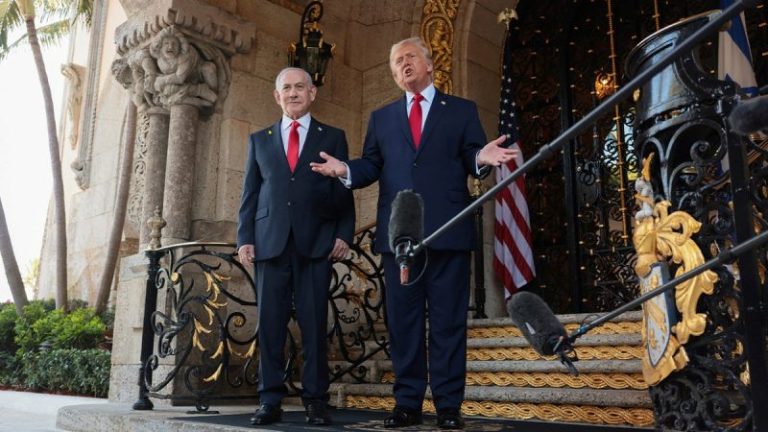
In Trump’s remarks at Mar-a-Lago on Monday at his press conference with Prime Minister Benjamin Netanyahu, he repeatedly praised Erdogan and downplayed concerns about a possible Israel-Turkey confrontation.

‘I know President Erdogan very well… he’s a very good friend of mine,’ Trump said. ‘Bibi respects him… They’re not going to have a problem. Nothing’s going to happen.’ Netanyahu smiled and didn’t comment.

At the same time, Trump aligned himself publicly with Netanyahu on Gaza’s future, issuing his strongest statement yet that Hamas must disarm.

‘They made an agreement that they were going to disarm,’ Trump said. ‘If they’re not going to disarm, those same countries will go and wipe out Hamas.’

According to Diker, the president is deliberately managing tensions with Ankara by keeping Erdogan inside the diplomatic framework rather than confronting him publicly.

‘President Trump is very, very good at keeping adversaries close, together with allies,’ Diker said. ‘That’s why he keeps saying that he likes Erdogan. He wants to keep Erdogan in the party. He wants to keep him close.’

Diker said Trump understands his own leverage in the region and believes he can coalesce Arab and Muslim states when it serves U.S. and Israeli interests, citing coordination during the first phase of the hostage deal.

Diker said Netanyahu is now walking a narrow line, trying not to undermine the framework Trump has built while ensuring Israel’s security red lines are maintained.

‘Israel will not allow Turkish Armed Forces in Gaza. It’s not going to happen,’ Diker said, adding that Israel may still be forced into limited compromises to preserve Trump’s broader support, particularly on Iran.

Beyond Gaza, Israel sees Turkey’s role in Syria as a growing point of friction. Ankara maintains influence across large swaths of northern Syria, while Israel has continued air operations aimed at Iranian targets.

Sinan Ciddi, a senior fellow at the Foundation for Defense of Democracies, warned in an analysis that Turkey views Israel-aligned regional cooperation as a direct challenge to its ambitions.

Ciddi cited a trilateral summit between Israel, Greece and Cyprus in Jerusalem as a flashpoint, arguing it signaled resistance to Turkey’s ‘Blue Homeland’ doctrine and broader maritime claims in the Eastern Mediterranean.

Following the summit, pro-Erdogan media outlets described Israel as a major threat, while Turkey increased military activity that alarmed U.S. allies, including airspace violations near Greece and reported efforts to expand radar coverage in Syria that could hinder Israeli operations against Iran.

Diker said Israel’s recognition of Somaliland adds another layer to the rivalry, particularly in the Red Sea region. ‘The Turks are working in Somalia. They are also working to control and influence what happens in the Red Sea region,’ Diker said. ‘Which is why Somaliland’s development is very, very important.’

He argued that the move gives Israel a strategic foothold along a vital maritime corridor.

‘Israel then has a strategic base, a forward base in Somaliland on the Red Sea,’ Diker said. ‘Very, very important, because it checkmates Turkey.’

Diker said the move was viewed in Ankara as a direct challenge to Turkish ambitions in the Horn of Africa, adding that the Trump administration had ‘expressed its understanding’ of Israel’s decision.

Despite Erdogan’s harsh rhetoric toward Israel and vocal support for the Palestinian cause, Turkish diplomatic sources say Ankara is acting pragmatically. While Turkey sees financial and political opportunity in Gaza’s reconstruction, those sources say Erdogan is aware there is little domestic appetite for sending Turkish troops into the enclave.

That gap between rhetoric and policy, analysts say, is likely to persist. As Diker put it, Trump is trying to keep the diplomatic structure intact while Israel works to contain what it sees as Turkey’s expanding regional footprint. ‘Trump does not want to topple the apple cart,’ Diker said. ‘He wants to try to keep everyone together so that they can move to stage two of the 20-point plan in Gaza.’

This post appeared first on FOX NEWS

After a steep decline during the first half of 2025, the zinc price is ending the year close to where they started.

Because it’s used to make galvanized steel, the majority of zinc demand is closely tied to housing and manufacturing sectors, which have recently faced pressures from a combination of high inflation and interest rates.

Additional pressures have come from an evolving US trade policy, causing uncertainty among investors who turned away from real estate and consumers who reduced spending.

What happened to the zinc price in 2025?

The zinc price was relatively flat at the start of 2025, beginning the year at US$2,927 per metric ton (MT) on January 2 and closing the first quarter at US$2,855 on March 30. However, the second quarter brought a broad rout for base metals prices, and by April 9 zinc had fallen to a yearly low of US$2,562.

Since then, zinc has gained steadily, ending the second quarter at US$2,753 on June 30. The price rise continued through Q3 and Q4, with zinc reaching US$2,954 on September 30 and US$3,088 on December 29.

Zinc price, 2025.

Chart via the London Metal Exchange.

Key trends for zinc in 2025

As mentioned, zinc saw a major price decline at the start of April, falling 14 percent as the base metals sector responded to US President Donald Trump’s “Liberation Day” tariffs announcement.

At the time, analysts predicted that the proposed reciprocal tariffs could trigger a recession, impacting consumer spending on new homes and cars, both of which have significant inputs of galvanized steel.

While the threat of a significant global recession eased as the proposed tariffs were dialed back, considerable uncertainty among both investors and consumers remained. This was evident in the US housing market, where affordability challenges persist, leading to stagnation in new housing starts and a glut of unsold homes.

Likewise, a stalled Chinese housing market persisted throughout 2025. The country’s real estate market collapsed in 2020 as Evergrande and Country Garden filed for bankruptcy. Over the past five years, the government has implemented several measures to stimulate the beleaguered sector, but they have had little effect.

According to CNBC, November sales from China’s top 100 developers declined 36 percent over 2024, and were down 19 percent through the first 11 months of 2025 — a ‘real and concerning’ worsening.

Against that backdrop, the International Lead and Zinc Study Group (ILZSG) is predicting a 2025 zinc market surplus of 85,000 MT in 2025. It notes that during the first 10 months of the year, zinc mine production rose to 10.51 million MT, up from 9.87 million MT in 2024. Refined zinc production was also up, rising slightly to 11.52 million MT from 11.12 million MT in the same period last year. Zinc demand reached 11.44 million MT, up from 11.19 million MT in 2024.

Despite the oversupply situation, London Metal Exchange (LME) stockpiles fell from 230,325 MT on January 2 to just 33,825 MT on November 1. The gap has since widened again, reaching 52,025 MT on November 28.

Zinc surplus expected in 2026

Oversupply is likely to persist as newly mined metals enter the market, while demand growth remains modest.

The ILZSG is predicting that global refined zinc demand will increase by 1 percent to 13.86 million MT in 2026.

The group notes that while it anticipates sees Chinese demand posting a 1.3 percent gain in 2025, it believes usage from the country will be flat in 2026 as the slump in the Chinese real estate sector persists into 2027.

Additional challenges are arising from a slowdown in the US housing market, as new buyers face high home prices and elevated mortgage rates. However, policy proposals from the Trump administration on December 17 could give the sector a much-needed boost and potentially increase downstream demand for zinc.

Likewise, European zinc demand is likely to grow next year following predicted 0.7 percent growth in 2025.

However, the ILZSG is predicting a more significant upward trend in zinc mine supply in 2026 — the organization is anticipating that output will increase by 2.4 percent to 12.8 million MT. This will come on the back of higher output from existing operations in Europe, Australia, Brazil, the Democratic Republic of Congo and China.

Additional zinc supply will come from a recent restart at the Almina-Minas Aljustrel mine in Portugal, commissioning of Bunker Hill Mining’s (CSE:BNKR,OTCQB:BHLL) namesake mine in Idaho, and the start of commercial production at the Xinjiang Huoshaoyun mine in China, which will be the sixth largest lead-zinc mine in the world.

Refined zinc output is also expected to increase by 2.4 percent in 2026, reaching 14.13 million MT from the anticipated 13.8 million MT in 2025. The higher levels are owed to the greater availability of concentrates in Brazil, Canada, Norway and China. Overall, the ILZSG predicts a global zinc supply surplus of 271,000 MT in 2026.

Zinc price forecast for 2026

In terms of the zinc price in 2026, a December report from Fastmarkets suggests that upward momentum from the 2025 LME average of US$3,218 is expected to continue through the first half of the year.

The firm points to regional disparities as Chinese production runs at a surplus, while the rest of the world falls short.

However, the expectation is that the zinc market will achieve a better balance in the second half of the year and into 2027 as global surpluses begin to emerge. Zinc prices are then seen declining as a result.

For its part, Morgan Stanley (NYSE:MS) recently revised its zinc price outlook for 2026, calling for a yearly average of US$2,900 for the base metal, as per a mid-December Reuters article.

Additionally, according to a November Argus report, long-term zinc contracts have slowed amid low LME inventories, creating near-term uncertainty and driving prices higher.

Argus suggests that manufacturers have been slow to issue sales orders, which has caused uncertainty among producers, leaving them to take a wait-and-see approach to determine if low inventories persist.

It’s also important to note that zinc is listed as a critical mineral in the US for its use in the production of galvanized steel for infrastructure and defense projects. The US has already given South32’s (ASX:S32,OTC Pink:SHTLF) Hermosa project FAST-41 approval, giving it access to streamlined regulatory processes.

With building regional disparities and a tense relationship between the US and China, the world’s top zinc producer, a deteriorating trade status could be a boon for US and western producers of the metal.

However, as long as refined supply of zinc remains in surplus against a backdrop of weak demand growth, investors can expect more of the same from zinc markets in the near term. This may open up opportunities for patient or less risk-averse investors who are willing to take a wait-and-see approach to how the market evolves.

Securities Disclosure: I, Dean Belder, hold no direct investment interest in any company mentioned in this article.

This post appeared first on investingnews.com