Author

admin

Browsing

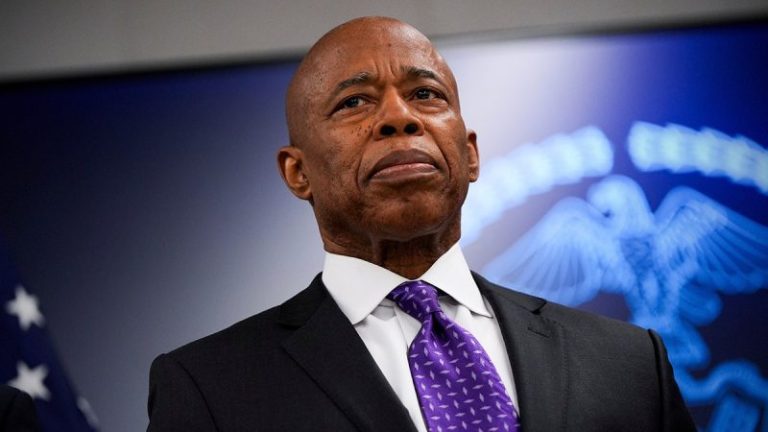
Outgoing New York City Mayor Eric Adams argued that the Biden administration’s Justice Department engaged in ‘lawfare’ against the former president’s political opponents, including himself on corruption allegations and President Donald Trump over issues such as mishandling classified documents.

‘I think what we have witnessed under President Biden’s Justice Department, Americans should never have to live through that again,’ Adams said on Monday during an appearance on Fox News’ ‘The Story.’

‘You saw everyday Americans who fought for the education of their children being put on watch lists, I think that you saw what happened with Charlie Kirk, when you saw the raiding of President Trump’s home. Debates should have happened … I think that you’re seeing the clear indication that the Justice Department under the previous administration used lawfare to go after those who disagree with them,’ he added.

Asked if he felt as angry about the alleged weaponization of the DOJ before he was targeted, Adams said ‘personal experience allows us to see firsthand the abuse.’

‘I spent my entire life, not only as a police officer, but as a state senator and borough president fighting against injustices,’ Adams said. ‘There’s a real history, a rich history, of me standing up and fighting what the criminal justice system should never be. Yes, that anger was there long before I was a target, but what I saw happen while I was the mayor is really deplorable, and we saw what happened to President Trump’s family as well.’

‘If you were to go back and look at my life story on criminal justice reform and not abuse, it goes back to being a young man who was abused at the hands of law enforcement,’ he continued. ‘And so I’ve always been a clear voice, and it really personalized it of what I was fighting for years because I experienced the lawfare myself.’

Adams was indicted in September 2024 on federal corruption charges related to bribery, wire fraud and accepting illegal foreign campaign contributions from Turkish officials and businessmen. He pleaded not guilty to all charges.

The mayor has insisted that the case was politically motivated over his criticism of how the Biden administration handled illegal immigration, but prosecutors in the Southern District of New York said in court filings that the investigation began in September 2021, before Adams’ public criticism of the government’s immigration policies or his mayoral election win.

The charges were dropped earlier this year at the request of the Trump administration.

Adams is set to leave office at the turn of the new year, when Mayor-elect Zohran Mamdani will be sworn in.

This post appeared first on FOX NEWS

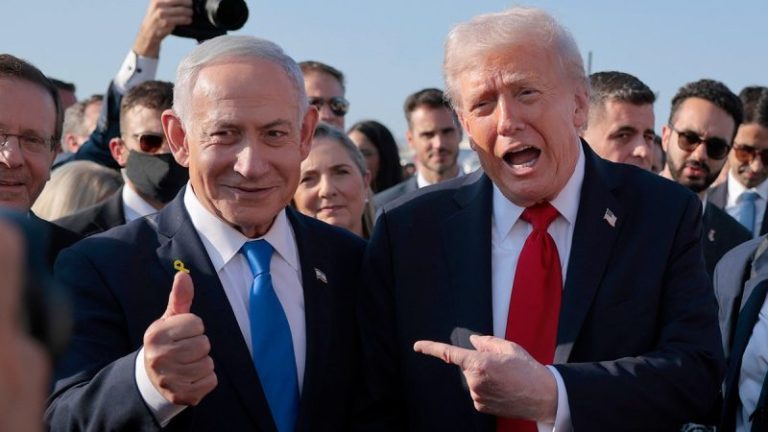
President Donald Trump is scheduled to meet with Israeli Prime Minister Benjamin Netanyahu at Mar-a-Lago on Monday afternoon, with talks expected to focus on renewed tensions with Iran and the possibility of advancing to additional stages of the Gaza peace plan.

Before meeting with the president, Netanyahu is slated to meet with Secretary of State Marco Rubio on Monday morning.

Dr. Dan Diker, president of the Jerusalem Center for Security and Foreign Affairs, told Fox News Digital that President Trump has likely been pressuring Netanyahu since the peace plan’s implementation, noting that the American leader has little patience for Middle Eastern timelines, which he said are far longer than those in the U.S. and the real estate sector.

‘The problem is that Hamas knows all it has to do is survive and continue controlling the western part of Gaza while attacking Israel, as it has been doing from Gaza’s tunnel network, in order to ratchet up tensions between Israel and the U.S.,’ Diker said.

Netanyahu’s mission during the visit, he continued, will be first to lay out Israel’s threat assessment regarding Iran, Hezbollah and Hamas as extremely serious, and to impress upon the president that Tehran is rebuilding its military capabilities. He is also likely to seek to persuade Trump to allow Israel to take the steps it deems necessary to defeat Hamas.

Israeli opposition leader and former prime minister Yair Lapid told Fox News Digital that ‘We [Israel] should be coordinating with President Trump on all the major fronts, but the top priority has to be the management of stage two in Gaza.’

Lapid added, ‘Israel needs to achieve the disarmament of Hamas and the removal of the threat from Gaza, and that requires the implementation of President Trump’s plan.’

During the meeting, Netanyahu will reportedly present Trump with plans for a potential strike on Iran. Israel has warned Washington that a recent Iranian Revolutionary Guard Corps missile drill could be masking preparations for an attack, a concern that IDF Chief of Staff Lt. Gen. Eyal Zamir conveyed to U.S. Central Command chief Adm. Brad Cooper during recent meetings in Tel Aviv.

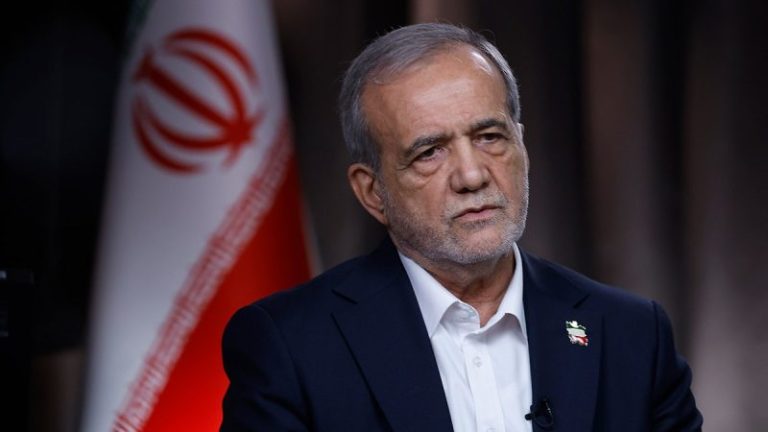
In a Saturday interview reported by the country’s media, Iranian President Masoud Pezeshkian said his country is engaged in what he described as a ‘total war‘ with the U.S., Israel and Europe. The Times of Israel reported him saying, ‘In my opinion, we are at total war with the United States, Israel and Europe,’ Pezeshkian said. ‘They want to bring our country to its knees.’

Axios reported that U.S. intelligence assesses there is no immediate threat, while Israeli defense officials say forces remain on heightened alert.

According to Dr. Meir Javedanfar, a lecturer on Iran and the Middle East at Reichman University, Netanyahu’s plan is expected to call for strikes on Iran’s missile program.

‘Israel will probably hope that such a wide-scale attack would further undermine the legitimacy of Iran’s supreme leader, thereby creating greater political instability within the country. This is especially true given that after the recent war with Israel, Iran’s economy has deteriorated significantly, and the regime is not taking the necessary steps to address these problems,’ he said.

Israeli Minister for Settlement and National Missions Orit Strook stressed the importance of completing full Gaza demilitarization before moving forward with further stages of the plan.

She referenced Trump’s address to the Israeli Knesset in October, noting that he highlighted his role in building international support for Gaza’s demilitarization and securing a U.N. Security Council resolution calling for the full dismantling of weapons, tunnels and terror infrastructure.

‘Hamas wakes up every day with a mission to hurt us,’ Strook told Fox News Digital. ‘The IDF will not withdraw even one meter, and no rehabilitation framework will be established until full demilitarization is completed.

‘If, God forbid, the opposite happens in the meeting, it will be a failure of the peace plan, a failure for Trump himself — who would be settling for fake demilitarization— and a failure for us. We will not be able to say that we won this war if Hamas remains armed,’ she added.

Trump is nevertheless expected to soon unveil the second stage of his Gaza framework, despite Hamas’s failure to return the remains of Israel Police Master Sgt. Ran Gvili, who was killed during the Oct. 7, 2023 massacre, and whose body was taken to Gaza by Hamas terrorists.

Fox News Digital’s Sophia Compton contributed to this report.

This post appeared first on FOX NEWS

Don Durrett: Gold, Silver Price Targets and 15 ‘Must-Own’ Silver Stocks

Kicking off the list in the fifth spot is Don Durrett of GoldStockData.com.

In this January interview, Don shared his silver and gold price outlook for 2025, as well as his 15 ‘must-own’ silver stocks. We don’t have time here for the full list, but I’ll leave the link to the video below. For now, here’s Don talking about why he’s so bullish on silver and gold stocks.

Peter Grandich: Gold Mines Set to Print Cash as Price Hits New Highs

Peter Grandich of Peter Grandich & Co. is next.

This interview is from all the way back in February, when gold was still around US$2,800 per ounce. Peter talked about how US$5,000 was no longer sounding outlandish to him, and also explained how the higher gold price could impact mining companies.

Vince Lanci: Silver’s London Liquidity Crisis — What’s Happening, What’s Next

Vince Lanci of Echobay Partners is always a popular guest, and in mid-October he helped break down unusual dynamics in silver, which had broken through US$50 per ounce.

Ed Steer: Silver Rally Now Unstoppable, Price to Hit Triple Digits

Ed Steer of Ed Steer’s Gold and Silver Digest comes in at number two. This interview is also from mid-October, and in it Ed weighed in on the silver market’s complex inner workings. Ed also gave his thoughts on the precious metal’s long-term prospects.

Rick Rule: Gold Strategy, Oil Stocks I Own, ‘Sure Money’ in Uranium

Finally, our most popular interview of 2025 was with none other than Rick Rule of Rule Investment Media. In this early November conversation, he said he had recently sold 25 percent of his junior gold stocks; he also explained why he did it and how he redeployed that capital.

Securities Disclosure: I, Charlotte McLeod, hold no direct investment interest in any company mentioned in this article.

This post appeared first on investingnews.com

Iranian President Masoud Pezeshkian said his country is engaged in what he described as a ‘total war’ with the U.S., Israel and Europe.

In an interview published Saturday by Iranian state media, Pezeshkian said that he believes the Western powers want to bring Iran ‘to its knees,’ The Times of Israel reported.

‘In my opinion, we are at total war with the United States, Israel and Europe,’ Pezeshkian said. ‘They want to bring our country to its knees.’

Pezeshkian argued that the current conflict is more complex than the Iran-Iraq war of the 1980s, saying his country is now under pressure ‘from every angle,’ according to The Times of Israel.

‘If one understands it well, this war is far more complex and difficult than that war. In the war with Iraq, the situation was clear, they fired missiles, and we knew where to hit,’ Pezeshkian said, according to The Jerusalem Post. 

‘Here, they are besieging us from every aspect, they are creating problems for us in terms of livelihood, culturally, politically, and security-wise.’

Despite the strain, Pezeshkian claimed Iran’s military emerged stronger following its June conflict with Israel, according to The Times of Israel.

‘Our beloved military forces are doing their jobs with strength and now, in terms of equipment and manpower, despite all the problems we have, they are stronger than when they attacked. So if they want to attack, they will naturally face a more decisive response,’ he said.

The interview with Pezeshkian was released ahead of a planned meeting this coming week at Mar-a-Lago between Israeli Prime Minister Benjamin Netanyahu and President Donald Trump, according to The Jerusalem Post.

Tensions remain high following a brief but intense air conflict in June that was kicked off by Israel. 

The fighting resulted in roughly 1,100 deaths in Iran, including senior military commanders and nuclear scientists, while Iranian missile attacks killed 28 people in the Jewish State.

On June 22, President Donald Trump announced U.S. forces had launched attacks on Iranian nuclear sites, including Fordow, Natanz and Isfahan.

‘Our objective was the destruction of Iran’s nuclear enrichment capacity and a stop to the nuclear threat posed by the world’s number one state sponsor of terror,’ the president said. ‘Tonight, I can report to the world that the strikes were a spectacular military success. Iran’s key nuclear enrichment facilities have been completely and totally obliterated.’

A US-brokered ceasefire between Iran and Israel took effect on June 24.

Fox News Digital’s Landon Mion contributed to this report.

This post appeared first on FOX NEWS

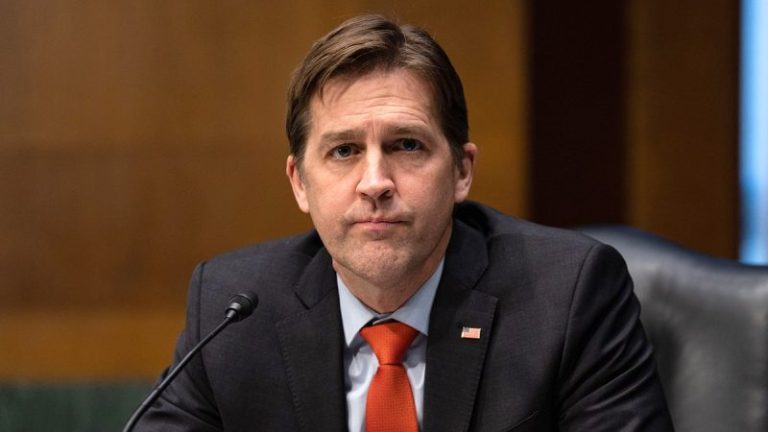
As a writer, there are times when I read something and think, ‘Wow, that’s good, this cat has chops.’ Very rarely do I read something that’s new, that I didn’t know was possible. Ben Sasse, he just wrote one of those.

The former Republican senator from Nebraska was informing the nation that he has stage four cancer and is going to die soon.

‘Advanced pancreatic is nasty stuff; it’s a death sentence,’ he write. ‘But I already had a death sentence before last week too — we all do.’

It may seem trivial, or even cruel to ponder Sasse’s written words when we know the pain he and his family must feel, but it is not trivial to me, and never has been in the history of man.

Shakespeare called death the undiscovered country, but Sasse preferred to focus on what we know, writing, ‘To be clear, optimism is great, and it’s absolutely necessary, but it’s insufficient. It’s not the kinda thing that holds up when you tell your daughters you’re not going to walk them down the aisle. Nor telling your mom and pops they’re gonna bury their son.’

‘Kinda,’ as a writer, this casual usage that my editors often change when I employ it is the embodiment of what Sasse has wrought here. His words make me think that beauty always portends tragedy, but that’s okay. To invoke a New Yorkism, it is what it is.

Sasse, who went from the Senate to serve as president of University of Florida until last year, goes on to say, ‘A well-lived life demands more reality — stiffer stuff. That’s why, during Advent, even while still walking in darkness, we shout our hope — often properly with a gravelly voice soldiering through tears’

Aside from a few modern references, Sasse’s letter to our nation would have been understood perfectly 2,500 years ago in Athens, where such writing of the examination of the human condition was born.

Sasse tells us that, ‘Remembering Isaiah’s prophecies of what’s to come doesn’t dull the pain of current sufferings. But it does put it in eternity’s perspective: 

‘When we’ve been there 10,000 years…We’ve no less days to sing God’s praise.’

Maybe what stands out the most in this incredible piece of writing is that it is not performative at all, in an age in which everything is. In the law, a dying declaration holds special weight. In Sasse’s pen, it holds our hearts.

Much of our languages’ great work involves death, Dylan Thomas imploring his father in poetry: ‘Do not go gentle into that good night.

Rage, rage against the dying of the light.

As I read his profound letter to us, I couldn’t help but see the image of Sasse in his running clothes, stooped on a stone wall at the capitol, chopping it up with Schumer and McCain. Just a regular guy, one of us.

Reading his words about his own mortality, I see now he is much more than that. I spend almost the whole time I’m awake reading, when I’m not writing. At 50, little surprises me. This did.

My mother died of damnable cancer when I was 24, her final request of me was to write and deliver her eulogy, and I’ll be honest the request felt too hard. But when she died, I had a job to do, and for two days I did nothing but write, it was her last gift, she knew me, and she got me through it.

I’m so grateful for Sasse’s words, and that at a time when everything is so ugly, he took the occasion of personal horror to buck us up. His great-great-grandchildren will know of it and feel rightful pride.

God bless Ben Sasse and his family, and may his profound and beautiful words echo down the centuries as the epitome of grace in a falling world.

As a writer, I want to say, thank you senator, I know right now it must seem completely insignificant, but there is a scribe in West Virginia today who will be forever changed by those words, and I’m grateful for it.

This post appeared first on FOX NEWS

Altius Minerals (TSX:ALS,OTCQX:ATUSF) is making a bet on a lithium market recovery, agreeing to acquire Lithium Royalty (TSX:LIRC) in a C$520 million deal that will expand its exposure to battery metals.

Under a definitive agreement announced by the two companies on Monday (December 22), Altius plans to purchase all of the issued common and convertible common shares of Lithium Royalty for C$9.50 each.

The amount will be paid as either C$9.50 in cash or 0.24 of a common Altius share, according to shareholders’ election.

For Altius, the acquisition will allow it to bring a portfolio of 37 lithium royalties into its fold. None of them involve streams, and they span projects from production through early exploration.

Four of the royalties are tied to producing assets, three of which were commissioned in 2025 and are currently ramping up or expanding. Another 12 projects are in advanced stages with completed economic studies, while three to five additional assets are targeting startup between 2026 and 2030.

The company said the portfolio is geographically concentrated in lower-risk jurisdictions, with most assets located in Canada, Australia and South America, and diversified across both brine-based and hard-rock lithium production.

At the current spot price, Altius expects the acquired royalties to contribute between US$29 million and US$43.7 million in annual revenue by the end of the decade. Lithium carbonate equivalent prices fell to multi-year lows in 2025, holding below US$9,000 per metric ton for most of the year, even as demand continues to expand beyond electric vehicles.

Altius said global lithium demand is expected to exceed 1.5 million metric tons of lithium carbonate equivalent in 2025, with supply deficits potentially re-emerging as early as 2026 after years of oversupply.

Altius Chief Executive Brian Dalton said lithium has “emerged as a mainstream scale mined commodity,” and described the acquired portfolio as featuring “very long resource lives,” strong cost positioning and low jurisdictional risk.

A special shareholders’ meeting is scheduled to happen no later than March 10, 2026.

If approved, the deal is expected to close in the first quarter of 2026, after which Lithium Royalty shares will be delisted and the company will cease to be a reporting issuer in Canada.

Securities Disclosure: I, Giann Liguid, hold no direct investment interest in any company mentioned in this article.

This post appeared first on investingnews.com

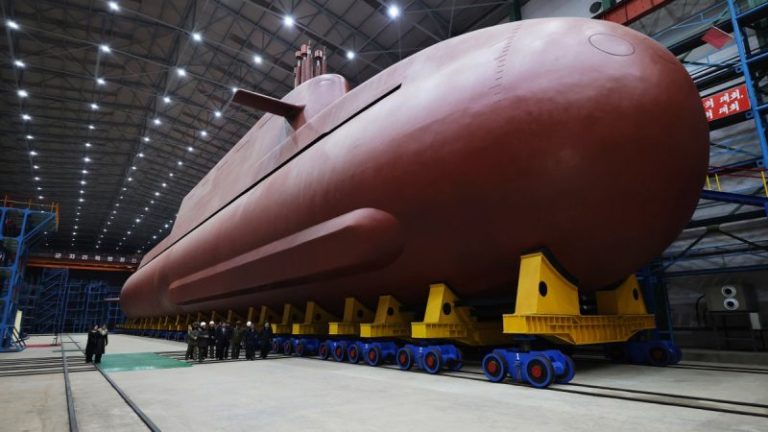
North Korea showed off its apparent progress in the development of a nuclear-powered submarine. State media released photos of North Korean dictator Kim Jong Un and his daughter, a potential heir, as they inspected what appears to be a largely completed hull.

The Korean Central News Agency (KCNA), North Korea’s official state media, said Kim and his daughter visited the shipyard to examine the construction of what it describes as an 8,700-ton-class nuclear-propelled submarine, The Associated Press reported. Pyongyang has signaled that it plans to arm the submarine with nuclear weapons, the AP noted. Kim has said the development of the submarine is a crucial step toward the modernization and nuclear armament of his country’s navy.

The Christmas Day release of the photos marks the first time North Korean state media has shown an update on the nuclear-powered submarine since March. Earlier images mostly showed the lower sections of the vessel, the AP noted. The KCNA did not say when the photos released on Thursday were taken.

Moon Keun-sik, a submarine expert at Seoul’s Hanyang University, told the AP that the photos of a largely completed hull indicate that many of the core components are already in place, as submarines are typically built from the inside out. However, it was not immediately clear exactly how much progress Pyongyang had made.

‘Showing the entire vessel now seems to indicate that most of the equipment has already been installed and it is just about ready to be launched into the water,’ Moon, who also served as a submarine officer in the South Korean navy, told the AP. Moon added that North Korea’s submarine could be ready for testing at sea within months.

While at the shipyard, Kim condemned South Korea’s efforts to develop its own nuclear-powered submarine as an ‘offensive act,’ despite the fact that President Donald Trump has backed Seoul’s push toward the technology. Kim said South Korea’s efforts violate North Korea’s security and maritime sovereignty, according to the AP.

In October, during his tour of Asia aimed at securing investments, Trump said that the U.S. would share technology with South Korea that would allow it to build a nuclear-powered submarine. The president posted on Truth Social that the vessel would be built in Philadelphia.

‘South Korea will be building its nuclear-powered submarine in the Philadelphia shipyards, right here in the good ol’ U.S.A. Shipbuilding in our country will soon be making a BIG COMEBACK,’ the president wrote.

The White House underscored the point when it released a fact sheet in November which directly referenced Washington and Seoul’s efforts to ‘further our maritime and nuclear partnership.’

The Associated Press contributed to this report.

This post appeared first on FOX NEWS

Artificial intelligence (AI) has cemented its role as a key sector for investors, but its path forward is shifting.

Several catalysts, including sustained AI infrastructure spending and US Federal Reserve interest rate cuts, are poised to drive tech sector growth in 2026; however, massive capital expenditure digestion by hyperscalers, alongside increasing demands for a return on investment and persistent power supply limitations, are influencing a rotation in focus, with risks like high valuations and policy uncertainty potentially capping AI industry gains.

Overall, experts are calling for the technology sector to navigate a delicate balance between aggressive expansion and necessary financial discipline in 2026, with AI at the heart of these matters.

Capex digestion and AI verticalization

AI capital expenditures by hyperscalers are projected to fuel demand for semiconductors, data centers and related infrastructure in the year head, as per Nicholas Mersch, portfolio manager at Purpose Investments.

According to notes from multiple analysts, the Big Four — Meta Platforms (NASDAQ:META), Microsoft (NASDAQ:MSFT), Alphabet (NASDAQ:GOOGL) and Amazon (NASDAQ:AMZN) — are slated to spend over US$300 billion on AI infrastructure. Mersch cited forecasts that see hyperscaler capex hitting roughly US$600 billion in 2026.

“Over the next 12 to 24 months, the narrative likely shifts from who can build fastest to who can drive the highest revenue and margin per dollar of AI infrastructure,’ Mersch added. “This is where verticalization matters. The companies that can capture the full stack, from silicon to applications, look like they will win.’

His top pick in this arena is Google, followed by Microsoft.

While the cloud layer remains a high-stakes game of concentration among a few platforms, Mersch said the hardware layer underneath is beginning to fragment as the chip stack quietly diversifies.

“Large multi-year AI chip deals are broadening the market beyond NVIDIA (NASDAQ:NVDA), with Advanced Micro Devices (NASDAQ:AMD) and custom application-specific integrated circuit (ASIC) programs winning meaningful share. High-bandwidth memory (HBM) has become the real bottleneck and profit pool, with tri-sourced HBM3E, an emerging HBM4 race and surging HBM demand from ASICs,’ the expert said.

‘The result is a more plural, multi-vendor accelerator ecosystem. Looking out to the second half of the decade, total AI silicon spend can keep growing even if individual GPU vendors see more competition and pricing pressure, with memory, packaging and custom silicon capturing a larger share of the economics.’

Chip diversification, however, is now colliding with HBM and packaging shortages, constraining output from 2026 to 2027. BMI’s Cedric Chehab notes that rapid capex growth is outpacing supply, ruling out near-term oversupply, but warns of volatility if data center investments fail to deliver profitability amid persistent infrastructure shortages.

Power as a binding constraint for AI

Power limits are a specter looming above AI expansion heading into 2026.

“Individual campuses are pushing past 1 gigawatt, utilities in key regions are scrambling to add generation and transmission and Big Tech is signing multi-gigawatt nuclear and long-term power deals, including restarts of previously shuttered plants,” explained Mersch. US data center demand is now poised to triple by 2030, thrusting utilities, nuclear operators and grid infrastructure into prime investment orbits.

“Even Google has acknowledged that serving capacity needs to double roughly every six months,” he added.

Alphabet, the parent company of Google, and other hyperscalers became active infrastructure developers in 2025, inking high-profile strategic deals designed to secure 24/7 — and carbon-free — energy for AI data centers.

Google’s deal with Elementl Power in May to provide capital to develop three advanced nuclear sites in the US represents a shift toward nuclear energy that is perhaps the most significant structural change in the AI landscape today, further extending the verticalization narrative into the power grid itself.

The shift toward energy-backed AI is being institutionalized at the highest levels of finance. In late 2025, JPMorgan Chase (NYSE:JPM) launched its US$1.5 trillion Security and Resiliency Initiative, a decade-long plan specifically targeting the intersection of AI, grid infrastructure and nuclear energy.

By earmarking US$10 billion in direct equity for US firms, the initiative effectively underwrites the full-stack transition.

Are AI stocks in a bubble?

The path for AI is moving from building technology to proving its value. While many experts remain optimistic, the transition from deployment to execution introduces new risks that could define the industry’s next winners and losers.

As organizations fully embed AI into their core workflows, the operational stakes are shifting. Infrastructure strategies are diversifying as security-conscious businesses seek more control over their high-value AI workloads.

Simultaneously, the rise of agentic AI, which automates full workflows, combined with cost and complexity issues on major hyperscalers, will lead to a trend of cloud repatriation toward regional and bare-metal platforms.

Despite concerns over a potential bubble, the industry will continue to receive massive institutional backing. B2BROKER’s John Murillo rejects the idea of an AI bubble, comparing OpenAI to Edison’s plants amid giants’ resilience.

‘In the case of dot-coms, everyone was investing just to invest; it didn’t matter what exactly to choose and some of the projects didn’t have a solid foundation. With AI, it’s not like this. The technology proves its worthiness every day, and it has already swept away many junior analysts,’ Murillo emphasized.

Nevertheless, high AI valuations risk corrections if adoption disappoints or energy constraints emerge.

The success of the current capex cycle will depend on whether these investments translate into measurable operating leverage and cost savings through the back half of the decade.

“The bubble scenario is very unlikely,” Murillo added. “I think in the current economic situation, there are problems much worse than a potential bubble.”

For example, geopolitical tensions, sticky inflation and US midterm elections could spark volatility, prompting sector rotations away from overvalued mega caps.

Investor takeaway

The investment focus in AI is shifting from the initial narrative to tangible execution and quantifiable profitability. While the challenges of elevated valuations and geopolitical instability persist, some experts dismiss comparisons to a technology bubble, arguing the sector’s demonstrated value offers a stable underpinning.

Future leaders in the AI industry will be distinguished by their capacity to convert infrastructure spending into significant operating leverage and cost efficiencies.

Securities Disclosure: I, Meagen Seatter, hold no direct investment interest in any company mentioned in this article.

This post appeared first on investingnews.com

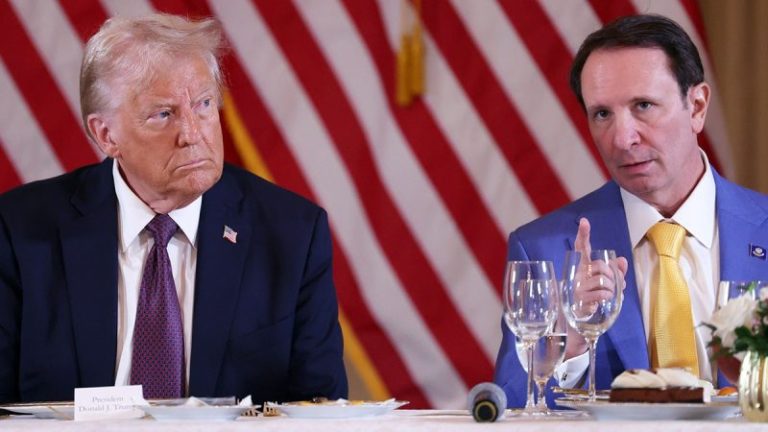
President Donald Trump’s newly appointed envoy to Greenland said Tuesday the administration wants to open a dialogue with residents of the territory, stressing the U.S. is not seeking to ‘conquer’ the island.

During an appearance on Fox News’ ‘The Will Cain Show,’ Louisiana Gov. Jeff Landry, who was tapped as special envoy to Greenland by Trump on Sunday, said discussions must be had with Greenlanders to understand what they want moving forward.

‘What are they looking for? What opportunities have they not gotten? Why haven’t they gotten the protection that they actually deserve?’ Landry said.

Landry added that the U.S. ‘has always been a welcoming party,’ and that the Trump administration is not going to ‘go in there trying to conquer anybody’ or ‘take over anybody’s country.’

Landry’s comments came after Danish leaders sharply criticized Trump after he announced the appointment of the new special envoy to Greenland, a territory controlled by Denmark.

‘We have said it before. Now, we say it again. National borders and the sovereignty of states are rooted in international law,’ Danish Prime Minister Mette Frederiksen and Greenlandic Prime Minister Jens-Frederik Nielsen said in a joint statement Monday. ‘They are fundamental principles. You cannot annex another country. Not even with an argument about international security.’

Trump wrote on Truth Social Monday that Landry ‘understands how essential Greenland is to our National Security, and will strongly advance our Country’s Interests for the Safety, Security, and Survival of our Allies, and indeed, the World.’

On Tuesday, Danish Foreign Minister Lars Løkke Rasmussen called Trump’s comments ‘completely unacceptable,’ adding that he would summon the U.S. ambassador.

The Danish kingdom, he wrote on Facebook, is ‘sovereign and cannot accept that others question it.’

Trump has previously expressed ambitions for the U.S. to acquire Greenland, posting on Truth Social in December 2024 that ‘ownership and control of Greenland is an absolute necessity’ for national security purposes.

In another post from January 2025, Trump said Greenland is an ‘incredible place,’ and its people will ‘benefit tremendously if, and when, it becomes part of our Nation,’ before declaring, ‘MAKE GREENLAND GREAT AGAIN!’

Fox News Digital has reached out to the White House for comment.

Fox News Digital’s Alex Nitzberg and The Associated Press contributed to this report.

This post appeared first on FOX NEWS