Author

admin

Browsing

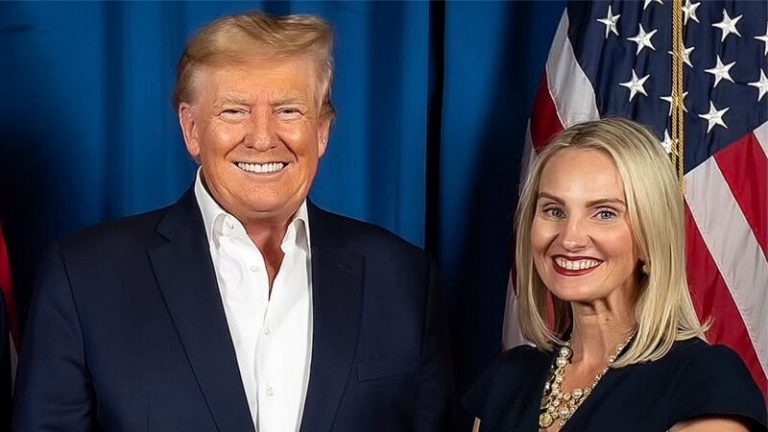
A week after President Donald Trump urged Sydney Gruters to run for an open GOP-held congressional seat in Florida, the former executive director of the state’s New College Foundation and wife of Republican National Committee (RNC) Chair Joe Gruters declared her candidacy.

“As a working mother of three, I see firsthand how much pressure rising prices are putting on families across Southwest Florida,” Sydney Gruters said as she launched her campaign on Thursday. “From groceries and gas to housing and insurance, too many families, seniors and veterans are being stretched thin. I’m running for Congress to protect our conservative values and fight for the people of this district and give them a strong voice in Washington.”

With Trump’s support, Gruters is considered the clear frontrunner to succeed retiring longtime GOP Rep. Vern Buchanan, her former boss, in Florida’s right-leaning 16th Congressional District, which stretches from Tampa’s eastern suburbs south to Bradenton. Republicans currently control the House 218-214 and will be defending their fragile majority in this year’s midterm elections.

Trump, in a social media post on March 24, emphasized that Gruters would “fight tirelessly.”

RNC CHAIR BETS ON ‘SECRET WEAPON’ TO DEFY MIDTERM HISTORY, PROTECT GOP MAJORITIES

“Should she decide to enter this Race, Sydney Gruters has my Complete and Total Endorsement. RUN, SYDNEY, RUN!” the president declared.

While her husband, a Florida state senator and top Trump supporter in the Sunshine State, is well known nationally as he steers the RNC, the 44-year-old Sydney Gruters is well known in her district and very familiar with Congress.

SCOOP: HOUSE GOP CAMPAIGN ARM LAUNCHES ‘MAGA MAJORITY’ PROGRAM TO BOOST TRUMP-ALIGNED CANDIDATES

Gruters served as Buchanan’s operation director for a decade (2007-2017) and later as district director to GOP Rep. Greg Steube (2019-2023) in the neighboring 17th Congressional District.

In-between her two congressional stints, she served in Trump’s first administration as state director for Florida and the U.S. Virgin Islands in the Department of Agriculture.

Prior to launching her congressional campaign, Gruters finished up her tenure as vice president of advancement and executive director of the New College Foundation.

Gruters took her position at the smaller liberal arts state college in Sarasota soon after Republican Gov. Ron DeSantis installed a conservative board of trustees at the school. The one-time progressive-minded college subsequently created a classical education curriculum, which emphasizes liberal arts and Western teachings. Last autumn, the college was among the first to sign on to Trump’s education compact, which offers schools federal funding for backing his education priorities.

As she launches her congressional bid, Gruters is also backed by Maggie’s List, a political group that works to elect conservative women to Congress.

Three other Republicans, as well as three Democrats, are also running to succeed Buchanan.

Joe Gruters, in a statement to Fox News Digital, said he’s “incredibly proud of Sydney as she launches her campaign, and it’s an honor to see her earn President Trump’s support. As always, the RNC remains neutral in Republican primaries, so any support I offer will be purely in my personal capacity.”

Trump won 57% of the vote in the district in his 2024 presidential election victory. And Buchanan grabbed nearly 60% of the vote as he won re-election. But the seat may be refigured ahead of this year’s midterms, as the GOP-dominated Florida legislature meets in a special session later this month to deal with congressional redistricting in the red-leaning state.

The 48-day Department of Homeland Security shutdown is one step closer to ending after the Senate moved to fund most of the department Thursday morning.

The Senate agreed via voice vote to send a bipartisan deal funding the whole department except for President Donald Trump’s immigration enforcement and border security efforts to the House for consideration.

The chamber is not expected to vote on the legislation until House lawmakers return to Washington on April 13. 

The Senate vote follows GOP leaders endorsing a two-track approach to funding DHS on Wednesday, with President Trump giving lawmakers a hard deadline to end the record-breaking funding lapse. 

HOUSE CONSERVATIVES RAGE AGAINST SENATE DHS SHUTDOWN DEAL

The Senate bill accomplishes the first phase of the plan by working with Democrats to fund as much of DHS as possible on a bipartisan basis. However, it would zero out funding for ICE and much of the Border Patrol, save for $11 billion in customs funding going to the agency. Additionally, $10 billion teed up for ICE won’t be funded under the measure.

As for ICE and the Border Patrol, Republicans have said they will seek three full years of funding for both of these agencies in a party-line budget reconciliation package that will bypass Democrats’ opposition. Trump says he wants the forthcoming bill on his desk by June 1.

“We are going to work as fast, and as focused, as possible to replenish funding for our Border and ICE Agents, and the Radical Left Democrats won’t be able to stop us,” Trump wrote on Truth Social on Wednesday. 

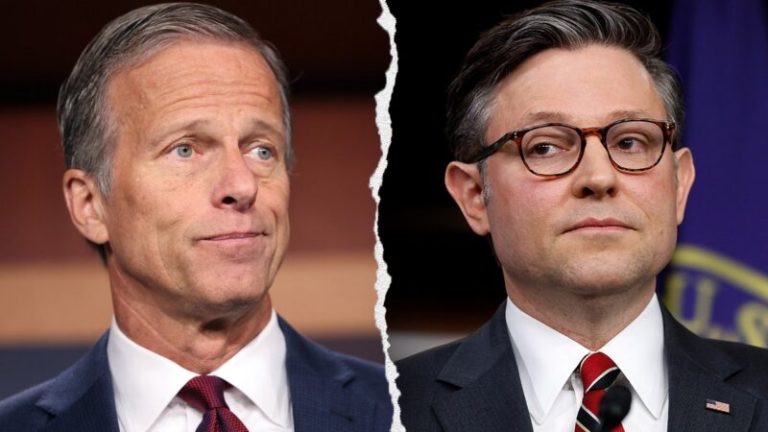
The Senate bill’s passage on Thursday was a déjà vu moment for Senate Majority Leader John Thune, R-S.D., who helped steer the same measure through the upper chamber last week.

But House GOP leadership sharply rejected it, calling the measure’s exclusion of ICE and CBP money a “crap sandwich” and warning about the risks of funding those entities using the budget reconciliation process. The chamber then put forward a rival proposal that Senate Minority Leader Chuck Schumer, D-N.Y., made clear was “dead on arrival” in the Senate. 

Thune said shortly after the vote that he was hopeful the House would move onto the bill quickly, and that the next step would be budget reconciliation. Still, he blamed Senate Democrats, and not Republicans in-fighting at the finish line, for the current position Congress was in. 

“I think this whole where we are is just a regrettable place. We have the Democrats who are holding the appropriations process hostage and their anti-law enforcement, open borders, defund the police wing is the ascendant wing,” Thune said. “And there, I think everybody’s afraid of them, and so we’re stuck in a spot that’s just not good for the country, the future of the appropriations process, or, for that matter, the future of the Senate.” 

House Speaker Mike Johnson, R-La., appeared to relent Wednesday after Trump issued a statement outlining an end to the shutdown that appeared to side with Thune’s two-part approach to funding the department. 

GOP INFIGHTING, DEMOCRATS’ UNMET DEMANDS AND A CLEAR WINDFALL: WHO’S WINNING AND LOSING THE DHS SHUTDOWN

As the DHS shutdown drags on, Trump and congressional Republicans are gambling that budget reconciliation will be the way to fund immigration enforcement for several years to come. Some Republicans have floated funding ICE not just through Trump’s term, but for up to a decade.

The GOP used the same process to fund ICE last year, teeing up $75 billion for enforcement operations for the next four fiscal years.

But the party-line process comes with a host of challenges that could test Republican unity in an election year.

GOP lawmakers will have to identify spending cuts to pay for it. When Republicans used the process to pass Trump’s One Big Beautiful Bill Act in July 2025, lawmakers nearly stumbled at the finish line over disagreements on cuts to federal Medicaid spending and food assistance programs.

Without a looming deadline like the expiration of Trump’s 2017 tax cuts that Republicans extended in July 2025 through the “big, beautiful bill,” some GOP lawmakers have voiced concern that the party will stay unified.

Republicans have proposed adding other issues into the reconciliation mix, including supplemental funding for the Iran war, affordability measures, the president’s tariff regime and pieces of the election integrity-focused SAVE America Act.

The budget reconciliation process allows a party with control of the White House and both chambers of Congress to pass tax and spending priorities with a simple majority threshold, though the process is governed by stringent requirements for what is eligible to be included.

Punting ICE and CBP money to a future spending bill could also negatively affect support staff employed by both agencies who have not been paid during the seven-week shutdown.

Democrats have repeatedly blocked funding for ICE and the Border Patrol in the Senate since the beginning of the shutdown in mid-February. Though none of their proposals to reform immigration enforcement have been adopted, Democratic leaders claimed victory on Wednesday. 

“Throughout this fight, Senate Democrats never wavered,” Senate Minority Leader Chuck Schumer, D-N.Y., said Wednesday. “We were clear from the start: fund critical security, protect Americans, and no blank check for reckless ICE and Border Patrol enforcement. 

“We were united, held the line, and refused to let Republican chaos win.”

The Senate deal funding most of DHS could still face roadblocks in the House. A handful of conservatives have already said they will vote “no” while using the same messaging employed by House GOP leadership to oppose the bill last week.

“Let’s make this simple: caving to Democrats and not paying CBP and ICE is agreeing to defund Law Enforcement and leaving our borders wide open again,” Rep. Scott Perry, R-Pa., wrote on social media Wednesday. “If that’s the vote, I’m a NO.”

American flyers still smarting from interminable airport security lines are about to get another shock.

A looming global jet fuel shortage is expected to hike the cost of air travel and reduce flight schedules, as airlines look to offset rising prices.

On Monday, JetBlue announced it was raising baggage fees, citing “rising operating costs.”

“While we recognize that fee increases are never ideal, we take careful consideration to ensure these changes are implemented only when necessary,” the carrier said.

United Airlines CEO Scott Kirby said costs to passengers have already been increasing. Data from flight information group OAG shows average airfares in the past week reached $465, the highest price point for the same period since at least 2019.

“We have to raise prices to deal with higher fuel prices,” Kirby acknowledged at a company event last week in Los Angeles. In a subsequent memo, he added: “It may be a challenge to continue passing through much of the increased fuel price if oil stays higher for longer.”

The rising prices are the latest example of the economic fallout from the war with Iran. Analysts have started warning that the full toll has only begun to be accounted for as the global economy absorbs the loss of critical energy exports out of the region due to the closure of the Strait of Hormuz and damage to other key energy infrastructure sites in the region. On Tuesday, U.S. gasoline prices hit $4 a gallon for the first time since 2022 amid surging oil prices. Major stock indexes, meanwhile, have fallen by nearly 10% since the start of the war.

In the case of air travel, the industry is facing jet fuel prices that have surged 85% in the U.S. since the day before the war began in February, according to data from Argus published by the industry group Airlines for America. On Monday, they hit a record $4.62 a gallon.

Most U.S. carriers no longer hedge fuel costs, said Henry Harteveldt, president of Atmosphere Research Group. So they are forced to pass on some costs to passengers.

While U.S. carriers largely source jet fuel domestically, countries in Asia and Europe that are more reliant on Middle East stocks have begun signaling they are taking unprecedented measures to conserve jet fuel. In South Korea, carriers have requested that the government help redirect fuel stocks bound for export back to local markets.

The Financial Times reported Monday that the U.K. was also facing an acute shortage, with no Britain-bound cargoes visible on the water as transit through the Strait of Hormuz remains blocked. Some foreign carriers have begun charging fuel surcharges of as much as $150.

As overseas carriers begin looking to alternative supply bases, the cost for a global commodity like jet fuel rises across the board.

“It shocks the entire mechanism,” said Jaime Brito, an executive director at Oil Price Information Service consultancy.

President Donald Trump commented on the jet fuel shortages Tuesday morning, though he did not mention their impact on U.S. travelers.

“All of those countries that can’t get jet fuel because of the Strait of Hormuz, like the United Kingdom, which refused to get involved in the decapitation of Iran, I have a suggestion for you: Number 1, buy from the U.S., we have plenty, and Number 2, build up some delayed courage, go to the Strait, and just TAKE IT,” he wrote on Truth Social.

Airlines are also signaling capacity cuts to cope with rising costs. United will drop about 5% of planned flights in mostly “off-peak periods” — like red-eye and midweek routes — during the second and third quarters of 2026 to further mitigate the cost increases.

“We’re certainly going to be nimble in terms of capacity to make sure that supply and demand stay in balance,” American Airlines CEO Robert Isom said at a JPMorgan conference earlier this month.

Kyle Potter, executive editor of the Thrifty Traveler, said most carriers have quietly been raising airfares since the Iran war began. He said airlines typically move in droves when making pricing decisions, so it is likely that other carriers may also soon begin raising baggage fees or seek other forms of ancillary revenue. Potter noted that unlike airfares, revenues from these fees are not subject to federal excise taxes.

As a result, the fees — unlike airfares — are unlikely to come back down assuming jet fuel prices recover.

Representatives for five other major U.S. carriers did not respond to a request for comment.

The acute fuel price increase comes as air travel demand has remained steady, with January and February ticket sales at or near records. While investors have taken airline stocks down some 25% since the start of the Iran war, Kirby said that customers appear willing to keep booking thanks to healthy demand even if airfare rises.

“The number of wealthy Americans who are traveling is bigger and wealthier than ever, and that is what much of the airline industry is relying on right now,” Potter said. “And that means they’re more immune to higher fees, higher fares and just getting turned off by negative news about travel.”

President Donald Trump said he is strongly considering pulling the United States out of NATO over the alliance’s refusal to join his administration’s efforts in the Iran conflict, according to a report.

“I was never swayed by NATO,” Trump told The Daily Telegraph in an interview published Wednesday.

The president, long a critic of the military alliance, which has been pivotal in maintaining global order since World War II, said reconsidering the matter was “beyond consideration.”

“I always knew they were a paper tiger, and Putin knows that too, by the way,” Trump told the British outlet.

MORE KEY US ALLIES BLOCK MILITARY FLIGHTS AS IRAN WAR RIFT WIDENS WITH TRUMP

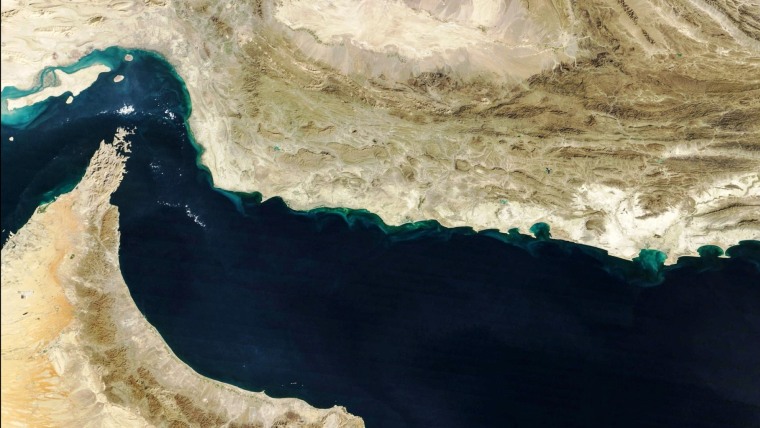
The comments come after European nations reportedly rejected Trump’s request that allies send warships to reopen the Strait of Hormuz, through which roughly 20% of the world’s oil supply travels. Iran has threatened or moved to restrict access to the strait in reaction to the U.S. offensive against Iranian targets, raising concerns about global energy markets and economic stability.

“Beyond not being there, it was actually hard to believe. And I didn’t do a big sale. I just said, ‘Hey,’ you know, I didn’t insist too much. I just think it should be automatic,” Trump said.

“We’ve been there automatically, including Ukraine. Ukraine wasn’t our problem. It was a test, and we were there for them, and we would always have been there for them. They weren’t there for us.”

TRUMP WARNS NATO OF ‘VERY BAD’ FUTURE IF ALLIES DON’T HELP SECURE STRAIT OF HORMUZ

The president also criticized the United Kingdom and Prime Minister Keir Starmer for not participating in the conflict.

“You don’t even have a navy. You’re too old and had aircraft carriers that didn’t work,” Trump said.

Responding to the president’s comments, Starmer said Britain is “fully committed to NATO,” calling it “the single most effective military alliance the world has ever seen.”

Starmer told reporters that “whatever the pressure on me and others, whatever the noise, I am going to act in the British national interest in all the decisions I make.”

The Associated Press contributed to this report.

President Donald Trump said Sunday that he would like to “take the oil in Iran” and is considering seizing the export hub of Kharg Island, which is responsible for more than 90% of Iran’s oil exports.

In an interview with the Financial Times, Trump said his “preference would be to take the oil.”

“To be honest with you, my favorite thing is to take the oil in Iran but some stupid people back in the U.S. say: ‘Why are you doing that?’ But they’re stupid people,” he said.

The interview marks some of Trump’s most direct comments about his thinking on what to do with Iran’s oil.

In an interview with NBC News this month, Trump sidestepped answering whether he had plans to try to take Iran’s oil.

“You look at Venezuela,” he said. “People have thought about it, but it’s too soon to talk about that.”

In January, the U.S. captured Venezuelan leader Nicolás Maduro and proceeded to take more control over the country’s oil industry.

The White House did not immediately respond to a request for comment Sunday night.

Trump told the Financial Times on Sunday that the U.S. has “a lot of options,” including potentially taking Kharg Island, a rare island made of hard coral off Iran.

“Maybe we take Kharg Island, maybe we don’t. We have a lot of options,” Trump said. “It would also mean we had to be there [in Kharg Island] for a while.”

Oil prices have skyrocketed around the globe as the war continues, with U.S. crude oil costing over $100 a barrel Sunday.

Thousands more U.S. troops are heading to the Middle East, with the USS Tripoli arriving on Saturday as part of a complement of 3,500 troops. But Trump and his administration continue to signal that they are working to negotiate a 15-point proposal to end the war.

Trump declined Sunday to offer specific details about whether a ceasefire deal could be reached in the coming days to reopen the Strait of Hormuz, a critical waterway used to move about 20% of the world’s oil exports.

“We’ve got about 3,000 targets left — we’ve bombed 13,000 targets — and another couple of thousand targets to go,” Trump said in the Financial Times interview. “A deal could be made fairly quickly.”

Amid President Donald Trump’s illegal immigration crackdown, one congressional Democrat is calling for reparations for foreign nationals who are affected.

“We are going to have some form of reparation for the kids and the families that have been traumatized through all of this,” Rep. Pramila Jayapal, D-Wash., said Friday during a congressional hearing, referring to illegal immigrants. “You talked about how there’s no support for people even once they’re released. We need to make sure that we are funding that kind of work to continue to provide relief.”

Jayapal, the former chair of the Congressional Progressive Caucus (CPC), made the comments during the seventh installment of a hearing series titled “Kidnapped and Disappeared: Trump’s Attack on Children.”

The left-wing lawmaker said reparations for illegal immigrants affected by Trump’s crackdown efforts would be just one item in a series of reforms she would push Democrats to pursue if they retake House control in November. 

HOUSE DEM COMPARES TRUMP’S ILLEGAL IMMIGRATION CRACKDOWN TO ‘TERRORISM,’ VOWS TO ABOLISH ICE

Jayapal, who was born in India and became a U.S. citizen in 2000, also said she wants “offensive action” regarding those who are carrying out Trump’s illegal immigration crackdown. 

“We need real accountability, because at the end of the day, the people that have been inflicting this harm need to be prosecuted,” Jayapal said. “They need to be brought before us, and they need to be held to account for the trauma that they have created.”

A spokesperson for Jayapal did not respond to a Fox Digital inquiry about who specifically she wants to see prosecuted or who would be eligible for reparations.

Reparations refer to financial compensation for a specific group intended to address reputed economic harms. Many progressive Democrats have long advocated for reparations for the descendants of American slaves.

JAYAPAL DOUBLES DOWN ON ANTI-ICE TERROR CLAIMS AS DHS SHUTDOWN TRIGGERS HISTORIC TRAVEL CHAOS

Throughout the hearing, congressional Democrats repeatedly called attention to the children of deported illegal immigrants, while saying little about the victims of illegal immigrant crime.

The group of Democratic lawmakers did not discuss 18-year-old Sheridan Gorman, who was allegedly shot and killed by a Venezuelan national illegally living in the United States in Chicago earlier this month.

Jayapal’s comments came during the record-breaking Department of Homeland Security (DHS) that has continued to drag on with no end in sight.

She and nearly all House Democrats have refused to fund the department until the Trump administration agrees to various proposals that could rein in immigration enforcement.

“I have been clear since the start of the appropriations process: I will not vote to give Trump’s ICE or CBP another cent without major reforms,” Jayapal said Friday following her vote against a two-month DHS funding extension.

Though Democrats have been willing to fund the non-immigration parts of DHS, most Republicans have rejected that idea because it would effectively defund law enforcement.

Zeroing out appropriations for ICE and the Border Patrol would continue to force support staff employed by those agencies — have not received a full paycheck during the seven-week funding lapse — to keep working without pay.

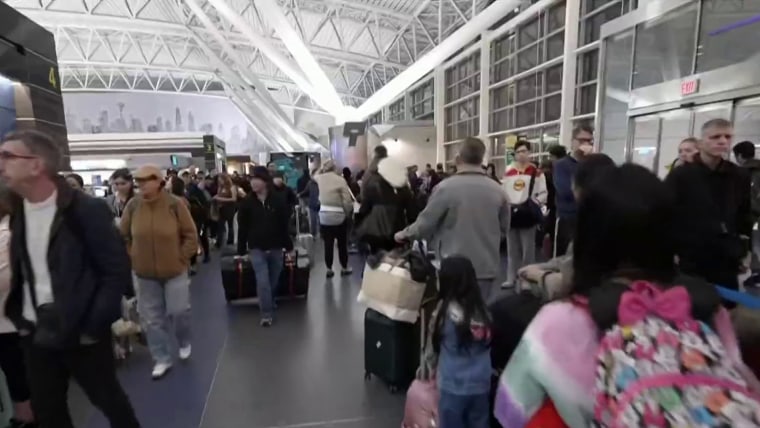
Travelers frustrated by long security lines may not see immediate relief, even as Transportation Security Administration officers begin receiving pay again on Monday after working without wages for more than a month during the partial government shutdown.

President Donald Trump signed an executive order Thursday directing federal officials to ensure that TSA workers are paid despite the shutdown, breaking a more than 40-day stretch in which officers went without salaries.

But the move is unlikely to bring instant relief at airport checkpoints, according to former TSA Administrator John S. Pistole.

“It’s a temporary fix,” he told NBC News.

The more pertinent question, he said, is how many workers actually return to their posts now that paychecks are set to resume Monday.

More than 500 officers have quit during the shutdown, according to the Department of Homeland Security, while thousands more have called out because they can’t afford basic expenses.

TSA callout rates reached a high of 12.35% of the workforce on Friday, accounting for more than 3,560 employees, a DHS spokesperson said Saturday. The department added that at Trump’s direction and under Homeland Security Secretary Markwayne Mullin, TSA has “immediately begun the process of paying its workforce” and that officers “should begin seeing paychecks as early as Monday, March 30.”

Those shortages have forced travelers to contend with missed and canceled flights, long security lines and growing uncertainty around air travel.

If most officers report back beginning Monday and airports are able to restore staffing, wait times could start to ease within several days to a couple of weeks, Pistole said.

“It really depends on that asterisk of how many people show up,” he said.

Some workers who left may already have other jobs lined up, raising questions about whether some will return at all.

“How many of them come back after they get this paycheck? Or maybe they already have another full-time job lined up, they’re just waiting to inform TSA after they get their check on Monday,” Pistole said. “So there are a number of variables there.”

Pistole said the uncertainty, coupled with TSA’s typical annual attrition rate of about 7%, could mean delays will continue even after pay resumes.

Until then, some travelers may want to consider alternatives such as driving, rail or bus.

“I think many will and are looking at those options to say, ‘Is that more reliable? Because the last thing I want to do is get to Bush International Airport in Houston and have a four-hour wait,’” Pistole said.

The U.S. government will allow a Russian tanker full of crude oil to reach Cuba, effectively easing a blockade that has pushed the island into an energy crisis, according to a report.

The Russian-flagged tanker, the Anatoly Kolodkin, was headed for Cuba on Sunday, carrying an estimated 730,000 barrels of oil, The New York Times reported, citing a U.S. official who had been briefed on the matter.

The tanker Anatoly ⁠Kolodkin was just off the eastern tip of Cuba on Sunday, ship tracking data showed.

“We have a tanker out there. We don’t mind having somebody get a boatload, because they need … they have to survive,” President Donald Trump told reporters on Sunday when asked about the report.

CUBA’S ENTIRE ELECTRICAL GRID COLLAPSES, LEAVING WHOLE ISLAND WITHOUT POWER

“If a country wants to send some oil into Cuba right now, I have no problem whether it’s Russia or not,” he added.

Trump had sought to restrict oil shipments to Cuba in an effort to pressure its government.

The U.S. government has temporarily eased some sanctions on Russian oil shipments to help stabilize global energy markets amid disruptions in the Strait of Hormuz following U.S. and Israeli military strikes on Iran that began last month.

CUBAN OFFICIAL REVEALS MILITARY ‘PREPARING’ FOR CONFLICT AFTER TRUMP CONSIDERS ‘TAKING’ ISLAND

The Anatoly Kolodkin, which departed from Primorsk, Russia, could soon dock at the Matanzas port in Cuba if it remains on its current path, according to tracking services MarineTraffic and LSEG.

The oil would provide significant relief to Cuba, where President Miguel Díaz-Canel has said fuel shortages have persisted for months, forcing strict gas rationing and deepening the island’s energy crisis.

The U.S. capture of then-Venezuelan leader Nicolás Maduro in January stripped a key Cuban ally who had been providing oil to the island on favorable terms.

The Trump administration then blocked all Venezuelan oil shipments to Cuba and vowed to impose punitive tariffs on any third country that supplied shipments to the island, forcing Mexico to stop its exports to Cuba.

Another ship, the Hong Kong-flagged Sea Horse, was also carrying about 200,000 barrels of Russian fuel to Cuba, but was rerouted to Venezuela.

President Donald Trump is used to bending financial markets to his will.

But with the war in Iran, he may have reached the limit of his ability to do so.

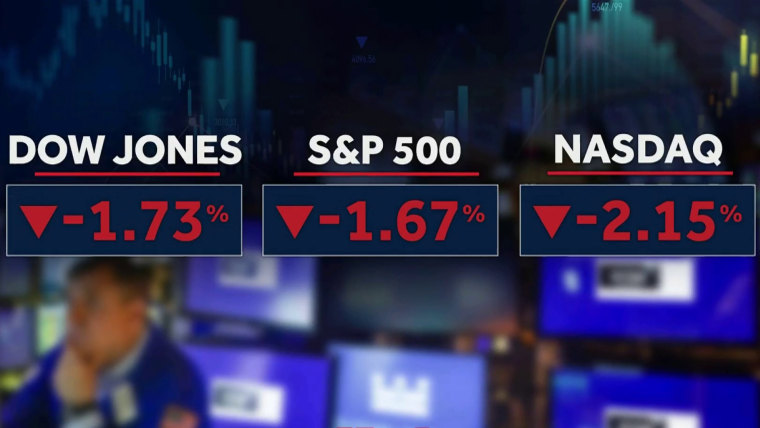
On Friday, the S&P 500 closed down 1.7% and notched its fifth-straight weekly decline, its worst stretch since 2022 and a sign of rapidly faltering confidence in a swift resolution to the Iran war.

Since the U.S. attacked Iran on Feb. 28, the S&P 500 has declined about 7%.

The Dow Jones Industrial Average fell 1.7% Friday and has lost nearly 4,000 points since the start of the war. It is now down more than 10% from its most recent high, a correction in technical terms.

The tech-heavy Nasdaq fell further into correction territory Friday, closing down 2% and off 13% since its record close in October.

Oil prices also rose sharply, with U.S. crude topping $100 a barrel and global Brent crude at approximately $114 at around 4 p.m. ET. The yield on the 10-year Treasury note surged to 4.4%, the highest since last summer. Some energy stocks, like Exxon, traded near all-time highs.

Shortly after stock markets had closed Thursday, Trump announced he was pausing attacks on Iranian energy sites for 10 days. But stocks barely budged.

Just days earlier, they had rocketed higher Monday when the president announced there had been “productive” talks with Iranian representatives, so he would pause strikes on Iranian power facilities for five days.

“The market is looking beyond commentary from the administration,” said Adam Turnquist, chief strategist at LPL Financial investment group, which manages nearly $2 trillion in assets. “They actually want concrete details and a resolution. And actions speak louder than words, that’s really present in [current] price action.”

This new reality stands in contrast to Trump’s ability to move markets throughout his first term and into the outset of his second.

Trump spent the better part of 2025 whipsawing traders via frequent changes regarding tariff levels. Eventually, a pattern emerged: The president would announce a new import duty, markets would fall, and Trump would usually end up reversing himself in some way.

The trend even got a nickname, coined by a columnist for the Financial Times: “TACO” — for “Trump Always Chickens Out.” (Last month, the Supreme Court struck down many of the tariffs.)

This time, the chain of events unleashed by Trump’s decision to attack Iran are such that a return to prewar conditions — and market levels — is virtually impossible in the short or even medium term, experts say.

The disruption to flows of oil and gas has been so substantial that transport costs, and ultimately the price paid per barrel, are likely to stay elevated indefinitely. Even when the Strait of Hormuz, which Iran has used as a chokepoint to drive concessions from the West, eventually reopens, the cost of transiting through it has likely gone up for the foreseeable future.

And the broader fallout on the economy and consumer purchases is already being felt.

That, in turn, has made interest rate cuts by the Federal Reserve less likely, because the higher oil costs are set to contribute to already sticky inflation. The odds of a rate hike before the end of the year have now outpaced the odds of a cut.

“Let’s say hostilities end tomorrow — the market will rally, but it’s not necessarily ripping back to where it was before because of the disruptions that have occurred,” said Steve Sosnick, chief strategist at Interactive Brokers financial group. “You’re not going to see oil go back to where it was immediately. You’re not going to see markets price in rate cuts the way they were before.”

White House spokesman Kush Desai said Friday that Trump “continues to be a powerful force driving the market’s confidence in the United States as the most dynamic, pro-business economy in the world.”

“Once the military objectives of Operation Epic Fury have been achieved and the market’s short-term disruptions are behind us, everyday investors are set to reap a windfall in a booming American economy,” Desai said.

A day earlier, the president said he was not concerned about the market’s recent performance.

Oil prices “have not gone up as much as I thought, Scott, to be honest with you,” he said during a Cabinet meeting, addressing Treasury Secretary Scott Bessent. “It’s all going to come back down to where it was and probably lower.”

Markets have not fallen further because the outlook for earnings growth remains bullish, Turnquist said — though that could change the longer the conflict drags on and further impinges on consumer spending and business investment.

And compared to prior oil shocks, the U.S. economy is less oil-intensive, as it has transitioned to one that is largely service-oriented. Global oil markets have also been supported by America’s oil production boom over the past decade — with more supplies online, overall prices are less likely to rise as much.

Yet by some metrics, stocks were already considered expensive prior to the hostilities. Having already contended with stretched valuations, traders may find it much harder to power stock prices back to the record levels seen just prior to the start of the latest conflict.

“The risk-reward is still very heavily weighted toward [the] risk” of further stock-price declines,” said Matt Maley, chief market strategist at Miller Tabak financial group.

Should hostilities persist, Trump’s ability to influence markets will only further erode, Sosnick predicted.

“He now realizes he’d like to jawbone his way out of it, but it’s not that easy at this point because the situation encompasses so many moving parts and difficult variables,” Sosnick said. “It doesn’t lend itself to a quick set of comments mollifying investors.”

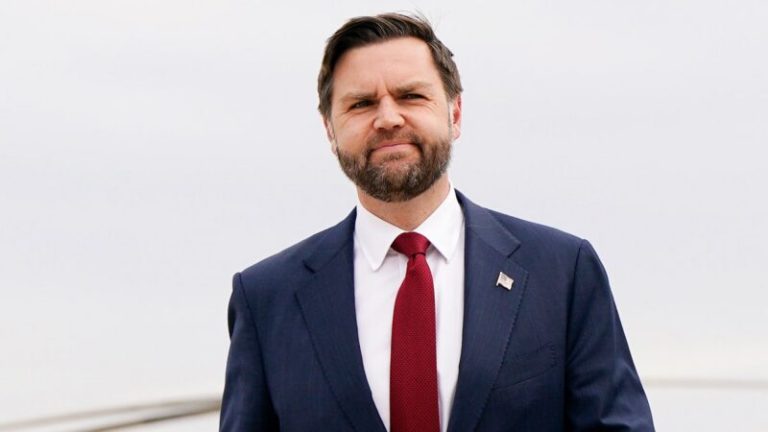
While discussing the mystery surrounding UFOs, Vice President JD Vance, who is Catholic, said he believes what people think of as aliens are actually “demons.”

While interviewing Vance, conservative commentator Benny Johnson asked the vice president, “You gonna release all the UFO files?”

“Ah, we’re workin’ on it,” Vance said. 

He explained that when he took office he “was obsessed with the UFO files” but ended up being busy with other issues.

Vance asserted that he will “get to the bottom” of the matter.

JD VANCE SAYS UFOS, ALIENS COULD BE ‘SPIRITUAL FORCES’ AS VP VOWS TO ‘GET TO THE BOTTOM’ OF MYSTERY IN SKIES

“I don’t think they’re aliens. I think they’re demons anyway,” Vance noted.

Prompted by Johnson, Vance later elaborated on his view.

“Well, look, I, I think that celestial beings who fly around, who do weird things to people — I think that the desire to describe everything celestial… to describe it as aliens — I mean every great world religion, including Christianity, the one that I believe in, has understood that there are weird things out there, and there are things that are very difficult to explain,” he said.

“And I naturally go — when I hear about, sort of, extra-natural phenomenon — that’s where I go to is the Christian understanding that, you know, there’s a lotta good out there, but there’s also some evil out there,” he continued.

UFO SECRET FILES, DRONE SWARMS AND NUCLEAR-LINKED SIGHTINGS STUN EXPERTS IN 2025

He added that he believes that among “the devil’s great tricks is to convince people he never existed.”

Last month, President Donald Trump said he would order the release of files pertaining to the issue of aliens and UFOs.

EXPLOSIVE NEW DOCUMENTARY PROBES ‘80-YEAR GLOBAL COVERUP’ OF UFO SECRETS

“Based on the tremendous interest shown, I will be directing the Secretary of War, and other relevant Departments and Agencies, to begin the process of identifying and releasing Government files related to alien and extraterrestrial life, unidentified aerial phenomena (UAP), and unidentified flying objects (UFOs), and any and all other information connected to these highly complex, but extremely interesting and important, matters. GOD BLESS AMERICA!” the president declared in a February Truth Social post.