Author

admin

Browsing

WASHINGTON — The Senate agreed unanimously early Friday to fund the Department of Homeland Security, but without funding for immigration enforcement and deportation operations.

Senators approved the package at 2:20 a.m. by voice vote following a marathon session.

The 42-day funding lapse has seen them go without pay, leading many to call out of work and causing long lines at airports. While the measure still needs to pass the House, the Senate vote paves the way to allow airports to fully function again.

The legislation would fund all of DHS except Immigration and Customs Enforcement and Customs and Border Protection, which Democrats have refused to vote for without significant reforms to immigration raids and deportation practices.

The deal followed arduous bipartisan negotiations that occurred in fits and starts over the last six weeks, succumbing to the impasse around policy changes to immigration enforcement. Under the new plan, Democrats get their weeks-long demand to fund the department with the exceptions of ICE or CBP, but also without the restrictions they sought on how immigration officers may conduct operations.

“This could have been done three weeks ago,” Senate Minority Leader Chuck Schumer, D-N.Y., said. “This is exactly what we wanted.”

Long wait lines at a TSA checkpoint at New York’s LaGuardia airport Friday.Gabrielle Korein / NBC News

The bill faces an uncertain future in the Republican-controlled House. It is expected to have President Donald Trump’s support, which could help corral conservatives who have been skeptical about splitting off ICE funding from the underlying bill.

“Hopefully they’ll be around, and we can get at least a lot of the government opened up again, and then we’ll go from there,” Senate Majority Leader John Thune, R-S.D., said of the House and a potential vote on Friday. He said he texted with Speaker Mike Johnson, R-La., on Thursday night.

The Senate adjourned for a two-week recess, leaving the House with few options other than to accept their bill as written.

Thune separately blamed Democrats. “President Trump should never have had to step in to rescue TSA workers and U.S. air travel. We are here because, thanks to Democrats’ determined refusal to reach an agreement, there will be no Homeland Security funding bill this year.”

Speaking after the vote, Schumer said: “In the wake of the murders of Renee Good and Alex Pretti, Senate Democrats were clear. No blank check for a lawless ICE and Border Patrol.”

He added that the “long overdue agreement” funds TSA, the Coast Guard, the Federal Emergency Management Agency and the Cybersecurity and Infrastructure Security Agency, and “strengthens security at the border and the ports of entry, and keeps Americans safe.”

He added that the deal “could have been accomplished weeks ago if Republicans hadn’t stood in the way.”

The White House and Republicans declined to grant Democrats’ demands to restrict Trump’s immigration practices. They now plan to pursue the remainder for funding for ICE and CBP in a separate party-line bill, which they could also use to pass Iran war funding and elements of the Trump-backed SAVE America Act.

Senate Republicans held a vote open for hours Thursday as the two sides continued to negotiate, having traded offers for days.

Trump, meanwhile, announced earlier Thursday that he would instruct newly sworn-in Homeland Security Secretary Markwayne Mullin to “immediately pay our TSA Agents in order to address this Emergency Situation.”

That move may not be needed if the House passes the Senate legislation, according to a senior administration official, who said the White House is waiting to see what will happen.

This official also said the funds to pay TSA agents would come from the so-called One Big Beautiful Bill, the tax-cut and spending legislation Trump signed into law in July. It’s not clear exactly how that would work, but the administration has dipped into those unspent funds before to cover pay gaps during funding lapses.

The House can either debate and vote out the Senate-passed measures in the Rules Committee before bringing them to the floor under a simple majority vote, or Johnson can seek to fast-track it to the floor.

The House was set to hold an unrelated vote at 10 a.m. before leaving for recess.

We’d like to hear from you about how you’re experiencing the partial government shutdown, whether you’re a TSA agent who can’t work right now or a federal employee who is feeling the effects at your agency. Please contact us at tips@nbcuni.com or reach out to us here.

TSA officers missed their first full paychecks in mid-March, leading many to call out of work. Call-out rates for TSA officers have exceeded 11% nationally, with rates at some airports passing 40%.

Trump sent ICE agents to airports to help TSA earlier this week. Unlike TSA officers, ICE agents continue to receive paychecks during the partial shutdown as a result of funding from the so-called One Big Beautiful Bill, a sweeping GOP domestic policy package, that Trump signed into law last year.

Federal authorities are investigating a close call this week involving a military helicopter and a United Airlines plane approaching John Wayne Airport in Santa Ana.

United Airlines Flight 589 was approaching the airport in Orange County around 8:40 p.m. Tuesday when a Sikorsky Black Hawk helicopter crossed its path, according to the Federal Aviation Administration.

Pilots on the United Airlines plane were advised by air traffic control to watch for the military helicopter flying near the airport, United Airlines said.

“They saw the helicopter, and also received a traffic alert, which they responded to by leveling the aircraft,” United said.

The United flight with 162 passengers and six crew members landed safely.

The new investigation comes a week after the FAA issued a new airport safety order designed to improve safety near airports where helicopters cross both arrival and departure paths. The order suspends use of visual separation between airplanes and helicopters and requires air traffic controllers to use radar to manage lateral and vertical separation between aircraft.

A close call earlier this month between a twin-engine Beechcraft 99 and helicopter at Hollywood Burbank Airport was cited by federal authorities as a key factor behind a new airport safety measure.

In another example, the agency said American Airlines Flight 1657 was cleared to land at San Antonio International Airport when a police helicopter was on its final approach path. The helicopter turned to avoid the American Airlines plane, the FAA said.

The new requirement applies to more than 150 of the nation’s busiest airports and extends a restriction already in place at Ronald Reagan Washington National Airport.

The upgraded safety measure was rolled out after a year-long FAA safety team review. In a news release, the FAA also referenced the Jan. 29 American Airlines jet and Army Black Hawk crash that killed 67 people. A key factor in the crash was the placement of a helicopter route in the approach path of Reagan National Airport’s secondary runway, the NTSB board said, also identifying air traffic controllers’ over reliance on asking helicopter pilots to avoid other aircraft as a factor.

President Donald Trump on Friday signed an executive order directing federal officials to ensure Transportation Security Administration (TSA) employees receive back pay during the ongoing Department of Homeland Security (DHS) shutdown.

Trump described the situation as an “emergency,” citing severe strain on airport security operations. 

“Accordingly, I hereby direct the Secretary of Homeland Security, in coordination with the Director of the Office of Management and Budget, to use funds that have a reasonable and logical nexus to TSA operations to provide TSA employees with the compensation and benefits that would have accrued to them if not for the Democrat-led DHS shutdown, consistent with applicable law, including 31 U.S.C. 1301(a),” Trump said.

This is a breaking news story. Please check back for updates.

President Donald Trump’s push to expand U.S. mining and loosen China’s global grip on critical minerals is colliding with his administration’s defense in court of a Biden-era veto blocking Alaska’s copper-rich Pebble Mine, reviving scrutiny of Donald Trump Jr.’s past opposition to the project.

The fight over Pebble Mine has spanned multiple administrations. Including in 2014, when the Obama Environmental Protection Agency concluded mining in Bristol Bay’s headwaters could damage the world’s largest sockeye salmon fishery. Biden’s EPA vetoed the project in January 2023, prompting a lawsuit from Pebble and the state of Alaska. The Trump Department of Justice is now defending that veto in court. 

The clash under the Trump administration has given Pebble supporters new ammunition to argue the White House is undercutting its own agenda as Trump races to secure domestic supplies of copper and other minerals critical to defense systems and advanced technology.

It also puts Trump Jr.’s stance on Pebble Mine back in focus. In 2020, Trump Jr. publicly opposed the mine, joining GOP operative Nick Ayers, who served as chief of staff to former Vice President Mike Pence, in citing concerns about the local bay’s ecosystem. 

FROM MOJAVE TO BEIJING: HOW AMERICA QUIETLY CONCEDED THE RARE EARTH RACE

“As a sportsman who has spent plenty of time in the area I agree 100% [with Ayers],” Trump Jr. wrote on X in August 2020. “The headwaters of Bristol Bay and the surrounding fishery are too unique and fragile to take any chances with. #PebbleMine.”

Policy paradox

John Shively, CEO of Pebble Limited Partnership, the company hoping to develop the mine, contended that the Trump DOJ defending the Biden-era veto undermines the president’s agenda and would force the United States to cede copper and rare earth minerals to Beijing. Shively called the veto a “textbook example of D.C. bureaucrats imposing their will on Alaska.”

“It sort of conflicts a little bit with what President Trump is doing,” Shively told Fox News Digital in an interview. “I’ll give him credit. One of the things I like to say in life is, ‘If you don’t recognize a problem, you’re never going to solve it.’ Well, they have recognized we’re in serious trouble in getting minerals in this country and metals, and so it’s a little surprising they continued the EPA lawsuit.”

The White House and EPA did not respond to multiple requests for comment for this story. The DOJ, which is representing EPA in court as it fights to keep the Biden-era veto in place, declined to comment and deferred to the EPA.

Since Trump took office, his administration has moved quickly to dismantle the environmental policies of his liberal predecessors and strengthen the United States’ mineral supply. Trump signed executive orders that declared a national emergency on critical minerals, directed federal agencies to fast-track permitting processes and expanded the government’s list of critical minerals by adding copper and nine others to the list.

Trump Jr., an avid outdoorsman, has not spoken to the president or anyone in the administration during this term about Pebble Mine, but he did weigh in on the matter with his father in the first term, a source close to Trump Jr. told Fox News Digital. 

One industry source who spoke to Fox News Digital pointed to Trump Jr. and Ayers, attributing the Trump administration’s position on Pebble Mine in part to them. Ayers, like Trump Jr., openly opposed the mine in an X post in 2020.

“Like millions of conservationists and sportsmen, I am hoping @realDonaldTrump will direct @EPA to block the Pebble mine in Bristol Bay,” Ayers wrote on X. “A Canadian company will unnecessarily mine the USA’s greatest fishery at a severe cost. This should be stopped.” Pebble, which is spearheading the mine project, is a U.S. offshoot of Canadian company Northern Dynasty Minerals.

Ayers did not provide comment for this story.

The source close to Trump Jr. said that in the first administration, the president’s son told associates he was concerned, having been to Bristol Bay to fish on multiple occasions, about the mine’s potential effect on the ecosystem there.

The industry source balked at the Trump administration’s Pebble Mine contradiction, saying it was rooted in profit motives. The source told Fox News Digital that “these guys are cheap dates. … Like you sold your soul for a fishing trip on a boat for a week.” 

“How can you open at the one hand this reserve of rare earths to stop the Chinese from cornering the market, but then say, ‘We’re not going to have our own mining industry’?” the source said.

CHINA’S RARE EARTH TECH OBSESSION ENSNARES US RESIDENT AS CCP LOOKS TO MAINTAIN STRANGLEHOLD

When asked about potential outside influences affecting the administration’s position, Shively said: “Instead of focusing on comments from the past, we hope the administration is worried about the next president using this EPA veto to shut down signature Trump energy and critical mineral projects.”

A ‘kill switch’ to save the salmon

The veto, also known as a “kill switch,” is a rarely-used mechanism of the Clean Water Act. The law allows a company to seek a mining permit from the U.S. Army Corps of Engineers, but the EPA can use the kill switch to block the permit.

Pebble’s permit request was rejected in the first Trump term, but Pebble won a reversal of that decision through an internal appeals process. That internal process was still playing out when the Biden administration issued the veto.

Pebble is asking the court to scrap the veto and allow the company to continue with the permitting process.

Pebble lawyers have argued that the company “spent decades and a billion dollars planning the safest and least impactful mine possible” and that studies adequately addressed the salmon concerns.

Copper and other critical minerals

China is the world’s leading import source for more than two dozen critical minerals, including most rare earth minerals. The Trump administration has said that domestic access to critical minerals, including rare earths, is fundamental to national security and AI infrastructure.

The United States has, in recent decades, gone from dominating the production of the world’s rare earths to relying on China, which now controls roughly 70% of mining and nearly 90% of refining, Fox News Digital previously reported. 

China dominates the refining of many critical minerals and more than half of global copper refining, while the U.S. imports roughly 45% of its copper supply. Pebble says the mine could supply about 15% of U.S. copper demand.

“We’ve already committed to building a lot more defense capacity,” Shively said, noting that copper would be used for nuclear submarines, large aircraft carriers, jets and more crucial defense supplies.

In addition to copper, the Pebble mineral deposit is also rich in rare earths, Shively said, noting Pebble could mine rhenium and molydbdenum, which is used to strengthen steel. 

Shively said the veto, if the court approves it, would set a dangerous precedent that allows future administrations and activists to level broader Clean Water Act vetoes. The current veto targets an expansive 220,000-acre area of Alaska containing an estimated 80 billion pounds of copper, according to court papers. 

“If they can use this tool against us, they can use it anywhere in the country,” Shively said. “And when you get rabid environmentalists in government, they tend to use these kinds of tools.”

Briefing in the lawsuit is set to be completed by mid-April, and the court could issue a decision anytime after that or call for oral arguments to continue examining the fight.

U.S. stocks rose Wednesday and global oil prices fell in yet another volatile trading session as traders and investors were buffeted by constant headlines about the war in Iran.

News of a 15-point U.S. peace plan proposal sparked hopes early in the day that the Trump administration was moving to end its monthlong war against Iran. Initially, the S&P 500 and the Nasdaq 100 futures rose more than 1%.

But reports that Iran had responded negatively to the proposal briefly knocked index futures off their pre-market highs and lifted oil prices off their morning lows.

Despite the early setback, stocks closed the trading day higher. At 4 p.m. ET, the S&P 500 index was up about 0.4%, the Nasdaq Composite closed 0.7% higher, and the Dow jumped 305 points. The Russell 2000 index of smaller companies rose 1.1%.

The price of U.S. crude oil also traded off its lowest levels of the day and was down only 1.4% to about $90 per barrel by late afternoon. West Texas Intermediate crude oil has soared more than 30% since the start of the war on Feb. 28. The cost per barrel is up 50% since the beginning of the year.

International Brent crude prices traded near breakeven, at around $102 per barrel. The price of heating oil, a proxy for jet fuel, dropped 6%.

The global price of oil directly affects what Americans pay at the gas pump and what it costs them to heat and cool their homes. The average nationwide price of unleaded gas Wednesday was $3.98 per gallon, according to AAA data.

“Markets desperately want to believe in the positive,” UBS Global Wealth Management chief economist Paul Donovan wrote. “Focus on the apparent 15-point US plan to end the war has received more attention than Iranian dismissals of this, or the fact that passage through the Strait of Hormuz is minimal.”

Iran’s response to the U.S. proposal included a list of five conditions for ending the war, according to Iranian state TV, which cited a senior political-security official with knowledge of the details of the proposal.

Pakistan has also offered to mediate talks to end the hostilities, four sources told NBC News. A Persian Gulf official said Pakistan had been passing messages between the two countries for the past two days.

An in-person meeting between the U.S. and Iran could be held in the coming days, two sources added.

But President Donald Trump has continued to give conflicting signals.

On March 16, Trump said he was delaying his scheduled visit to China “by a month or so” to monitor the war. On Monday, he said the Strait of Hormuz would be “open very soon.”

And on Tuesday, Trump told reporters in the Oval Office, “This war has been won.” At the same time, the U.S. is sending more than 1,000 additional troops to the Middle East, sources said.

A motorist drives past a sign displaying prices at a gas station in Oakland, Calif., on Tuesday.Godofredo A. Vásquez / AP

Since the war started, the market has experienced several days like this, when markets are whipsawed by constant back-and-forth comments.

“There’s really no way to know at this point what the facts are regarding the state of negotiations, as neither side has any real incentive to conduct talks via the press, so expect more whipsaw action as things continue to progress,” analysts at Bespoke Investment Group wrote in a client note.

They added that the “ongoing tensions continue to support higher prices [and] stoke inflation concerns” and are likely to cause central banks to remain on hold, rather than cut rates.

On the contrary, traders believe the European Central Bank and the Bank of England will both raise interest rates.

“Uncertainty remains high,” analysts at ING wrote in a note Wednesday morning. “Overall, volatility remains elevated and a geopolitical risk premium persists.”

In the 18 trading sessions since the war began, U.S. oil prices have closed down only five times. Likewise, over the same period, the S&P 500 has closed higher only seven times. Three of those higher closes were only fractional.

After Wednesday’s close, the Nasdaq was down nearly 6% for the year, while the S&P 500 was on track for a 3.5% loss so far. The majority of those losses were concentrated in the weeks since the war began.

Meanwhile, the Strait of Hormuz, through which 20% of the world’s oil supply typically passes, has remained at a near standstill since the war began.

On Monday, just five ships passed through the strait, according to data compiled by S&P Global Market Intelligence. On Tuesday, the total was six. On many days since the war started, not a single ship has passed through.

However, some of the ships passing through the strait have taken an unusual course that put them close to the Iranian coastline, potentially signaling that Tehran was keeping a tight grip on traffic flows. Two Indian ships were granted passage Tuesday after a deal with Iran, Bloomberg News reported. The Iranian navy also guided the ships.

Otherwise, hundreds of other ships loaded up with cargo, oil and liquefied natural gas remain stuck.

A former accountant and lawyer for the disgraced financier Jeffrey Epstein both told the House Oversight Committee earlier this month that the Department of Justice had never interviewed them about Epstein’s crimes.

“I’ve never been questioned by any government authority,” Epstein’s ex-accountant Richard Kahn said.

He noted that he had received a grand jury subpoena from the Southern District of New York and from the U.S. Virgin Island’s Department of Justice for documents about Epstein’s property.

“Both of the requests were for the same thing. They were asking for Epstein’s estate documents. They wanted to see his will and his 1953 trust,” Kahn said.

HOUSE OVERSIGHT SUBPOENAS AG BONDI IN PROBE OF EPSTEIN CASE ‘MISMANAGEMENT’

Similarly, Darren Indyke said he had never been asked about Epstein’s dealings.

“Personally, no,” Indyke told the Oversight Committee. “I don’t believe I have.”

When asked if that surprised him, Indyke told investigators he believed it was consistent with the scope of his employment.

“Given my role as a transactional attorney for Mr. Epstein, no,” Indyke said.

Epstein, a former financier with a formidable social circle, died in 2019 while imprisoned on charges of sex trafficking minors. His death, which was ruled a suicide, left behind questions about whether Epstein had facilitated illegal sexual encounters for some of his contacts and prompted public demands for accountability for possible accomplices.

Like many public figures, Kahn and Indyke both appear in the Epstein Files — troves of documents released by the DOJ in compliance with the Epstein Files Transparency Act.

HOUSE OVERSIGHT COMMITTEE CALLS BILL GATES, LEON BLACK TO TESTIFY OVER JEFFREY EPSTEIN TIES

Their communications in the files do not, on their own, implicate any wrongdoing, and neither does their appearance before the House Oversight Committee.

Their depositions come among a series of other interviews from lawmakers on Capitol Hill. Interviewers have called figures like former President Bill Clinton, former Secretary of State Hillary Clinton, billionaire businessman Les Wexner and Epstein’s accomplice and romantic partner Ghislaine Maxwell to deliver testimony.

So far, none of the subjects interviewed by the Oversight Committee has faced charges for their proximity to Epstein, except for Maxwell. She was convicted in 2022 on charges of exploiting underage girls.

Indyke, the attorney, said he was aware of Epstein’s original 2008 plea deal in Florida, where he admitted to soliciting a minor for prostitution.

“He was adamant that he had no idea that anyone involved was underage and personally assured me that he would never again let himself be in that position. I believed him, and I made the mistake of believing that Mr. Epstein would not again commit a crime,” Indyke said.

GHISLAINE MAXWELL PLEADS FIFTH AMENDMENT, DODGES QUESTIONS IN HOUSE OVERSIGHT EPSTEIN PROBE

Kahn, Epstein’s accountant, gave a similar statement.

“Epstein told me his 2006 arrest was a mistake, that he did not know the woman was underage, and that nothing like that would happen again,” Kahn said.

“I believed him at the time and never saw what appeared to be a minor in his presence. Had I learned of his horrific behavior, I would have quit work immediately,” Kahn added.

Fox News Digital reached out to Kahn and Indyke for comment.

Cartier Resources Inc. (″ Cartier ″ or the ″ Company ″) (TSXV: ECR,OTC:ECRFF; FSE: 6CA) is pleased to announce the ninth batch of results from the 100,000-m drilling program (2 drill rigs), for the Portal Sector, specifically from the North Simon Zone (″ NSZ ″) on the 100%-owned Cadillac Project, located in Val-d’Or (Abitibi, Quebec).

Strategic Highlights from Portal Sector

Drill Hole Results (Figures 1 to 4)

  • CA26-314 intersected 7.1 g/t Au over 8.0 m including 38.8 g/t Au over 1.0 m (NS Zone).
  • CA26-325 graded 6.8 g/t Au over 2.2 m (NS Zone).
  • CA26-308 reported 3.3 g/t Au over 4.2 m (5C5 Zone).

Significance for Investors

  • Holes CA26-314 and 325 confirm the newly recognized NSZ high-grade gold zone near surface. The mineralization extends over 200 m in strike length and remains open in all directions, suggesting significant upside exploration potential.
  • Most importantly, NSZ is strategically located just 150 metres east of historical ramp. This logistical advantage should enhance the development flexibility and economics of Cadillac Project.

Next Steps

  • Further expansion drilling is planned to significantly refine the geological model, verify the mineralization continuity and determine the gold enrichment vectors.
  • Additional exploration drilling is required to test several new high-priority regional targets along strike of the Portal Sector and the Cadillac Fault Zone, backed by detailed structural and geological modelling and VRIFY’s artificial intelligence (AI) driven targeting.

These results of Portal Sector are particularly exciting as they confirm the presence of a fourth gold sector with strong exploration potential. Benefiting from the existing road access and historical infrastructure, this new sector has the potential for resource growth while being strategically located with respect to the Main Sector. We believe it could significantly enhance the value of the project and provide additional flexibility as we continue to advance and expand the overall development opportunities.‘ – Ronan Deroff, Vice President Exploration of Cartier.

Table 1: Drill hole best assay results from Portal Sector

Hole Number From (m) To (m) Core Length** (m) Au (g/t) Uncut Vertical Depth (m) Zone
CA26-308 122.8 127.0 4.2 3.3 ≈80 5C5
CA26-314 127.0 135.0 8.0 7.1*

≈110

NS

Including 127.0 128.0 1.0 18.1
Including 134.0 135.0 1.0 38.8*
CA26-325 29.0 31.2 2.2 6.8

≈25

NS

Including 29.0 30.0 1.0 5.8
Including 30.0 31.2 1.2 7.6

* Occurrences of visible gold (VG) have been noted in the drill core at various intervals. ** Based on the observed intercept angles within the drill core, true thicknesses are estimated to represent approximately 50-90% of the reported core length intervals.

Figure 1: Location of the new drill results (regional plan view)

Figure 2: Location of the new drill results (regional longitudinal section)

Figure 3: Plan view, cross and long sections of the Portal Sector

Figure 4: Photos of the drill core from hole CA26-314

Portal Sector

The Portal Sector is a highly prospective area featuring the new North Simon Zone with indicated resources of 9,600 ounces (0.2 million tonnes at 1.9 g/t Au) and inferred resources of 112,600 ounces (1.8 million tonnes at 2.0 g/t Au). The latter is the first ever resource estimate in this sector for which there has been only limited and relatively shallow testing. This sector hosts several newly defined high-priority drill targets.

This sector lies along an east-west trending, strongly sheared corridor (Cadillac Fault Zone) and occurs at the contact between the hanging wall turbiditic sedimentary rocks (wacke-mudrock), locally conglomerates and iron formations of Cadillac Group and the footwall mafic volcanics (basalt) of Piché Group. This lithological unit is a favorable horizon for hydrothermal fluid flow, likely related to synvolcanic gold deposition.

The Portal Sector, defined by at least four parallel gold-rich zones, are typically and primarily associated with a fine-grained and disseminated arsenopyrite-pyrrhotite mineralization, with a pervasive biotite-chlorite-carbonate alteration, all crosscut by late-stage smoky and white quartz vein and veinlet stockworks containing visible gold. Locally, accessory minerals such as pyrite and tourmaline are observed.

Milestones of 2025-2027 Exploration Program

100,000 m Drilling Program (Q3 2025 to Q2 2027)

The ambitious 600-hole drilling program will both expand known gold zones and test new shallow surface high-potential targets. The objective is to unlock the camp-scale, high-grade gold potential along the 15 km Cadillac Fault Zone. It is important to note that Cartier’s recent consolidation of this large land holding offers the unique opportunity in over 90 years for unrestricted exploration.

Environmental Baseline Studies & Economic Evaluation of Chimo mine tailings (Q3 2025 to Q3 2026)

The baseline studies will be divided into two distinct parts which include 1) environmental baseline desktop study and 2) preliminary environmental geochemical characterization. The initial baseline studies will provide a comprehensive understanding of the current environmental conditions and implement operations that minimize environmental impact while optimizing the economic potential of the project. These studies will be supplemented by an initial assessment of the economic potential of the past-producing Chimo mine tailings to determine whether a quantity of gold can be extracted economically.

Metallurgical Sampling and Testwork Program (Q4 2025 to Q1 2026)

The metallurgical testwork program includes defining of expected gold recovery rates and improving historical results from the Chimo deposit, as well as establishing metallurgical recovery data for the first-time for the East Chimo and West Nordeau satellite deposits, where no previous data exists. This comprehensive program will characterize the mineralized material, gold recovery potential and validate optimal grind size defining the most efficient and cost-effective flowsheet. The data generated will directly support optimized project development and have the potential to significantly reduce both capital and operating costs, while also improving the environmental footprint.

Preliminary Economic Assessment (2026)

Internal engineering studies have been initiated to validate a multitude of development scenarios that consider the updated MRE and current market environment. Following the selection of the most optimal scenario, a PEA will be completed which will also build upon the results of the metallurgical testwork program and the environmental baseline studies to unveil the updated development strategy and vision of the project.

Table 2: Drill hole collar coordinates from Portal Sector

Hole Number UTM Easting (m) UTM Northing (m) Elevation (m) Azimuth (°) Dip (°) Hole Length (m)
CA26-308 331360 5320154 340 184 -44 144
CA26-309 331360 5320154 340 191 -70 210
CA26-310 331360 5320154 340 231 -78 261
CA26-311 331278 5320204 338 213 -48 195
CA26-312 331278 5320204 338 210 -74 261
CA26-314 330937 5320470 335 207 -59 171
CA26-315 330937 5320470 335 160 -70 204
CA26-316 330937 5320470 335 184 -80 204
CA26-317 330951 5320425 335 219 -44 120
CA26-318 331011 5320439 335 213 -66 150
CA26-319 331011 5320439 335 207 -81 171
CA26-320 331037 5320425 335 188 -53 117
CA26-323 331010 5320365 335 165 -46 75
CA26-325 330946 5320385 335 204 -77 90

Table 3: Drill hole detailed assay results from Portal Sector

Hole Number From (m) To (m) Core Length* (m) Au (g/t) Uncut Vertical Depth (m) Zone
CA26-308 88.0 89.0 1.0 1.8 ≈60
And 122.8 127.0 4.2 3.3

≈80

5C5

Including 122.8 123.8 1.0 4.6
Including 123.8 124.8 1.0 1.6
Including 124.8 125.8 1.0 2.9
Including 125.8 126.3 0.5 5.3
Including 126.3 127.0 0.7 2.7
CA26-309 164.9 166.0 1.1 1.3 ≈155
And 188.0 189.0 1.0 1.6 ≈175 5C5
CA26-310 242.3 243.0 0.7 4.0* ≈235 5C5
CA26-311 142.0 143.0 1.0 1.8 ≈105
And 166.0 167.0 1.0 3.5

≈125

5C5

And 170.0 171.0 1.0 1.0
And 177.0 178.0 1.0 2.2
And 178.0 179.0 1.0 1.0
CA26-312 219.0 219.5 0.5 1.2 ≈210
And 249.0 250.0 1.0 1.1 ≈235

5C5

And 251.0 252.0 1.0 1.4
And 252.0 253.0 1.0 3.1
CA26-314 33.0 34.0 1.0 1.1 ≈30

And 34.0 35.0 1.0 1.8
And 78.0 79.0 1.0 1.0 ≈70

And 81.3 82.0 0.7 2.3
And 91.5 92.0 0.5 2.1
And 127.0 135.0 8.0 7.1* ≈110

NS

Including 127.0 128.0 1.0 18.1
Including 134.0 135.0 1.0 38.8*
CA26-315 44.5 45.5 1.0 1.2 ≈40
And 80.0 81.2 1.2 3.5 ≈75
CA26-316 194.0 195.0 1.0 1.2 ≈190

NS

And 197.0 198.0 1.0 1.7
CA26-317 70.0 71.0 1.0 1.0 ≈45
And 101.0 102.0 1.0 1.5 ≈65
CA26-318 106.0 107.0 1.0 1.2 ≈95

NS

And 107.0 108.0 1.0 1.5
CA26-319 76.0 77.0 1.0 1.2 ≈75
CA26-320 37.0 38.0 1.0 2.0 ≈25
CA26-323 40.5 41.5 1.0 1.0 ≈30
CA26-325 15.0 16.0 1.0 2.7 ≈15
And 29.0 31.2 2.2 6.8 ≈25

NS

Including 29.0 30.0 1.0 5.8
Including 30.0 31.2 1.2 7.6

* Occurrences of visible gold (VG) have been noted in the drill core at various intervals. ** Based on the observed intercept angles within the drill core, true thicknesses are estimated to represent approximately 50-90% of the reported core length intervals.

Quality Assurance and Quality Control (QA/QC) Program

The drill core from the Cadillac Project is NQ-size and, upon receipt from the drill rig, is described and sampled by Cartier geologists. Core is sawn in half, with one half labelled, bagged and submitted for analysis and the other half retained and stored at Cartier’s coreshack facilities located in Val-d’Or, Quebec, for future reference and verification. As part of Quality Assurance and Quality Control (QA/QC) program, Cartier inserts blank samples and certified reference materials (standards) at regular intervals into the sample stream prior to shipment to monitor laboratory performance and analytical accuracy.

Drill core samples are sent to MSALABS’s analytical laboratory located in Val-d’Or, Quebec, for preparation and gold analysis. The entire sample is dried and crushed (70% passing a 2-millimeter sieve). The analysis for gold is performed on an approximately 500 g aliquot using Chrysos Photon Assay technology, which uses high-energy X-ray excitation with gamma detection to quickly and non-destructively measure gold content.

Alternatively, samples are submitted to Activation Laboratories Ltd. (‘Actlabs’), located in either Val-d’Or or Ste-Germaine-Boulé, both in Quebec, for preparation and gold analysis. The entire sample is dried, crushed (90% passing a 2-millimetre sieve) and 250 g is pulverized (90% passing a 0.07-millimetre sieve). The analysis for gold is conducted using a 50 g fire assay fusion with atomic absorption spectroscopy (AAS) finish, with a detection limit up to 10,000 ppb. Samples exceeding this threshold are reanalyzed by fire assay with a gravimetric finish to determine high-grade values accurately.

Both MSALABS and Actlabs are ISO/IEC 17025 accredited for gold assays and implement industry-standard QA/QC protocols. Their internal quality control programs include the use of blanks, duplicates, and certified reference materials at set intervals, with established acceptance criteria to ensure data integrity and analytical precision.

Qualified Person

The scientific and technical content of this press release has been prepared, reviewed and approved by Mr. Ronan Déroff, P.Geo., M.Sc., Vice President Exploration, who is a ″ Qualified Person ″ as defined by National Instrument 43-101 – Standards of Disclosure for Mineral Projects (″ NI 43-101 ″).

About Cadillac Project

The Cadillac Project, covering 14,000 hectares along a 15-kilometre stretch of the Cadillac Fault, is one of the largest consolidated land packages in the Val-d’Or mining camp. Cartier’s flagship asset integrates the historic Chimo Mine and East Cadillac projects, creating a dominant position in a world class gold mining district. With excellent road access, year-round infrastructure and nearby milling capacity, the project is ideally positioned for rapid advancement and value creation.

The Cadillac property contains total gold resource of 767,800 ounces in the measured and indicated category (10.0 Mt at 2.4 g/t Au) and 2,416,900 ounces in the inferred category (35.2 Mt at 2.1 g/t Au) across all the sectors. Please see the ″ NI 43-101 Technical Report and Mineral Resource Estimate on the Cadillac Project, Val-d’Or, Abitibi, Quebec, Canada. Pierre-Luc Richard, P.Geo. of PLR Resources Inc., Stephen Coates, P.Eng. of Evomine Consulting Inc. and Florent Baril, P.Eng. of Bumigeme Inc. ″, effective January 27, 2026.

About Cartier Resources Inc.

Cartier Resources Inc., founded in 2006 and headquartered in Val-d’Or (Quebec) is a gold exploration company focused on building shareholder value through discovery and development in one of Canada’s most prolific mining camps. The Company combines strong technical expertise and a track record of successful exploration to advance its flagship Cadillac Project. Cartier’s strategy is clear: unlock the full potential of one of the largest undeveloped gold landholdings in Quebec.

For further information, contact:

Philippe Cloutier, P. Geo.
President and CEO
Telephone: 819-856-0512
philippe.cloutier@ressourcescartier.com
www.ressourcescartier.com

Neither TSX Venture Exchange nor its Regulation Services Provider (as that term is defined in policies of the TSX Venture Exchange) accepts responsibility for the adequacy or accuracy of this release.

Photos accompanying this announcement are available at:
https://www.globenewswire.com/NewsRoom/AttachmentNg/4a6070a5-433e-49db-b60d-22387d3a3983
https://www.globenewswire.com/NewsRoom/AttachmentNg/ac66c90e-4b27-42fa-ad98-5e596b72c8fe
https://www.globenewswire.com/NewsRoom/AttachmentNg/7db6da4e-0bcb-4ce2-8f3a-c58d2e5cf92c
https://www.globenewswire.com/NewsRoom/AttachmentNg/fa6a3b5f-0360-4d98-becb-946a9f200df1


News Provided by GlobeNewswire via QuoteMedia

This post appeared first on investingnews.com

(TheNewswire)


Vancouver, British Columbia / March 12, 2026 ‑ TheNewswire – Harvest Gold Corporation (TSXV: HVG,OTC:HVGDF) (‘Harvest Gold‘ or the ‘Company‘) is pleased to announce that it has entered into definitive agreements (the ‘Agreements‘) to acquire 24 additional mineral claims covering 1,356 hectares (the ‘Claims‘) from two separate arm’s length prospector groups in the Urban Barry Greenstone Belt of Quebec.

The block of six (6) claims and four (4) claims to the south are underlain by the Kiask River Deformation Zone and, when combined with Harvest Gold’s LaBelle property, provide continuous coverage over approximately 33 kilometres of strike length of favourable geology south of the Wilson intrusion (see Figure 1).


Click Image To View Full Size

Figure 1: Newly Acquired Mineral Claims

With this acquisition, Harvest Gold’s land position in the highly prospective Urban Barry Greenstone Belt now totals 401 mineral claims covering 21,372.81 hectares and over 50 kilometres of strike length of favorable and potentially mineralized structures, strategically located within the Urban Barry Greenstone Belt (See Figure 2).


Rick Mark, President and CEO of Harvest Gold, states: ‘This expansion enhances our strategic footprint in the Urban Barry Greenstone Belt. Importantly, it connects Mosseau and LaBelle and now covers the entirety of the Kiask River Deformation Zone. Historical results and surface showings from only a small portion of the now expanded Mosseau property underscore the strong exploration potential across the largely underexplored, 100% owned land package.


Strategic Expansion of the Mosseau Project

The Claims acquired by Harvest Gold cover 1,356 hectares in the Urban Barry Greenstone Belt of Quebec. The Claims expand the Company’s Mosseau Project along strike, both to the north and south, incorporating areas of favourable geology with documented historical gold and base metal showings. Historical work documented in the government’s database (SIGEOM) has outlined five (5) additional mineral showings in the north part of the Mosseau property, extending into the Toussaint Deformation Zone and three (3) mineral showings to the south, adjoining the Mosseau and LaBelle properties (Figure 1).

Northern Showings within the Toussaint Deformation Zone include:

  • Domtar 116 (Blueberry): 4.4% Cu, 46.0 g/t Ag, 1.38 g/t Au over 0.18 m (DDH) 

  • Domtar 111 (Beehler Vein): 0.69 g/t Au, 3.09 g/t Ag, 0.22% Cu, 0.23% MoS₂ over 0.61 m (channel sample) and 1.4 g/t Au, 0.86% Cu (grab sample) 

  • Rivière Wilson: 1.0 g/t Au (grab sample) 

  • Verneuil-BV-92-01: 1.23 g/t Au over 0.27 m (DDH) 

  • Verneuil-Serem Est: 1.41 g/t Au over 1.5 m (DDH) 

Southern Showings – Kiask River Deformation Zone

  • Lac Labrie: 47.32 g/t Au over 0.3 m (DDH), 22.3 g/t Au over 0.9 m (DDH), 119.67 g/t Au (float sample) 

  • Labrie 2: 1.65% Zn, 1.11% Pb (grab samples) 

  • Lac Labrie SE: 2.06 g/t Au, 4.46 g/t Ag over 0.61m (DDH) 

The block of six (6) claims and Four (4) claims to the south are underlain by the Kiask River Deformation Zone and, when combined with Harvest Gold’s LaBelle property, provide continuous coverage over approximately 33 kilometres of strike length of favourable geology south of the Wilson intrusion The Audet-Robert claim blocks were purchased from Jean Robert, Les Explorations Carat, 9495-6976 Québec Inc. (the ‘Audet-Robert Vendors‘) and the Gaudreault claim block was purchased from Daniel Gaudreault (the ‘Gaudreault Vendor‘).

Transaction Terms – Audet-Robert Claim Blocks

As consideration for a 100% interest in the Audet-Robert claim blocks, Harvest Gold has agreed to provide the Audet-Robert Vendors with:

  • $60,000 in cash, with $30,000 payable upon receiving TSX Venture Exchange (the Exchange‘) approval to the transaction and $30,000 payable by June 30th, 2026; 

  • 750,000 common shares of the Company (the Shares‘), with one-half (1/2) of the Shares to be issued upon receiving Exchange approval to the transaction and one-half (1/2) of the Shares to be delivered by June 30th, 2026.  The Shares will be subject to a statutory resale restriction period of four months from the date of issuance of the Shares in accordance with Canadian securities laws. 

Transaction Terms – Gaudreault Claim Block

As consideration for a 100% interest in the Gaudreault claim block, Harvest Gold will provide the Gaudreault Vendor with $5,000 in cash.

No finder’s fees are payable in connection with the transactions.

The Agreements remain subject to regulatory approval by the Exchange.

NI 43-101 Disclosure – Historical Data

The historical exploration results referenced in this news release were completed by previous operators and have not been independently verified by Harvest Gold. Although the Company considers the historical work to be relevant and reliable, it has not completed sufficient work to verify these historical results and does not rely on them for the purposes of this disclosure. The historical information is presented solely to provide context for current exploration results and ongoing exploration planning.

The true widths of the reported historical drill and channel sampling intervals have not been determined. Grab samples are selective by nature and may not be representative of the overall mineralization on the Mosseau Project.


Qualified Person Statement

All scientific and technical information in this news release has been prepared and approved by Louis Martin, P.Geo., Technical Advisor to the Company and considered a Qualified Person for the purposes of NI 43-101.

Mr. Martin has reviewed and verified the historical assay results reported in SIGEOM and has not identified any errors or omissions during the data verification process. The Company and Mr. Martin are not aware of any factors related to sampling or recovery that could materially affect the accuracy or reliability of the historical data disclosed herein.

About Harvest Gold Corporation

Harvest Gold is focused on exploring for near-surface gold deposits and copper-gold porphyry deposits in politically stable mining jurisdictions. Harvest Gold’s board of directors, management team and technical advisors have collective geological and financing experience exceeding 400 years.

Harvest Gold has three active gold projects focused in the Urban Barry area, totalling 401 claims covering 21,372.81 ha, located approximately 45-70 km west of Gold Fields Limited’s – Windfall Deposit (Figure 2).

Harvest Gold acknowledges that the Mosseau Gold Project straddles the Eeyou Istchee-James Bay and Abitibi territories.  Harvest Gold is committed to developing positive and mutually beneficial relationships based on respect and transparency with local Indigenous communities.

Harvest Gold’s three properties, Mosseau, Urban-Barry and LaBelle, together cover over 50 km of favourable strike along mineralized shear zones.


Click Image To View Full Size

Figure 2: Project Location: Urban-Barry Greenstone Belt


ON BEHALF OF THE BOARD OF DIRECTORS

Rick Mark
President and CEO
Harvest Gold Corporation

For more information please contact:

Rick Mark or Jan Urata
@ 604.737.2303 or
info@harvestgoldcorp.com

Neither TSX Venture Exchange nor its Regulation Services Provider (as that term is defined in the policies of the TSX Venture Exchange) accepts responsibility for the adequacy or accuracy of this release.

Forward Looking Information

This news release includes certain statements that may be deemed ‘forward looking statements’. All statements in this news release, other than statements of historical facts, that address events or developments that Harvest Gold expects to occur, are forward looking statements. Forward looking statements are statements that are not historical facts and are generally, but not always, identified by the words ‘expects’, ‘plans’, ‘anticipates’, ‘believes’, ‘intends’, ‘estimates’, ‘projects’, ‘potential’ and similar expressions, or that events or conditions ‘will’, ‘would’, ‘may’, ‘could’ or ‘should’ occur.

Although the Company believes the expectations expressed in such forward-looking statements are based on reasonable assumptions, such statements are not guarantees of future performance and actual results may differ materially from those in the forward-looking statements. Factors that could cause the actual results to differ materially from those in forward looking statements include market prices, exploitation and exploration successes, and continued availability of capital and financing, and general economic, market or business conditions. Investors are cautioned that any such statements are not guarantees of future performance and actual results or developments may differ materially from those projected in the forward-looking statements. Forward looking statements are based on the beliefs, estimates and opinions of the Company’s management on the date the statements are made. Except as required by securities laws, the Company undertakes no obligation to update these forward-looking statements in the event that management’s beliefs, estimates or opinions, or other factors, should change.

Copyright (c) 2026 TheNewswire – All rights reserved.

News Provided by TheNewsWire via QuoteMedia

This post appeared first on investingnews.com

A group of House Republicans is urging the Trump administration to choke off Russia’s profits from one of its largest energy companies as global oil prices spike.

It comes as the U.S. and Israel’s conflict with Iran, one of Russia’s closest allies and another major energy producer, is threatening to spiral the market out of control both overseas and here at home.

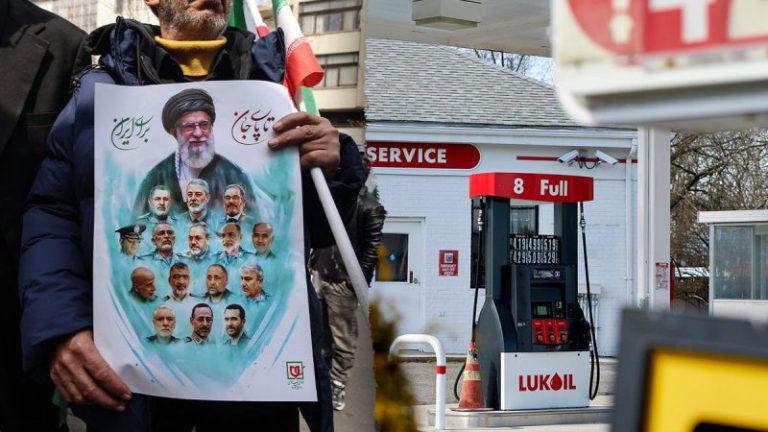
Rep. August Pfluger, R-Texas, who chairs the Republican Study Committee, is leading five fellow GOP lawmakers in a letter to Treasury Secretary Scott Bessent regarding Lukoil — which accounts for roughly 2% of the world’s oil output.

Western sanctions have forced Lukoil to announce it would sell certain international assets as countries like the U.S. and U.K. attempt to whittle down Russia’s control over global energy.

‘The U.S. government has a significant role — in fact, a responsibility — in determining the ultimate fate of these oil and gas assets. We encourage you to exercise the utmost caution to ensure we do not inadvertently squander this opportunity and relinquish our leverage to U.S. adversaries,’ the Republicans wrote.

They warned against a situation where ‘transaction loopholes or back-room deals with Lukoil’s senior management’ could allow Lukoil assets to ‘slip back into Russia’s hands as tensions subside or U.S. sanctions are lifted.’

The six Republicans on the letter, all from Texas, are also lobbying the administration to ease a pathway for Lone Star State companies to acquire those assets.

‘President Trump has created a once-in-a-generation opportunity not only to defund Russia’s war machine but also for leading American energy companies — including at least two headquartered in the great State of Texas — to acquire the LIG portfolio, permanently removing globally significant oil and gas assets from Russian control, enhancing energy security, affordability, and reliability, and strengthening President Trump’s America First agenda,’ they argued.

‘[W]e encourage the Department of the Treasury — in concert with the White House and Departments of Energy, State, and War — to scrutinize every detail of the various proposals to ensure that any sale of LIG’s assets ‘completely severs’ ties with the Russian parent company, paving the way for American energy companies to meet this moment with the urgency and precision it so deserves.’

The push comes at a particularly consequential time on the world stage as Iran continues to retaliate against U.S. allies in the Middle East.

Earlier this month, the U.S. and Israel began a joint operation launching strikes against Iran that targeted its military and nuclear assets as well as top leadership ranks.

Russia, which has been wreaking havoc on European energy markets with its invasion of Ukraine since February 2022, has reportedly been aiding Iran against the U.S. operation.

The Washington Post reported that Moscow was providing intelligence to Tehran to help it target U.S. forces in the region. It’s a particularly significant development in the wake of eight U.S. service members’ deaths since the conflict began.

Pfluger cited the conflict in the new letter, but did not mention Russia’s alleged role in aiding Iran.

‘American energy dominance is critical to our national security, and as the events of the last several days in Iran and the broader Middle East region have highlighted, our ability to promote peace through strength is enabled by our role in facilitating the stable and secure supply of energy to world markets,’ the letter said.

‘In this increasingly complex geopolitical era, we believe America’s energy companies, and not those of our adversaries, should continue leading the way.’

Meanwhile, AAA reported that the average national gas price in the U.S. rose by 27 cents to $3.25 as of March 5 since the Iran conflict began.

As of March 11, AAA’s calculations put the national gas price average at nearly $3.58.

This post appeared first on FOX NEWS

Republicans sharply criticized former President Joe Biden over rising prices at the gas pump, but a spike in energy prices amid the U.S.-Israeli conflict in Iran threatens to scramble the party’s affordability messaging.

The Iran conflict has led to a surge in gas prices for Americans, leading to an average 50 cents a gallon increase since Operation Epic Fury began on Feb. 28.

The average price of gas reached $3.54 per gallon on Tuesday, according to AAA. Diesel prices have also risen to $4.72 per gallon. The increases have been mostly fueled by volatility in oil prices, which rose above $100 per barrel on Monday as the Strait of Hormuz remained effectively shuttered.

The president characterized the gas price hike amid the Iran conflict as ‘a very small price to pay’ in a Truth Social post Sunday.

That statement represented a sharp break with Trump’s typical messaging touting low gas prices prior to Operation Epic Fury.

‘Gasoline, which reached a peak of over $6 a gallon in some states under my predecessor — it was quite honestly a disaster — is now below $2.30 a gallon in most states. And in some places, $1.99 a gallon,’ President Donald Trump said during his Feb. 27 State of the Union address. ‘And when I visited the great state of Iowa just a few weeks ago, I even saw $1.85 a gallon for gasoline.’

The surge in gas and diesel prices threatens to undermine the economic message of President Trump and congressional Republicans, who have touted low gas prices as a major win in the lead-up to November’s midterm elections. Cost of living issues are expected to be a key concern among voters as both parties claim to be laser-focused on making everyday life more affordable.

During the 2024 presidential contest, Trump frequently campaigned on ending Biden’s ‘war on American energy’ and pledged to reverse a surge in gas prices that occurred under his predecessor’s tenure.

Gas prices averaged $3.45 per gallon across all fuel grades during Biden’s four-year term, surging to a record high of more than $5 per gallon in June 2022 after the outbreak of the Russia-Ukraine war, according to the U.S. Energy Information Administration.

‘Starting on Day 1, we will drive down prices and make America affordable again,’ Trump said during a speech at the Republican National Committee convention in July 2024. ‘People can’t live like this.’

Democrats have seized on rising prices at the pump amid the conflict in Iran.

‘I wish the administration thought about this before they started this unnecessary war,’ Sen. Angus King, I-Maine, who caucuses with Democrats, said Monday when asked about the gas price hike.

‘Donald Trump’s war has sent gas prices skyrocketing through the roof,’ Senate Minority Leader Chuck Schumer, D-N.Y., wrote on social media Monday. ‘What contempt. What cluelessness.’

Schumer has called on the president to release oil from America’s Strategic Petroleum Reserve to combat supply bottlenecks in the Middle East. The top Democrat notably opposed a Trump-led effort to replenish the stockpile in his first term when oil prices were much lower.

Republicans have voiced confidence that the rise in gas prices would be temporary. GOP lawmakers have frequently cited their efforts to roll back Biden-era energy regulations and boost domestic production as evidence that their policies are working to lower energy prices.

‘It’s going to be probably volatile for a period of time. I think what’s going to be key is ensuring we can get safe access to the Strait of Hormuz,’ Sen. Steve Daines, R-Mont., said Monday, adding that he was confident the disruption would be short-lived.

Daines, who abruptly suspended his re-election campaign last week, highlighted that average gas prices were under $3 per gallon prior to Trump’s State of the Union speech. 

‘That’s an important win for the American people,’ the retiring Montana lawmaker said. ‘Something you’re reminded of usually weekly when you’re gassing up your vehicle.’

Some Republicans and Trump administration officials are also arguing that a defeated Iran will ultimately spur lower gas prices, even if there is pain in the short run.

White House press secretary Karoline Leavitt characterized the recent increase in oil and gas prices as ‘temporary’ during a briefing Tuesday.

‘Once the national security objectives of Operation Epic Fury are fully achieved, Americans will see oil and gas prices drop rapidly, potentially even lower than they were prior to the start of the operation,’ Leavitt said.

‘At the end of the day, we’re going to destroy this regime, and their ability to disrupt oil is going to be less, and we’re going to have more production, not less,’ Sen. Lindsey Graham, R-S.C., told reporters Monday. ‘Once you take the largest state sponsor of terrorism off the planet, who depends on oil for their revenue, that’s a more stable world.’

Nearly seven in 10 Americans — including 44% of Republicans — expect gas prices to keep increasing in the coming months, according to a Reuters-Ipsos poll released Monday.

Trump has threatened Iran with unprecedented force if the flow of oil through the Strait of Hormuz is further restricted.

‘Death, Fire, and Fury will reign upon them — But I hope, and pray, that it does not happen!’ Trump wrote Monday on Truth Social.

This post appeared first on FOX NEWS